Expedition 01 | Mazabuka, Southern Province, Zambia
Field trips rarely start off going as planned. This one started with endless traffic leaving Lusaka, a cash-only SIM card counter, and ended the first day with possibly the saltiest dinner I have ever eaten.
This trip to Zambia was the first expedition for my new wider social media project, the Southern African Herpetofauna Project, where I attempt to document not only the species encountered, but also the places, fieldwork and the reality behind each trip. For this first expedition, I was based near Mazabuka, near the Kafue Flats, where the days would be divided between bird counts, bat surveys, camera trapping and, whenever time allowed, searching for reptiles and amphibians.
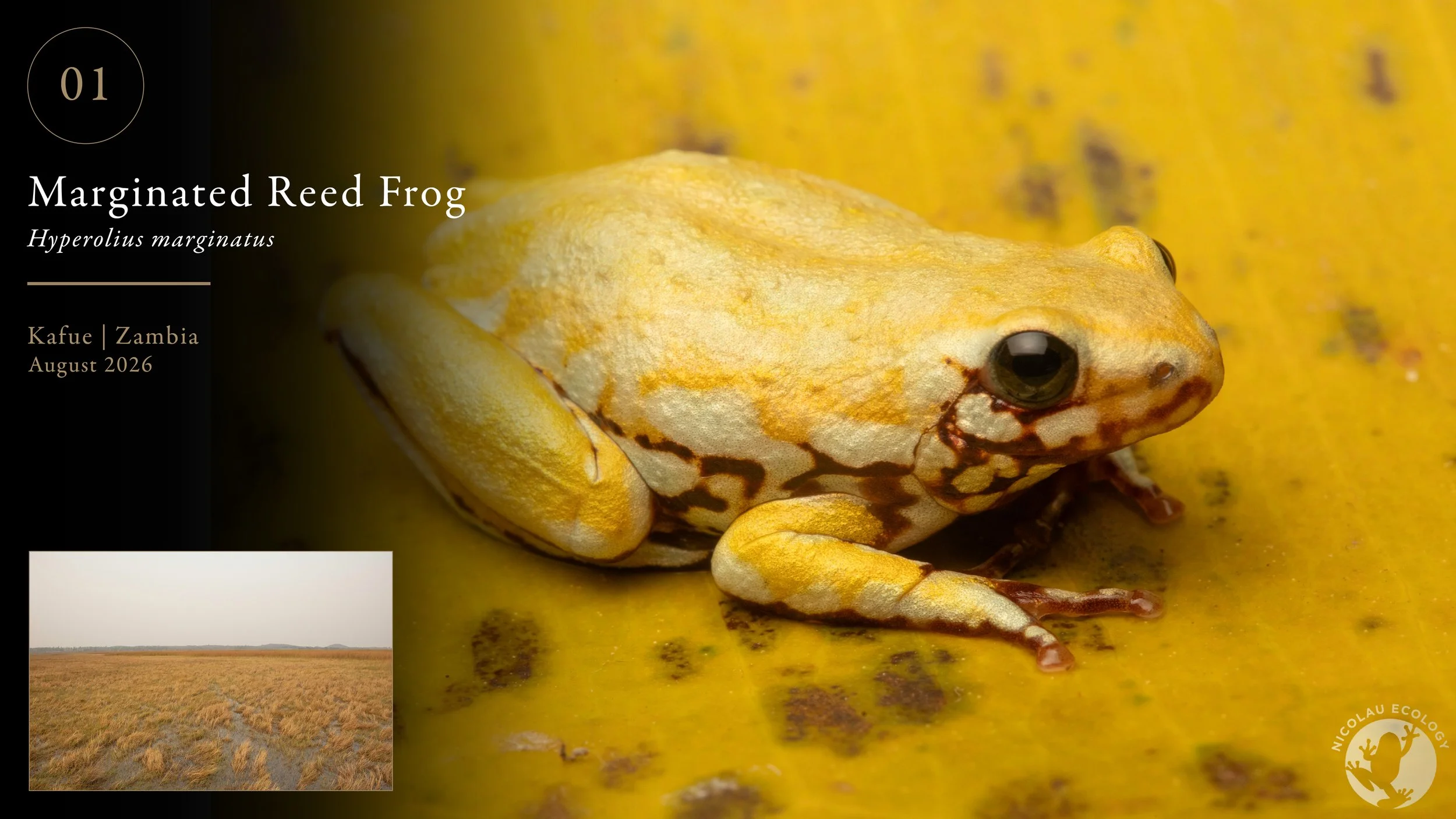
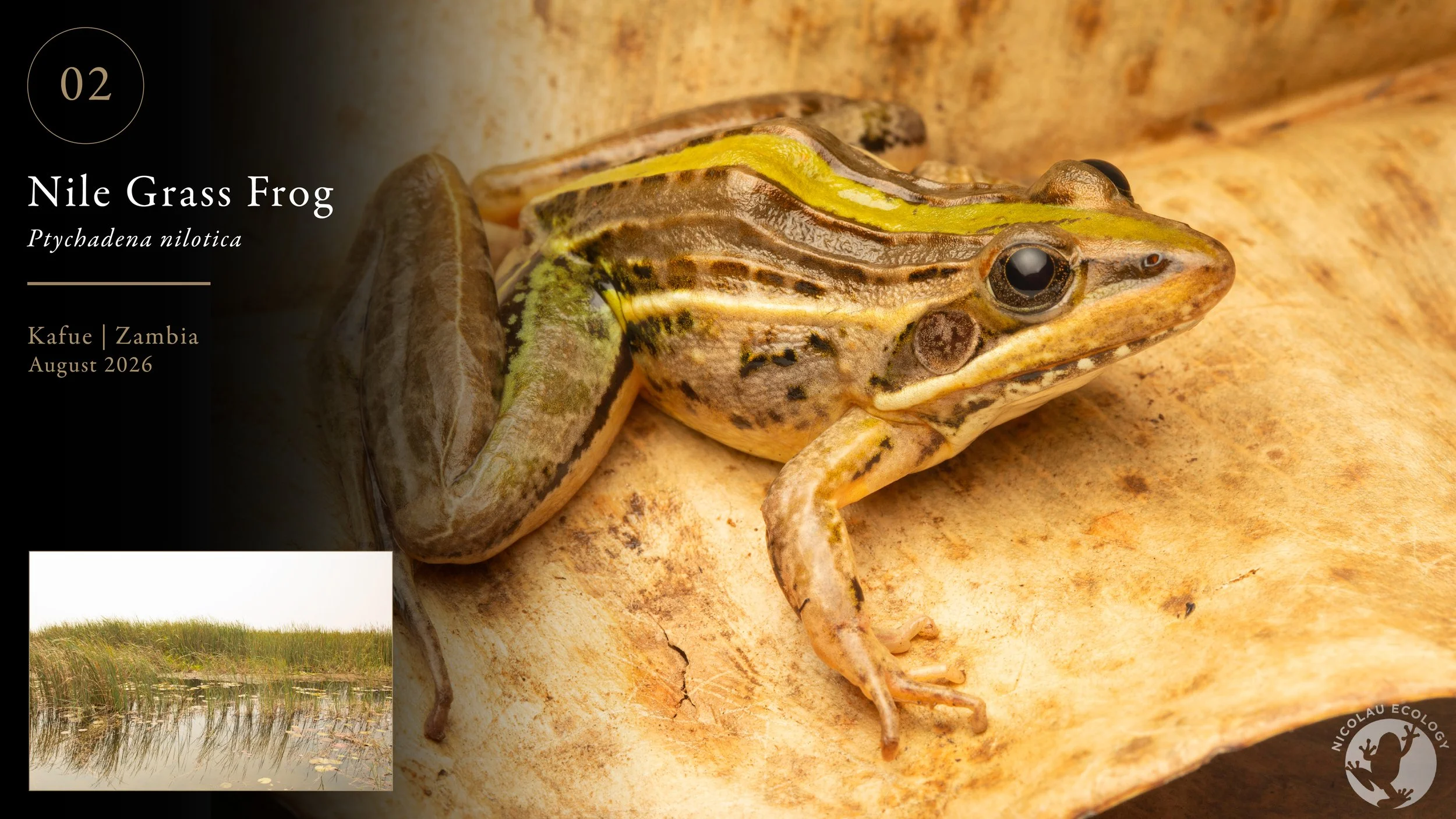
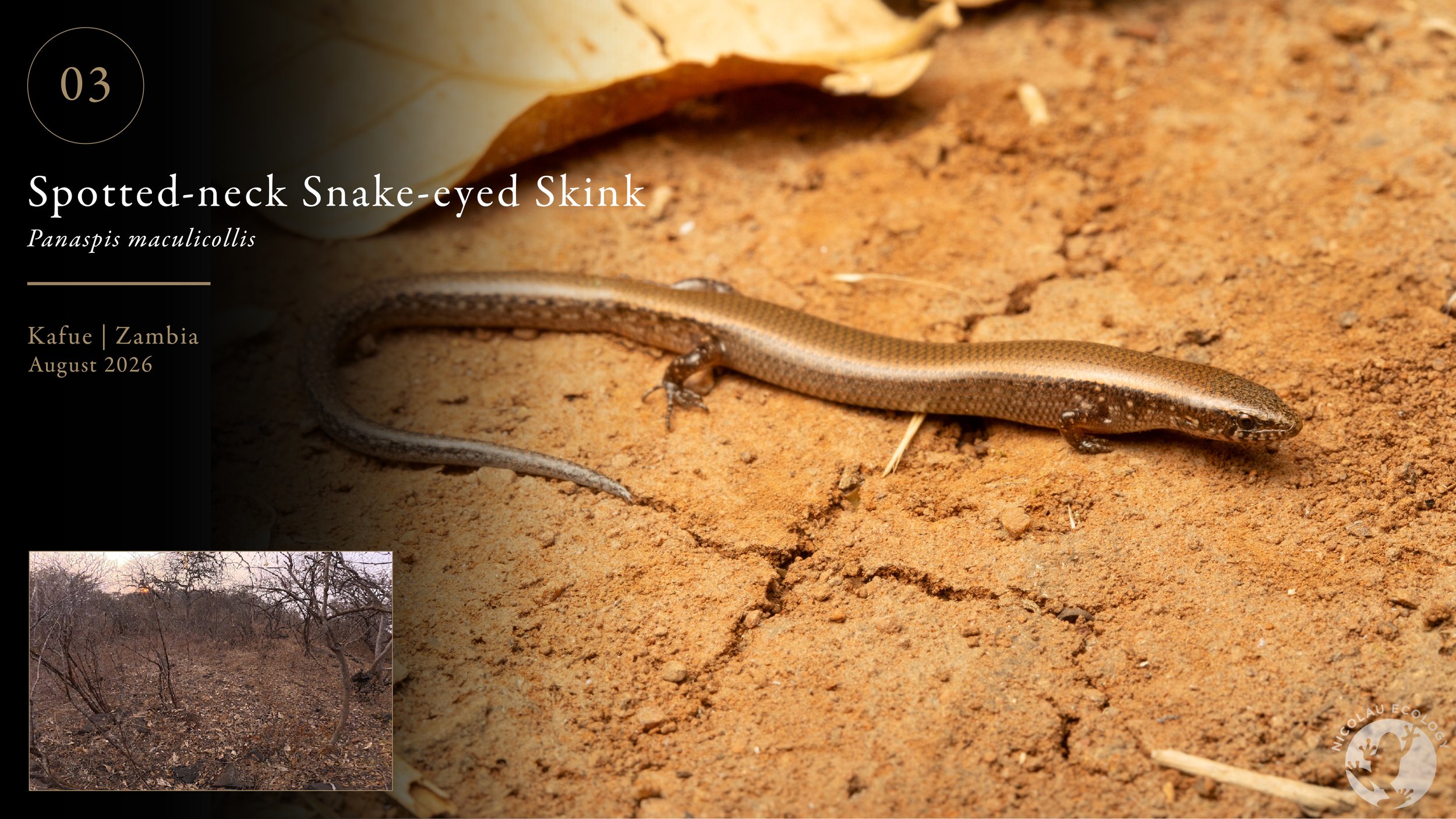
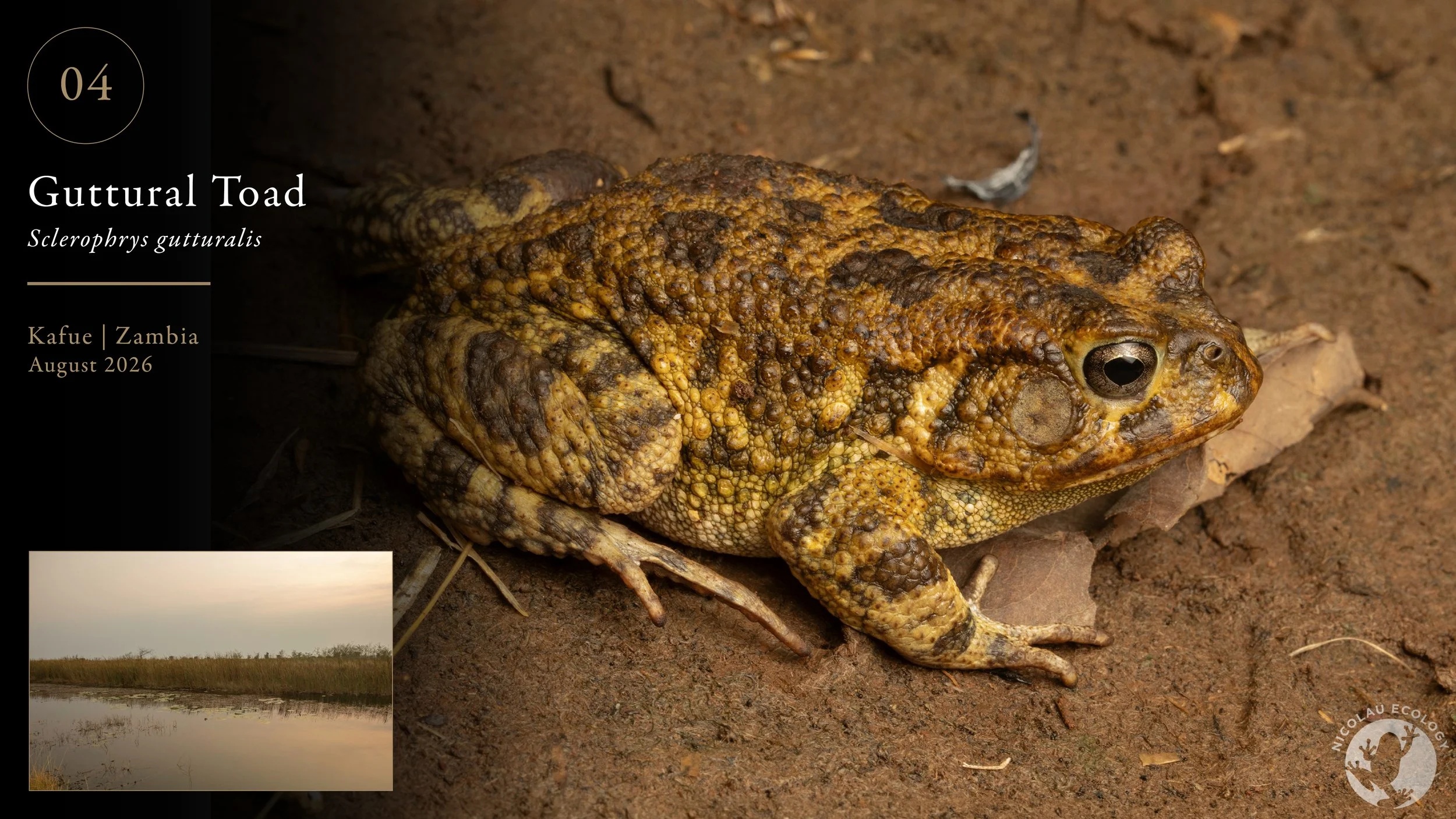
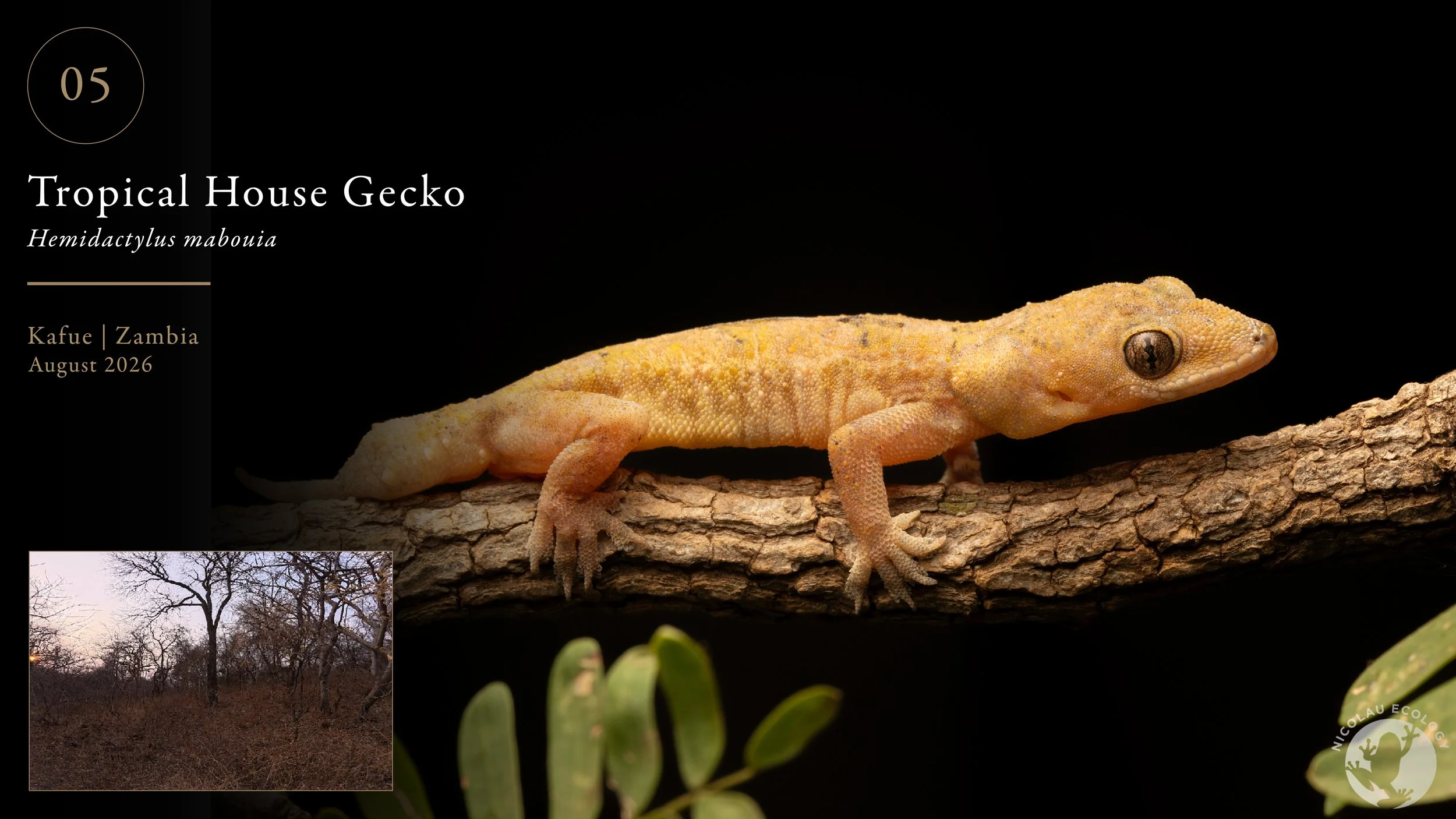
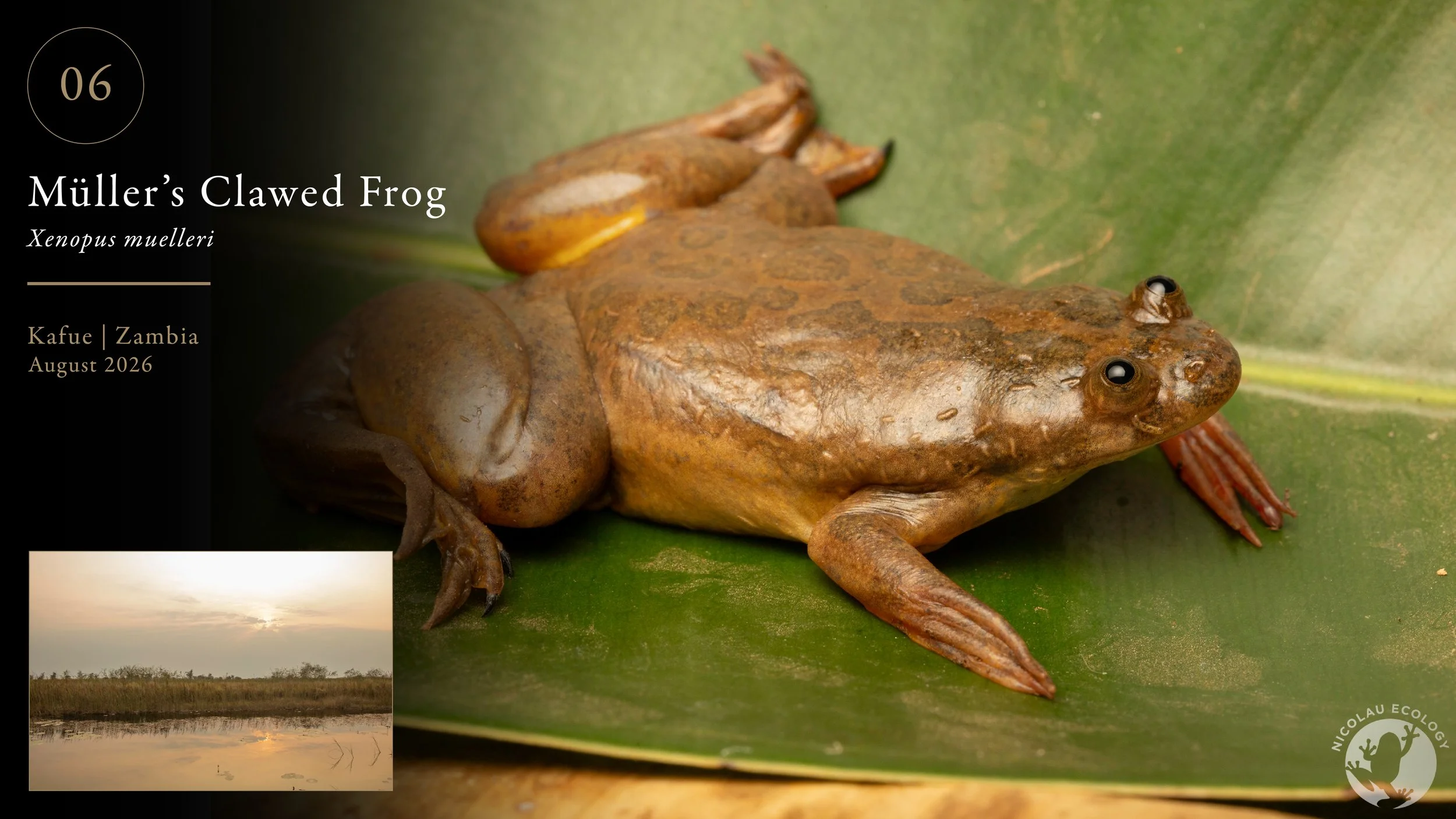
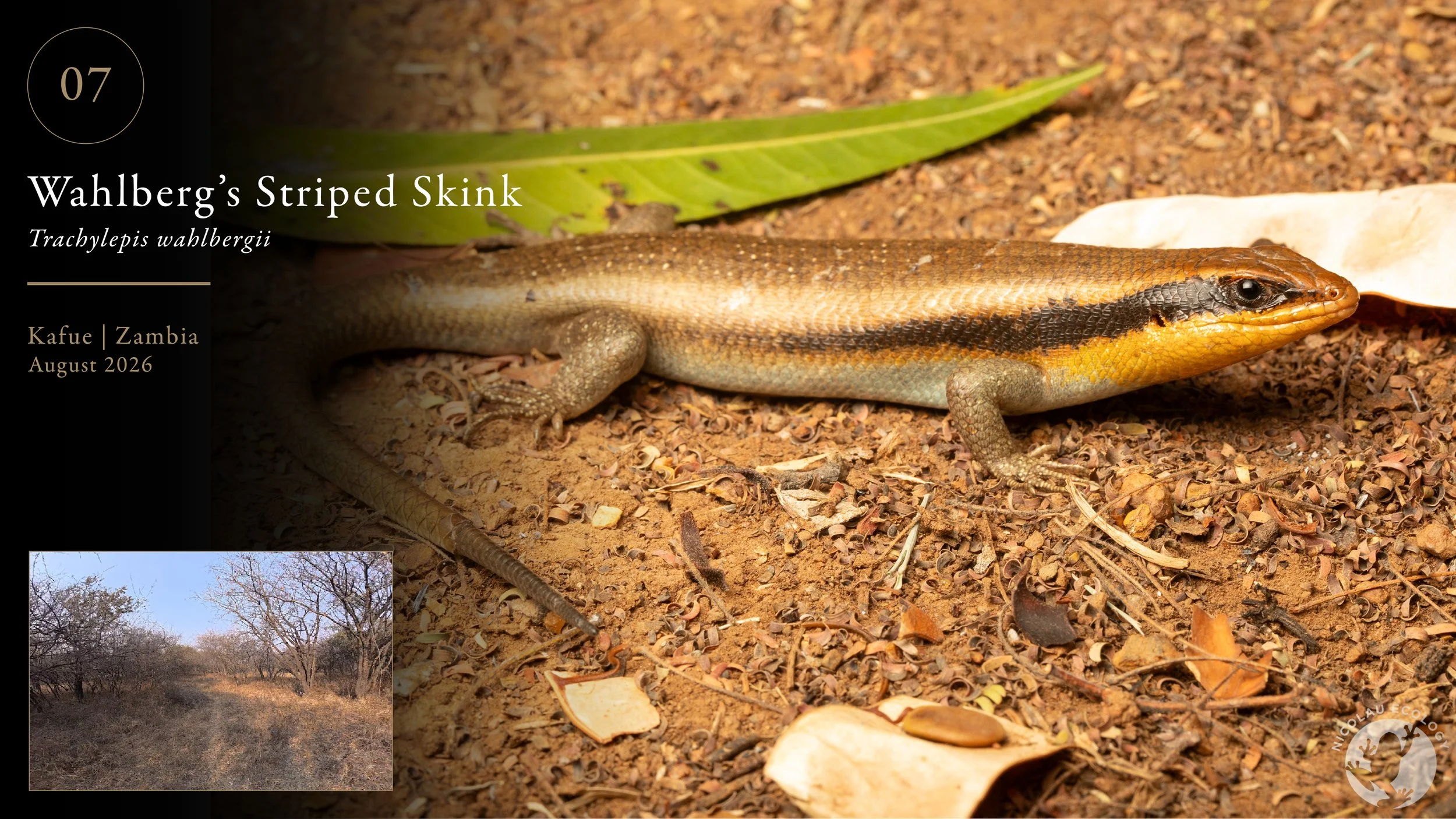
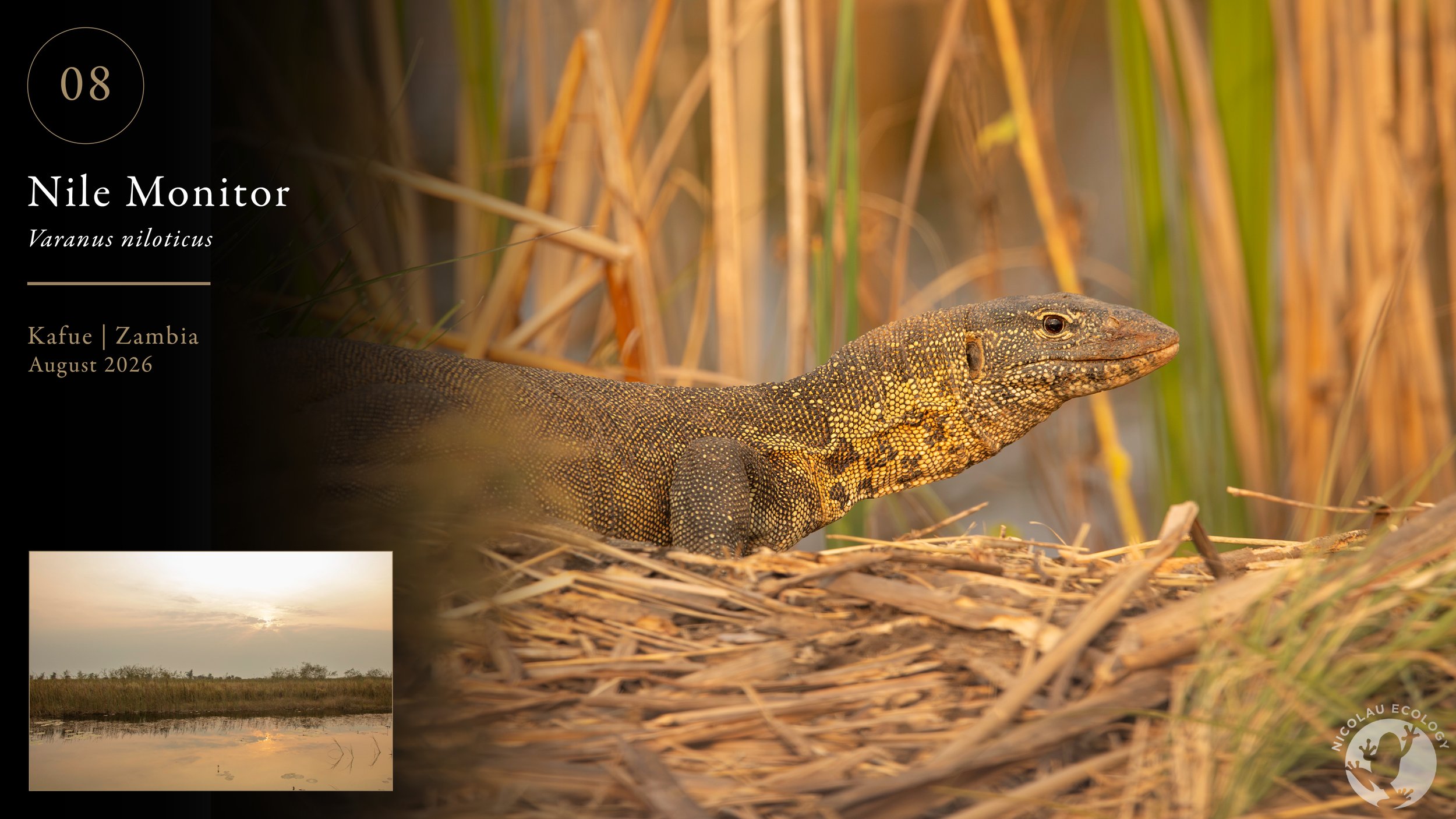
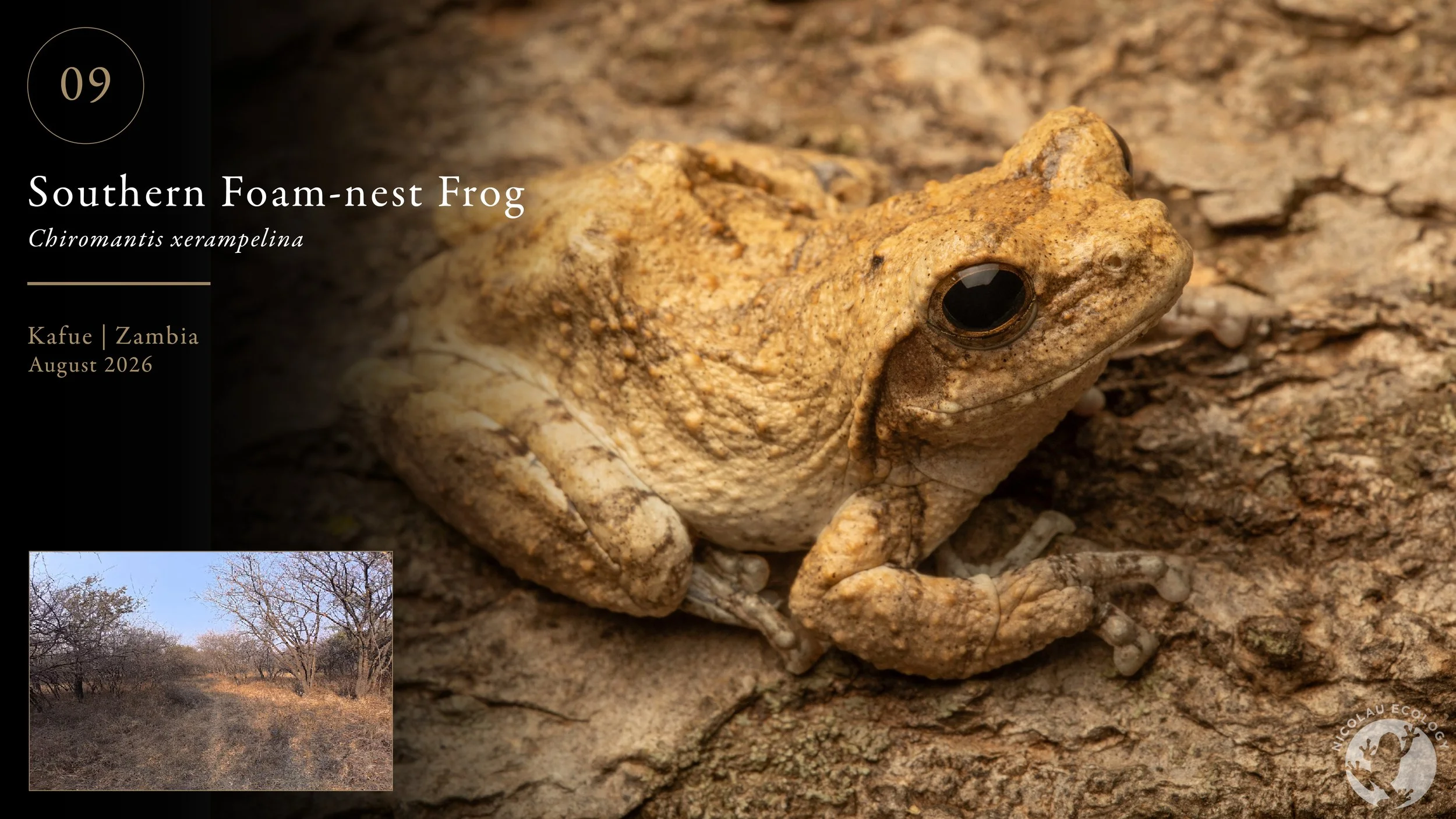
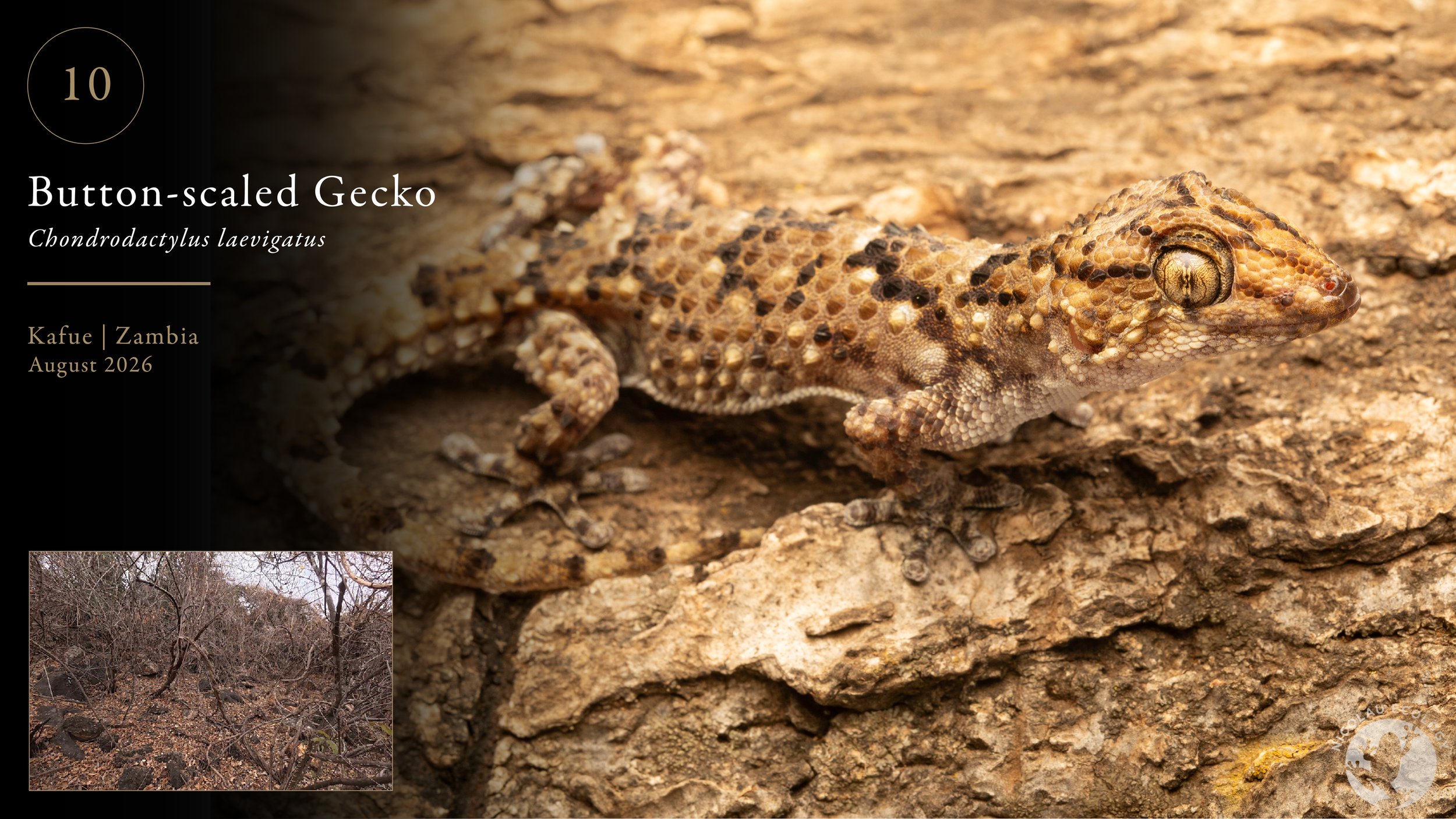
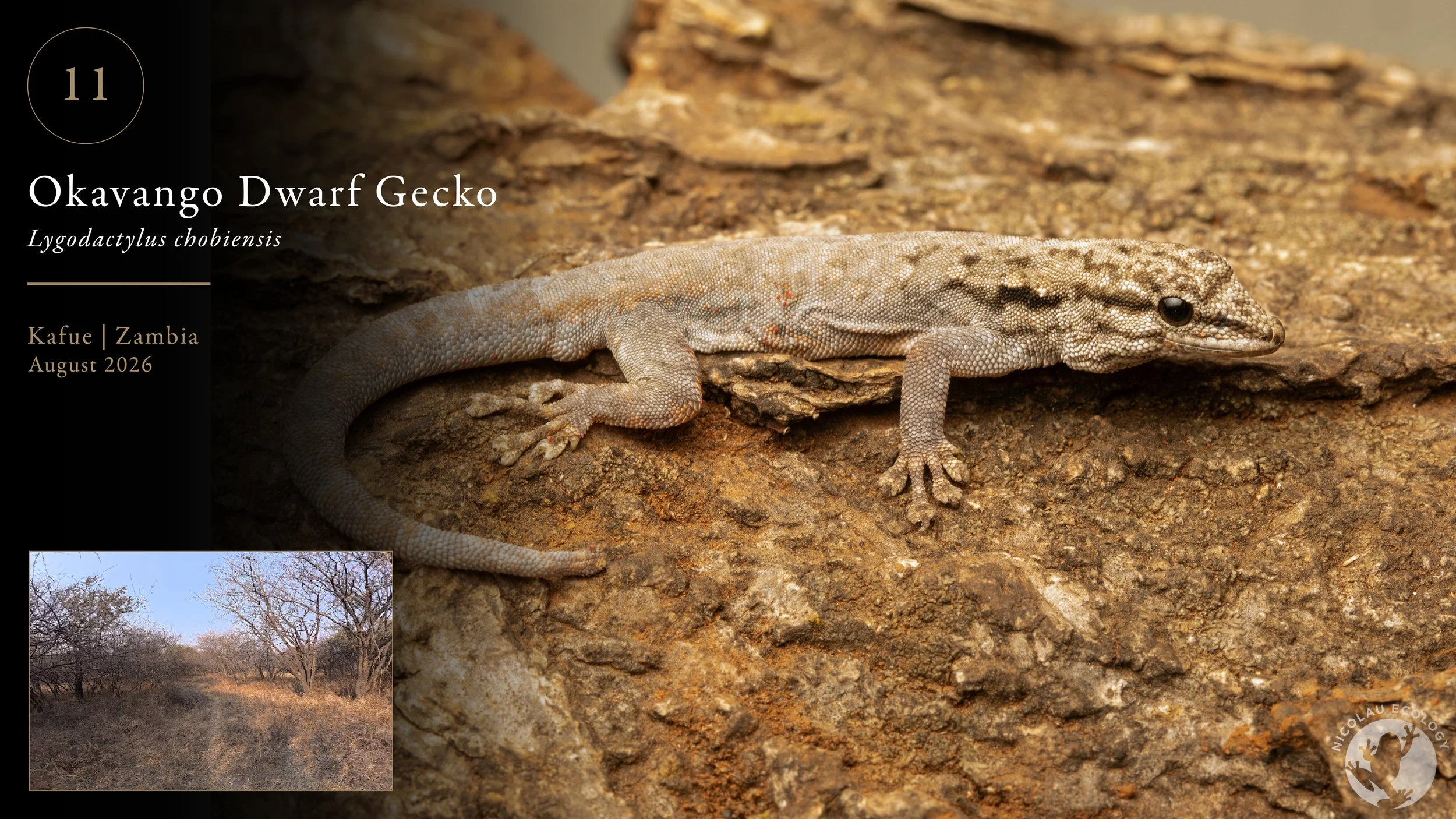
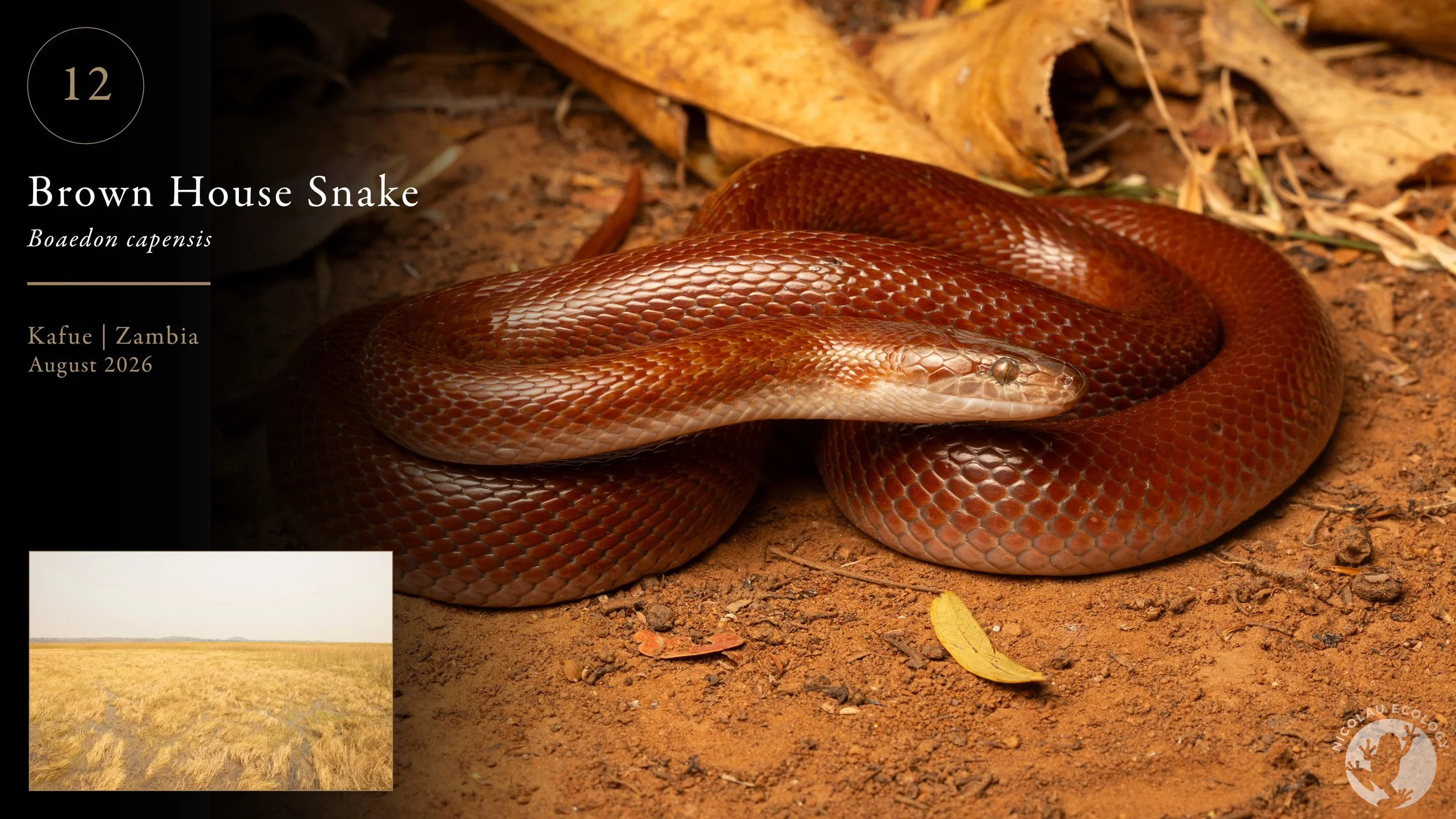
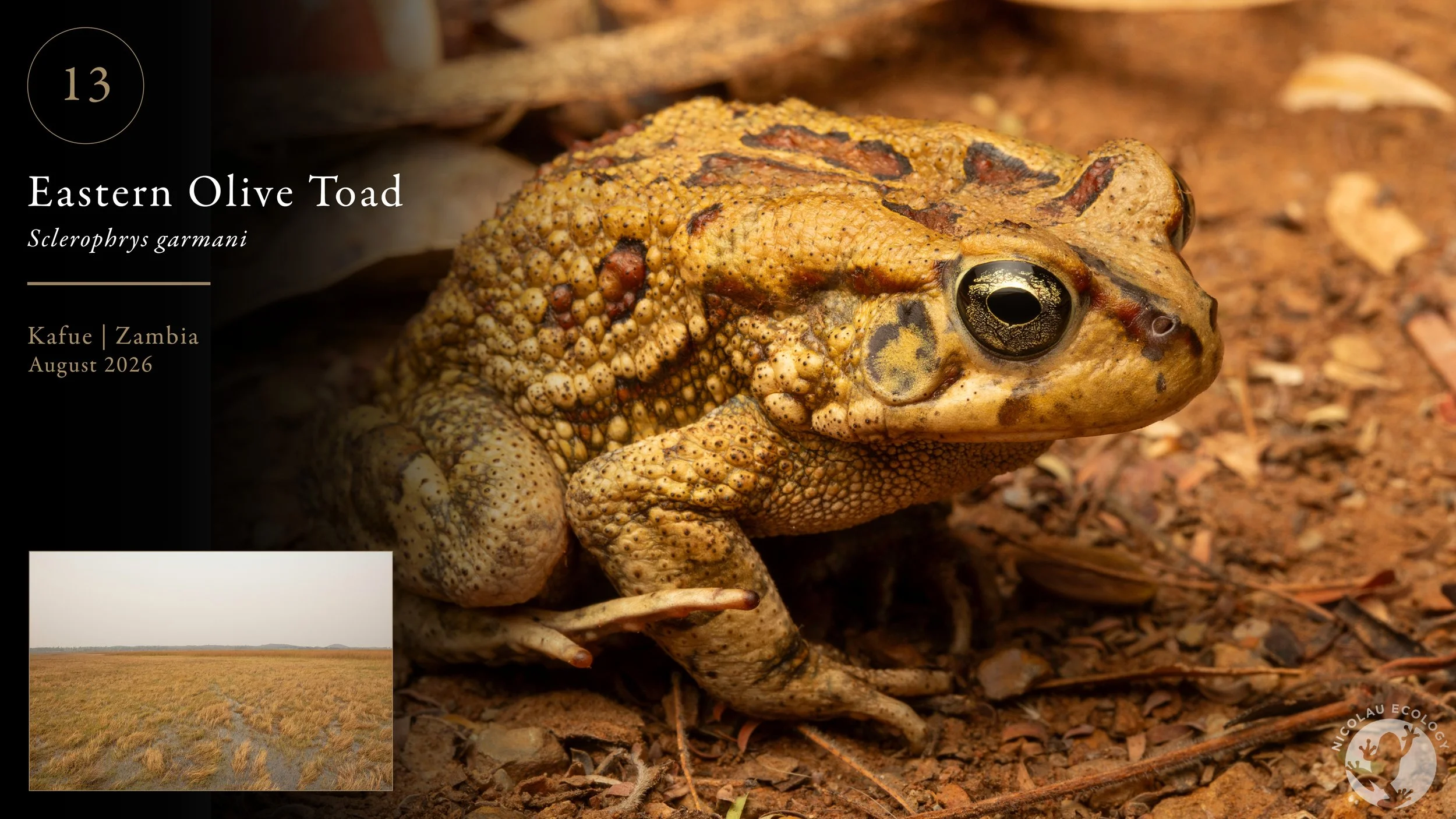
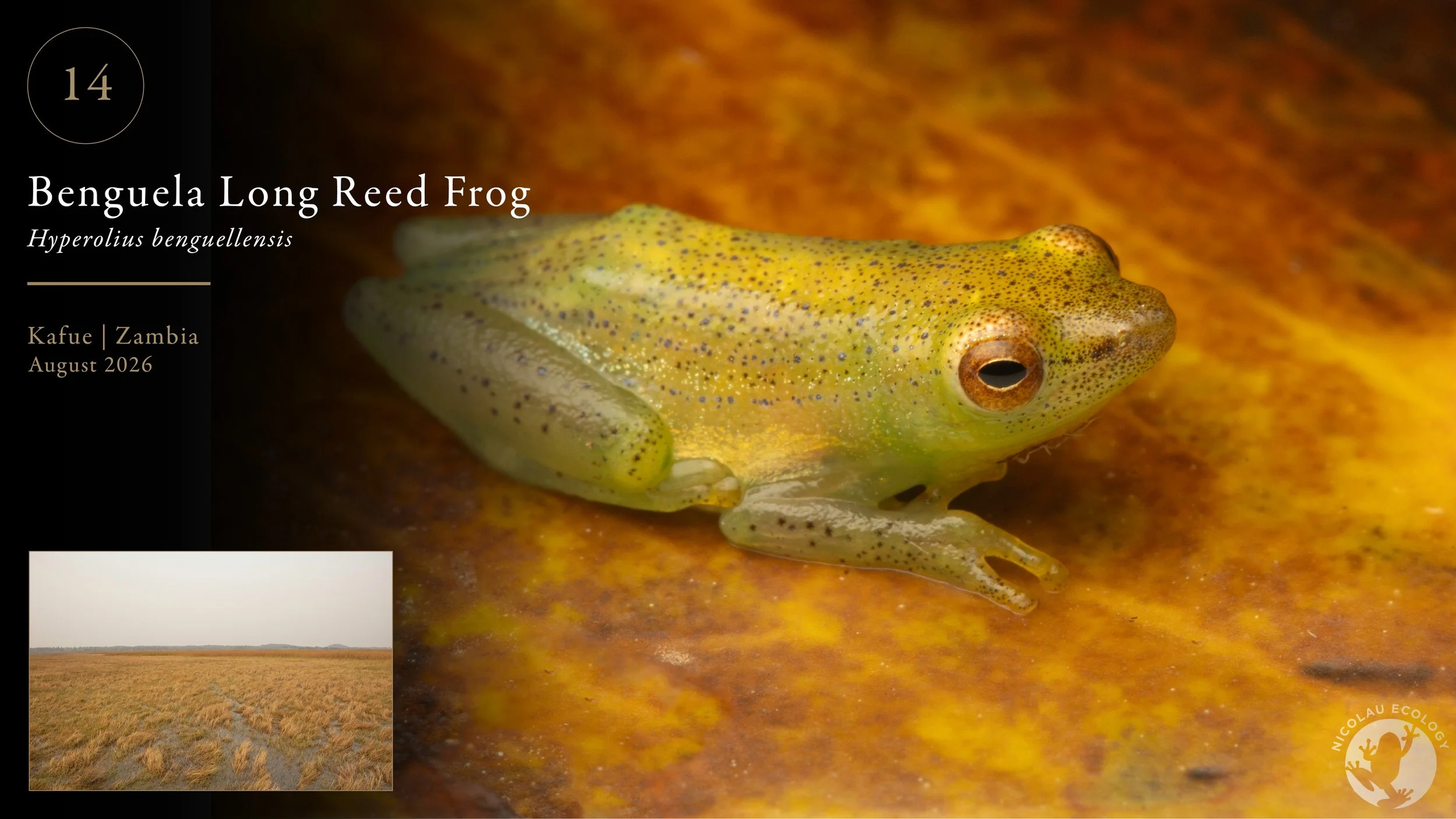
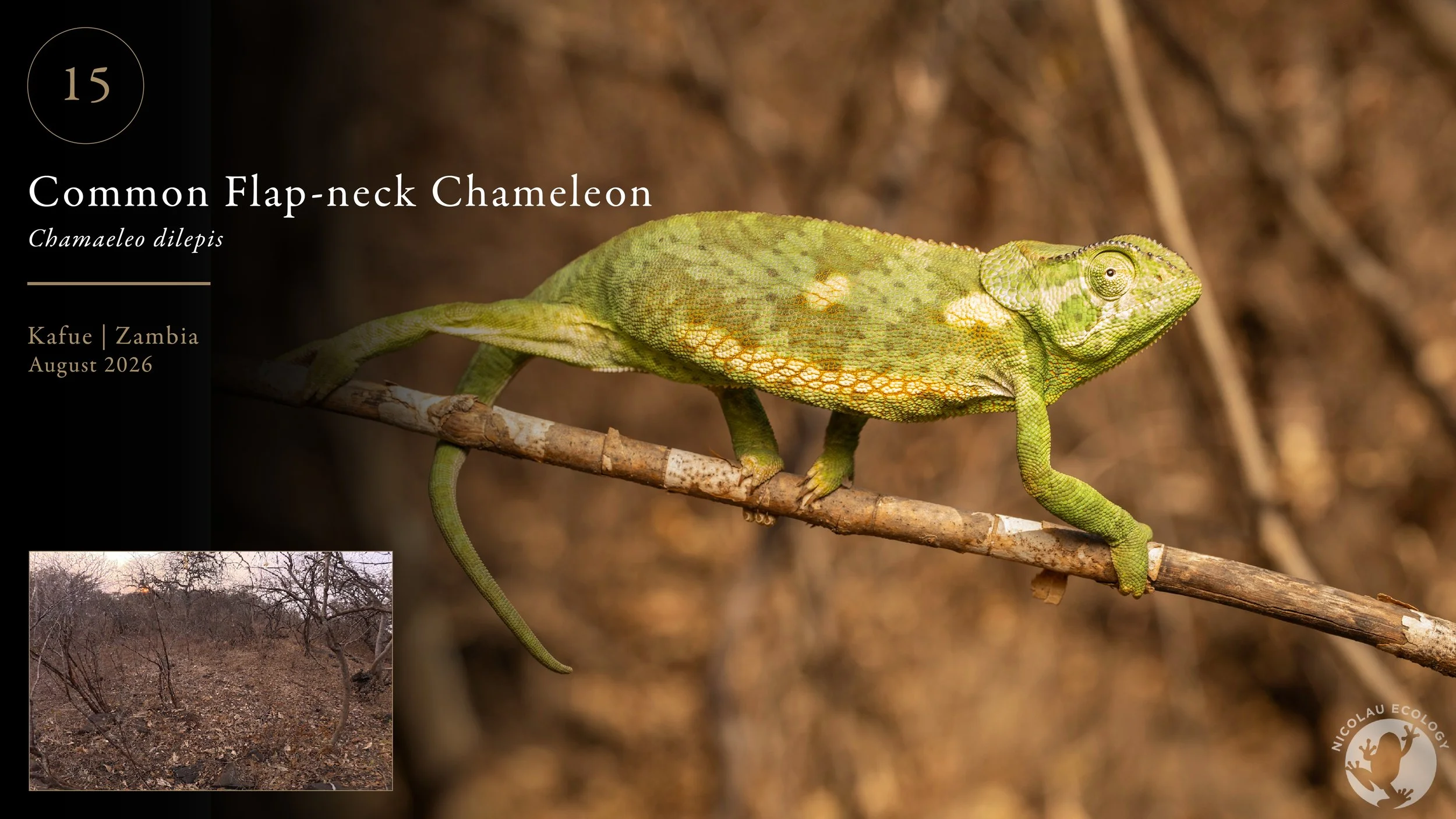
A collection of images highlighting the first 15 species documented for the SAHP.
We arrived in Lusaka shortly after midday on 8 August 2026. After meeting our driver, we set out to buy a local SIM card. After roughly 1 hour of attempting to get the SIM card to work, messages finally started to come through. However, only then did we find out that the shop would only accept cash, which added another small delay before we could finally leave the city. Traffic leaving Lusaka and passing through Kafue was chaotic, and we only reached Mazabuka after dark. Dinner was a chicken stir-fry with rice, and, without exaggeration, it may have been the saltiest meal of my life.
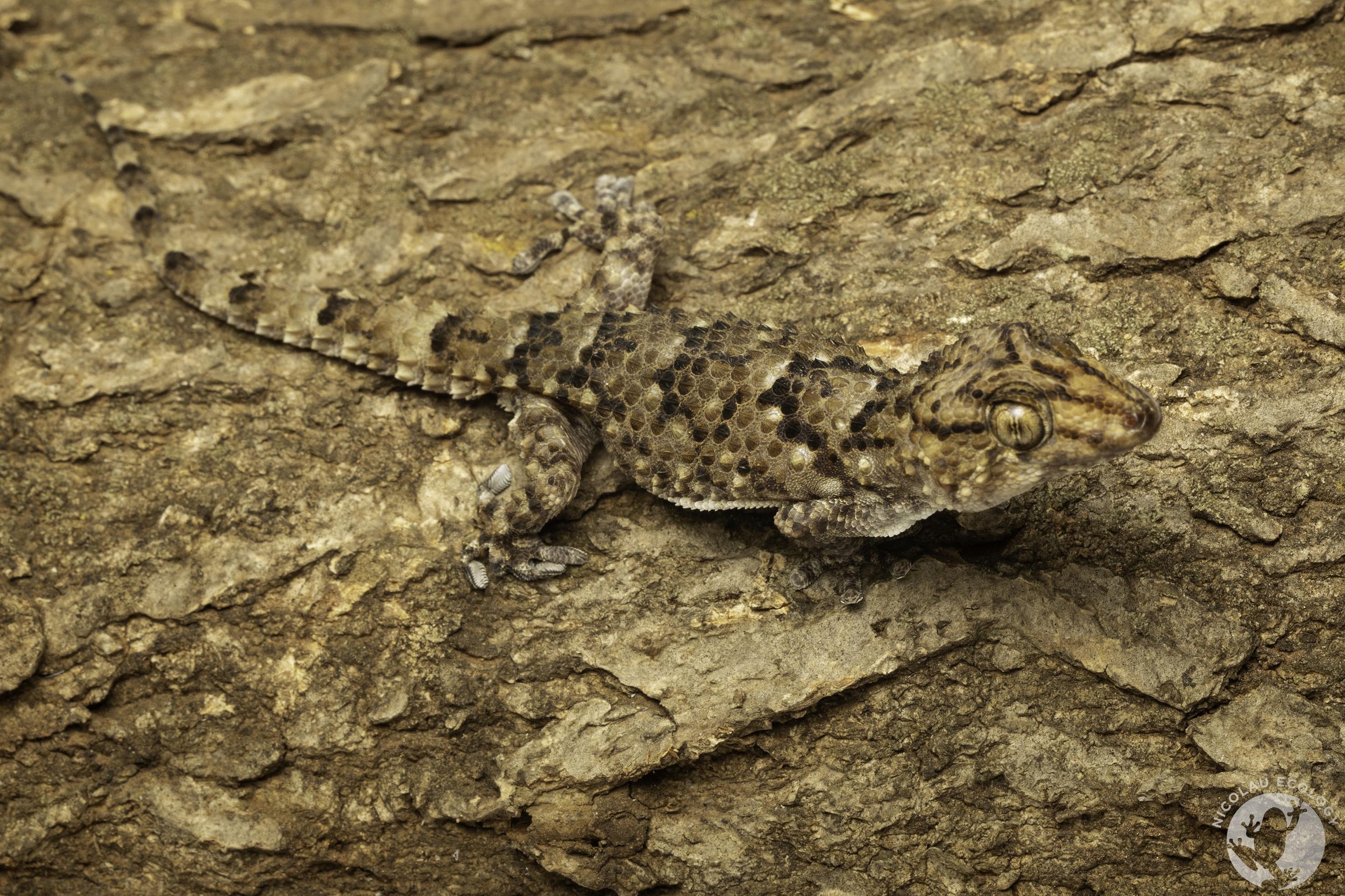
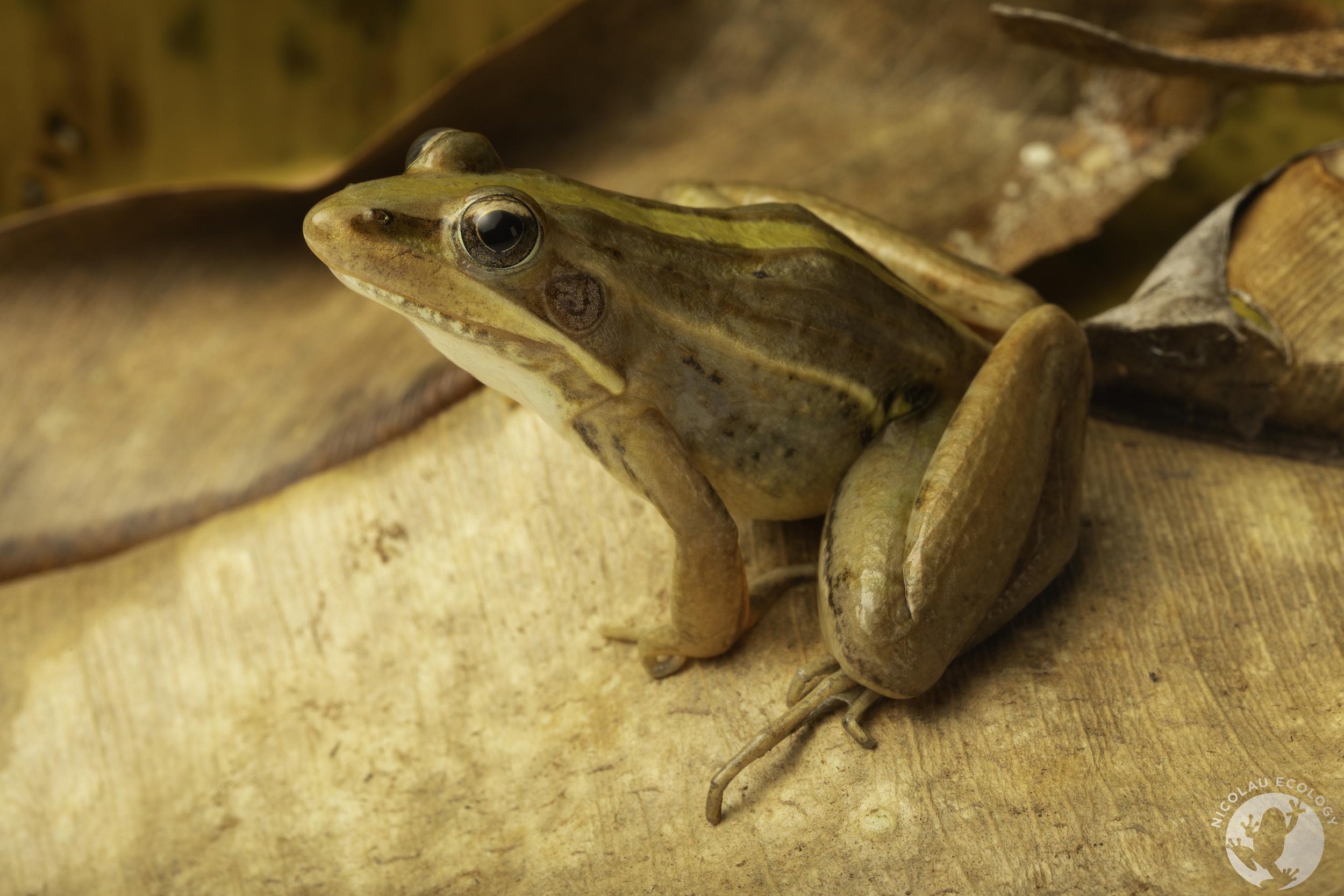
After drinking at least 2 litres of water to stop my lips from cracking, we (Justin Nicolau and I) went out to start some of the work we were here to do; in this case, I was part of a team performing baseline biodiversity surveys in the region. Some of the finds for the first night were large-spotted genets and thick-tailed bushbabies. I also found Hyperolius marginatus - Marginated Reed Frog in some reeds, a widespread species that was, in fact, a lifer for me. There were also many Sclerophrys gutturalis calling throughout the waterbodies were drove past. The accommodation itself was covered in Hemidactylus mabouia, with some individuals calling from the walls. I also spotted a Chondrodactylus laevigatus, but my torch died while trying to catch it, and it somehow disappeared, leaving me rather confused. I climbed into bed at about 00:30, excited for the next two weeks in a new country.
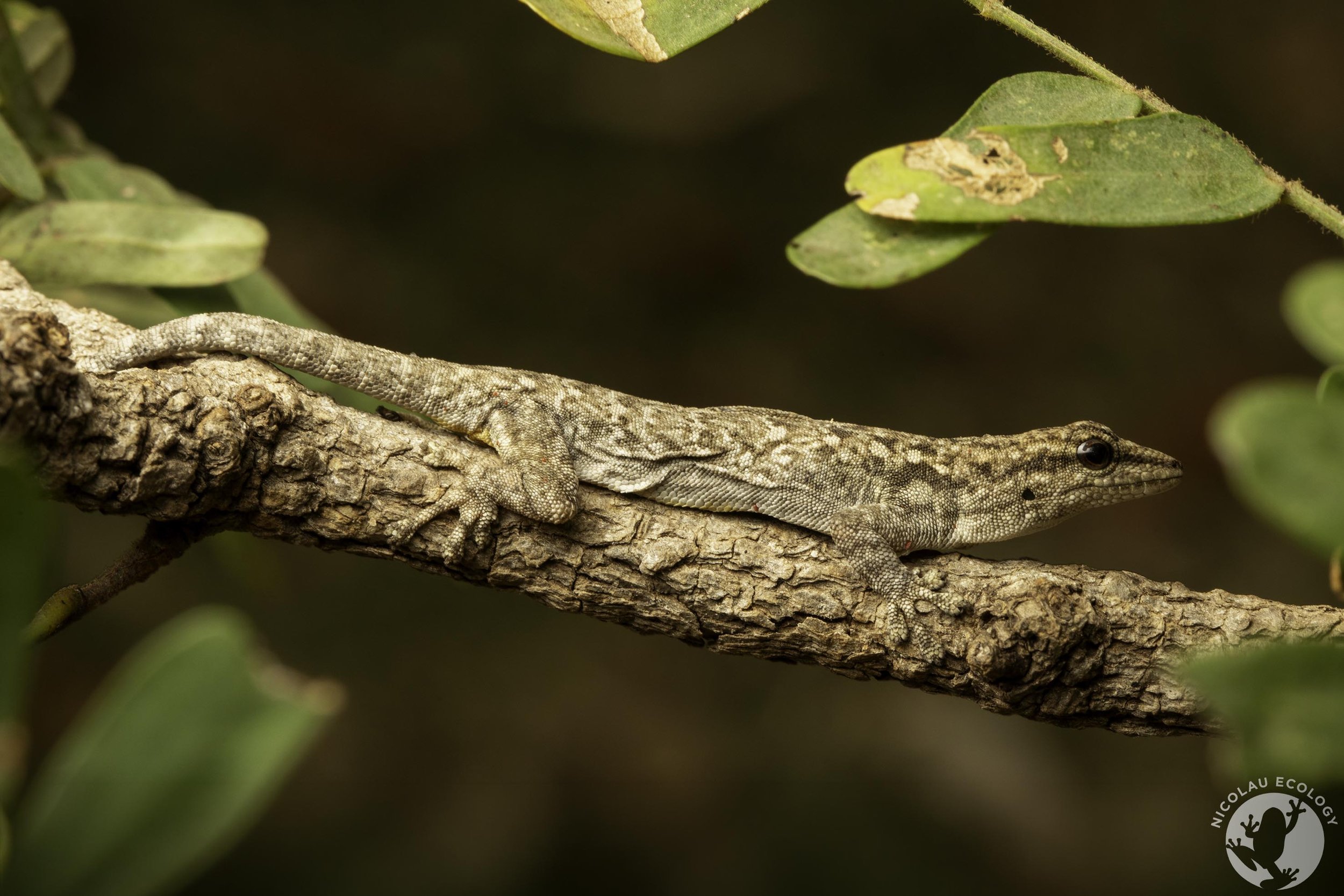
A Lygodactylus chobiensis (Okavango Dwarf Gecko) unware that it can currently be seen
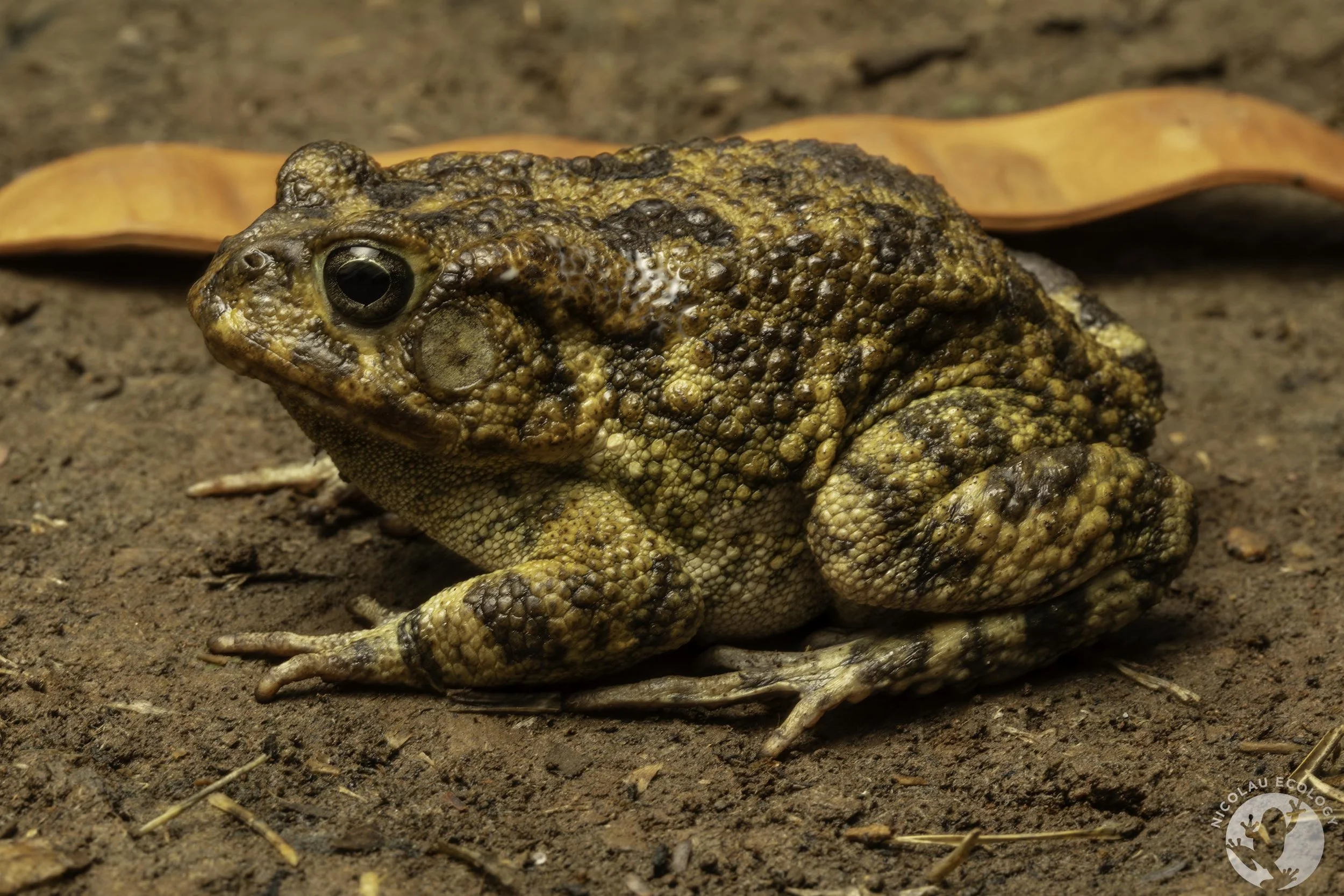
Sclerophrys gutturalis (Guttural Toad) was extremely common across site. Individuals lacked the characterstic red markings on the hind limbs
Our first site was a rocky hill in some nice wooded Savanna. It looked ideal for Pachydactylus oshaughnessyi, or at least I presumed it did, which is one of several targets for the trip. The only reptile I found was a Panaspis maculicollis amongst the leaf litter. I spent a fair amount of time searching for fossorial species this morning, and all following mornings, without any success. The good ol’ Trachylepis wahlbergii, however, was rather common across the site. Back at the accommodation, several Lygodactyluschobiensis were active on the walls after dark. I caught and photographed a Sclerophrys gutturalis and tried to record the calls of Hemidactylus mabouia, although calling slowed down drastically once I attempted to do so. Overall, it was not the best day of herping.
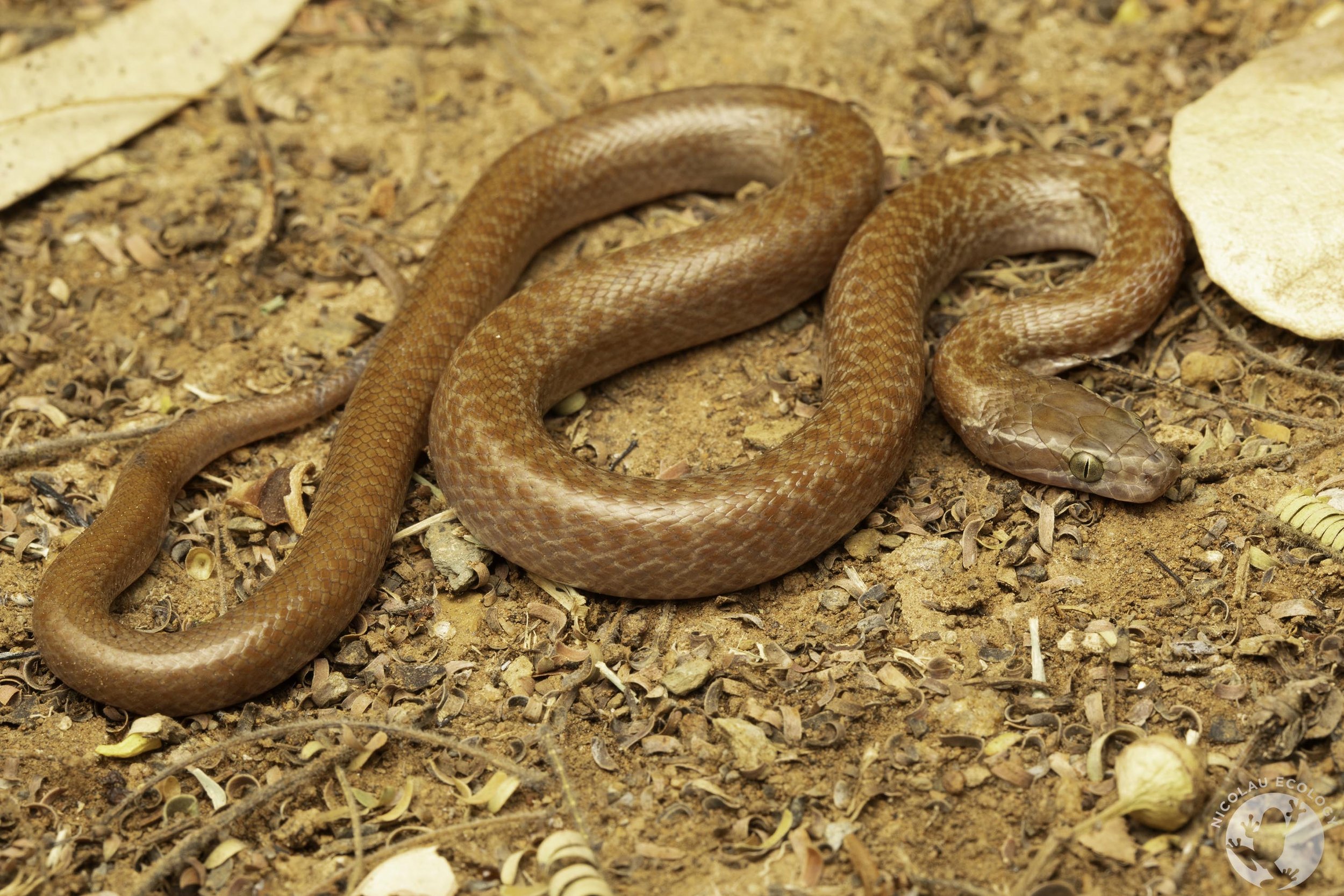
The following morning began with bird counts. At the first site, I managed to catch another Panaspis maculicollis. It was the only herp encountered before breakfast. I got rather confused about some of the Lygodactylus around here. Some were clearly L. chobiensis, but others appeared closer to L. angolensis – smaller-bodied geckos that lacked the distinct chevrons and showed noticeably different colour patterns. Well, these turned out to still be L. chobiensis. That night, we searched along a canal fed by the Kafue River. After a rather quiet day, the abundance of amphibians calling was very exciting. The diversity of calls was poor, with large numbers of Hyperolius marginatus, while the smaller Hyperolius benguellensis were calling but always deeper into the floodplain. Ptychadena nilotica and Xenopus muelleri were present in large numbers. The highlight from this night was a very young Boaedon capensis, found active at the edge of the reeds.’
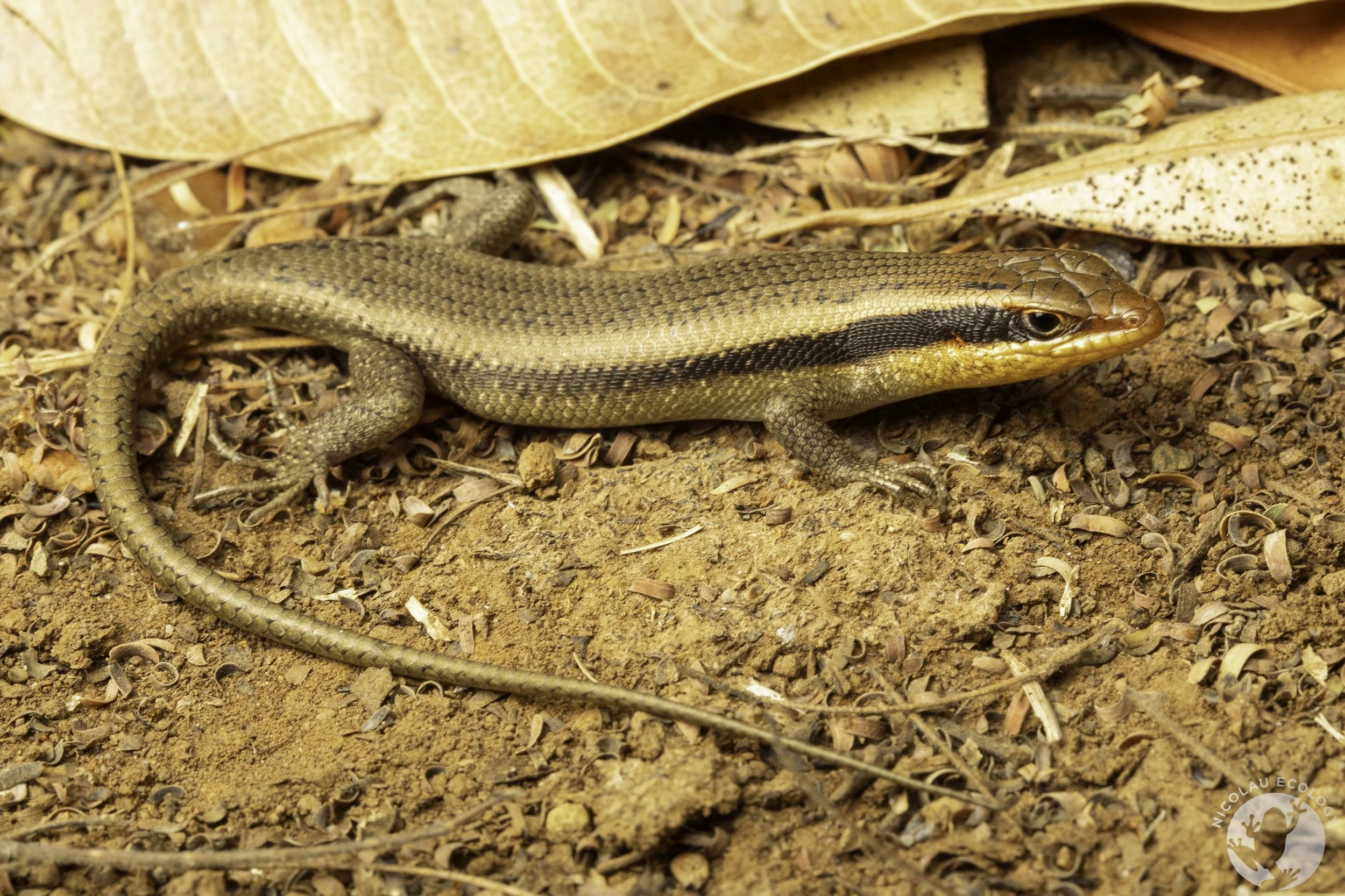
What felt like the only lizards living here during the day
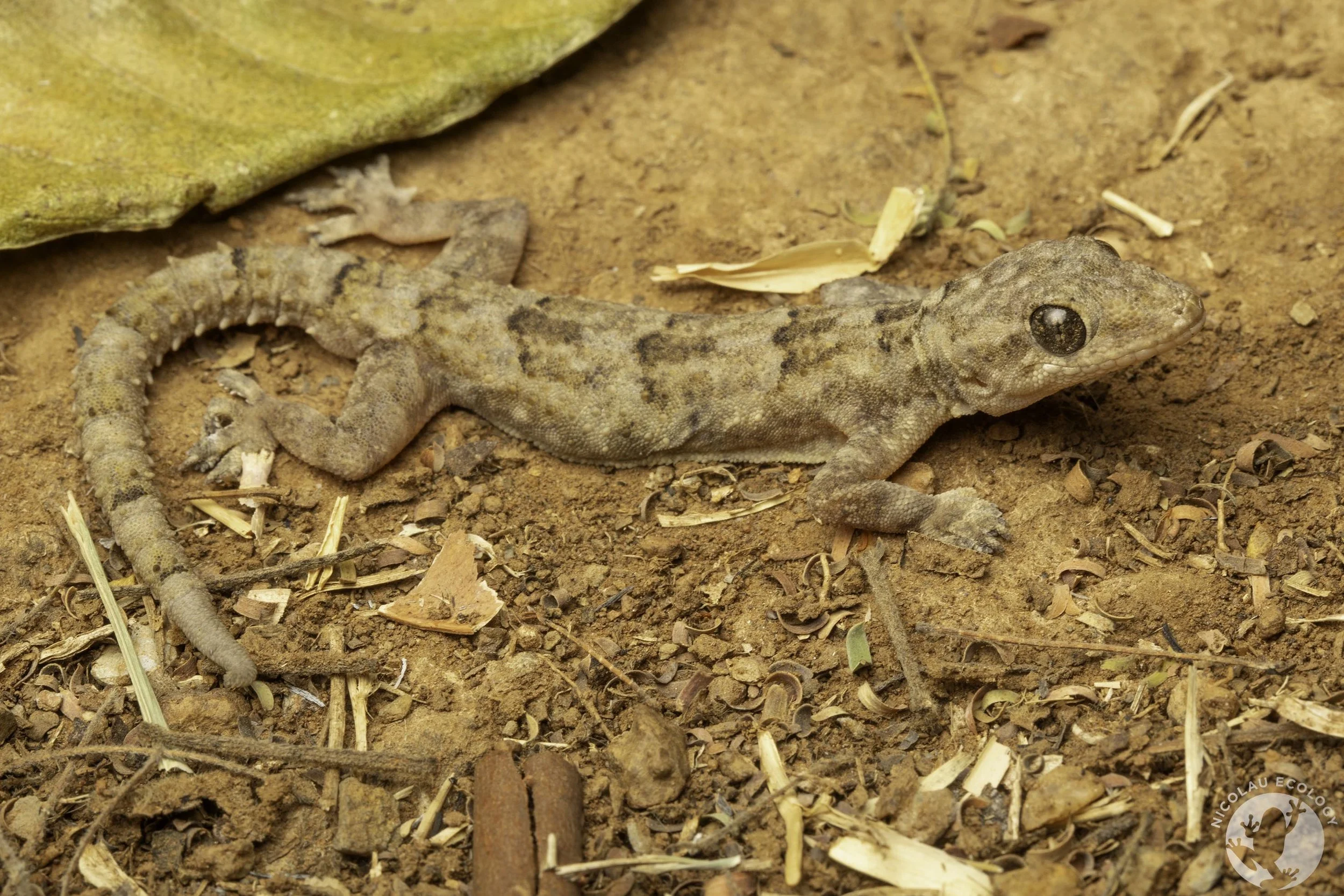
What felt like the only lizards living here during the night
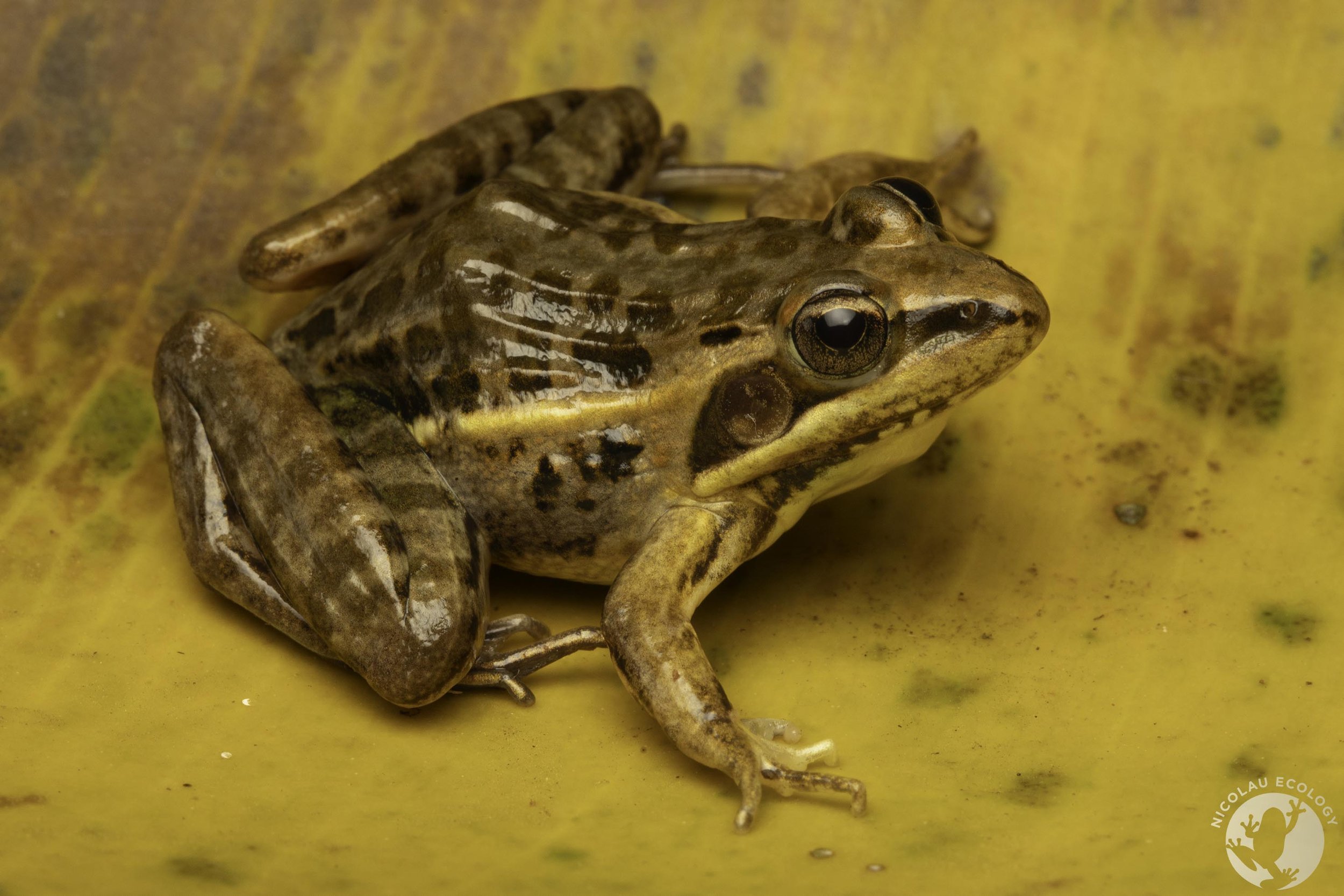
The morning produced very little. We later visited the Kafue River, checking out the small harbours along the river. We found a few Ptychadena nilotica and Trachylepis wahlbergii, but no Natriciteres olivacea, one of my main snake targets for the trip. The species had been found at this site during the previous season’s surveys, so it was rather frustrating to leave the site without finding any. The night survey was equally slow. We recorded a single Hemidactylus mabouia, a Panaspis, and several Chondrodactylus laevigatus. We finally saw some Varanus niloticus, several individuals encountered on the way to one of the harbours.
We set traps in the morning and again in the afternoon, filling the time between with active searches at several sites. Most of the effort was directed towards fossorial species, but we had no luck at all – not even a Trachylepis. By this point, the area felt like one of the most “dead” environments I had ever searched. The apparent absence of Pachydactylus was particularly baffling, because several sites seemed to offer exactly the right habitat. That night, we returned to the wetland. The survey produced nothing that we had not already encountered on the previous night, apart from a Sclerophrys garmani found on the road while travelling to the site.
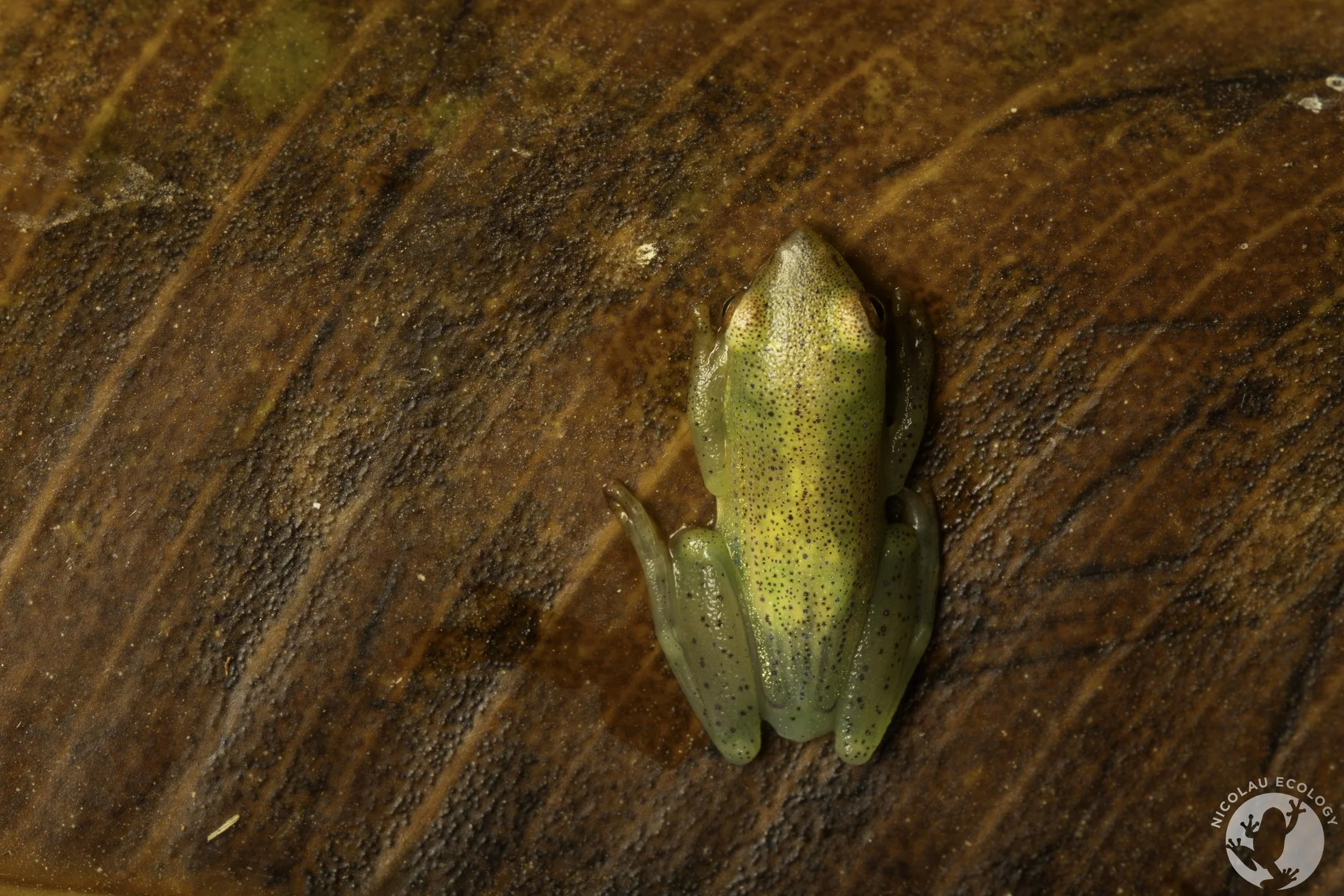
A common but welcome lifer, my 113th species of amphibian seen in Southern Africa, and 7th for this project.
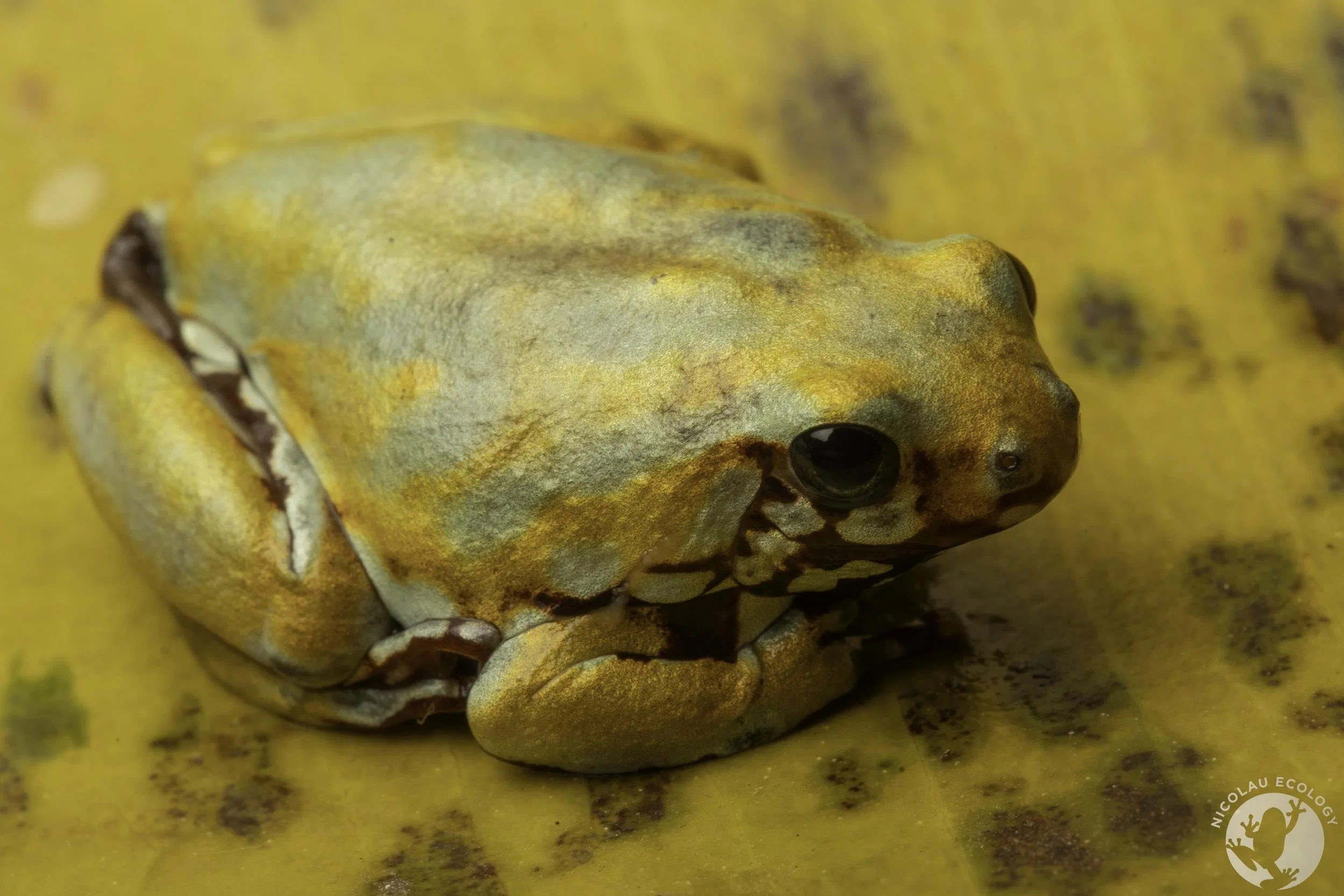
Froglets
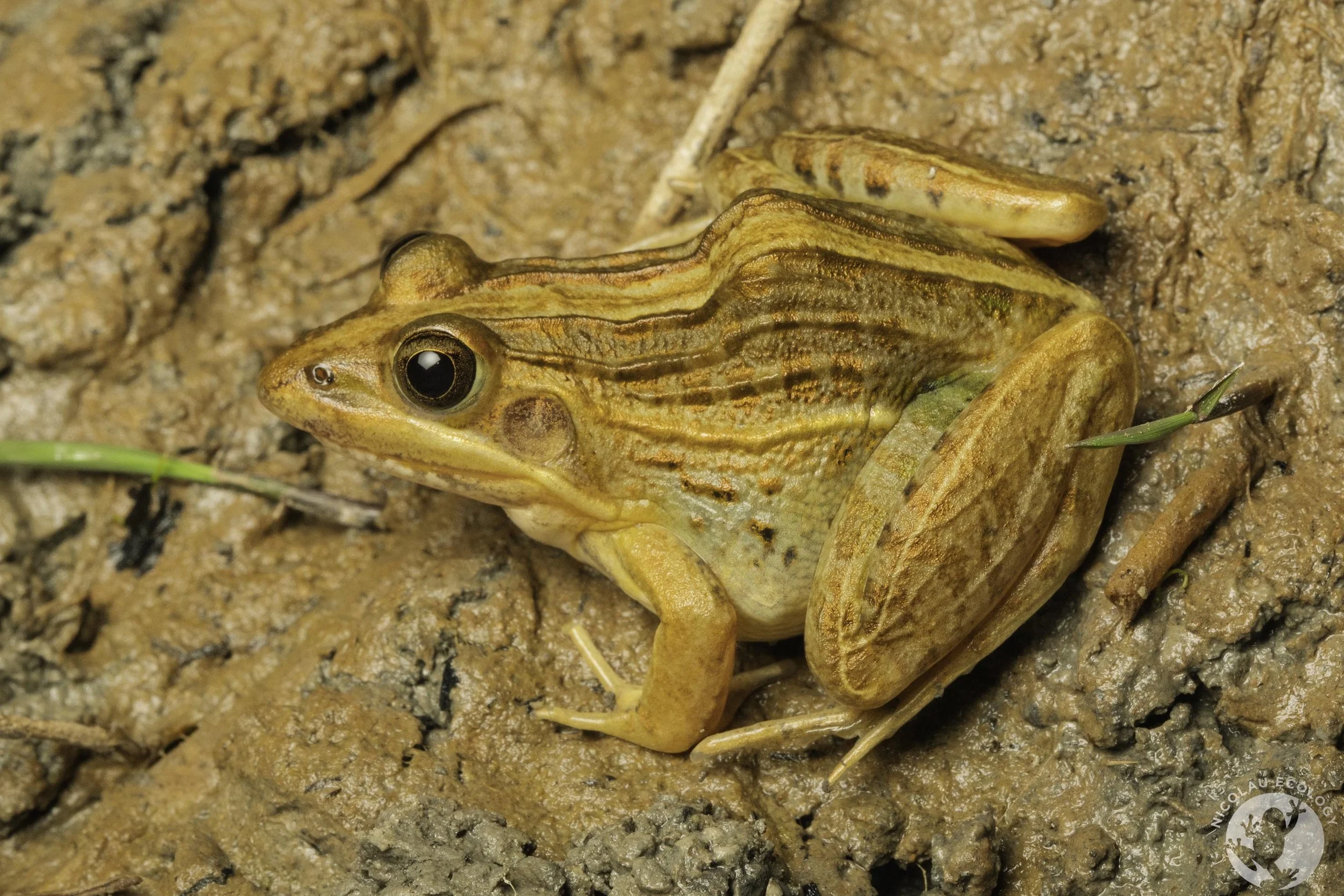
Denial is a river in Egypt
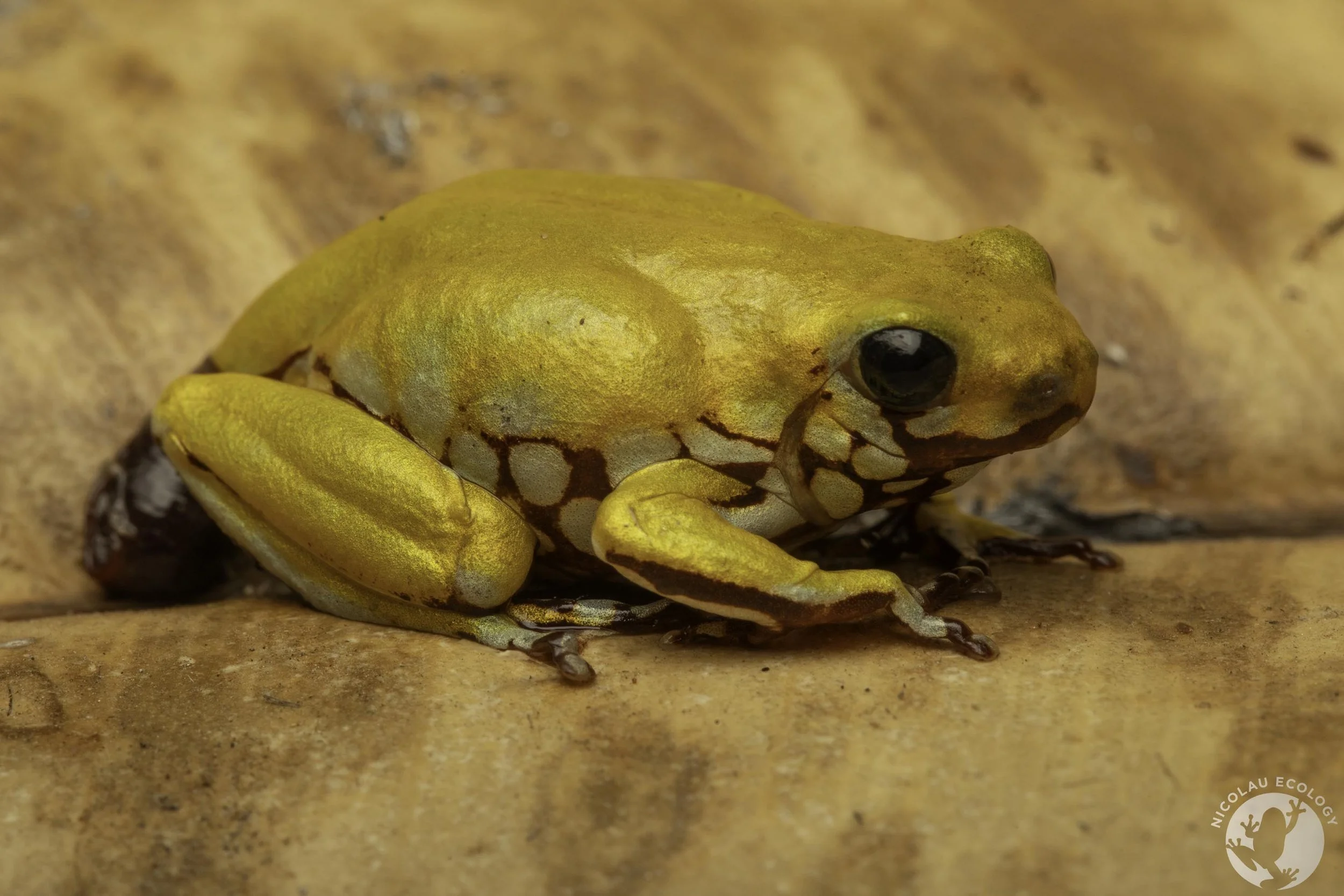
Froglets everywhere!
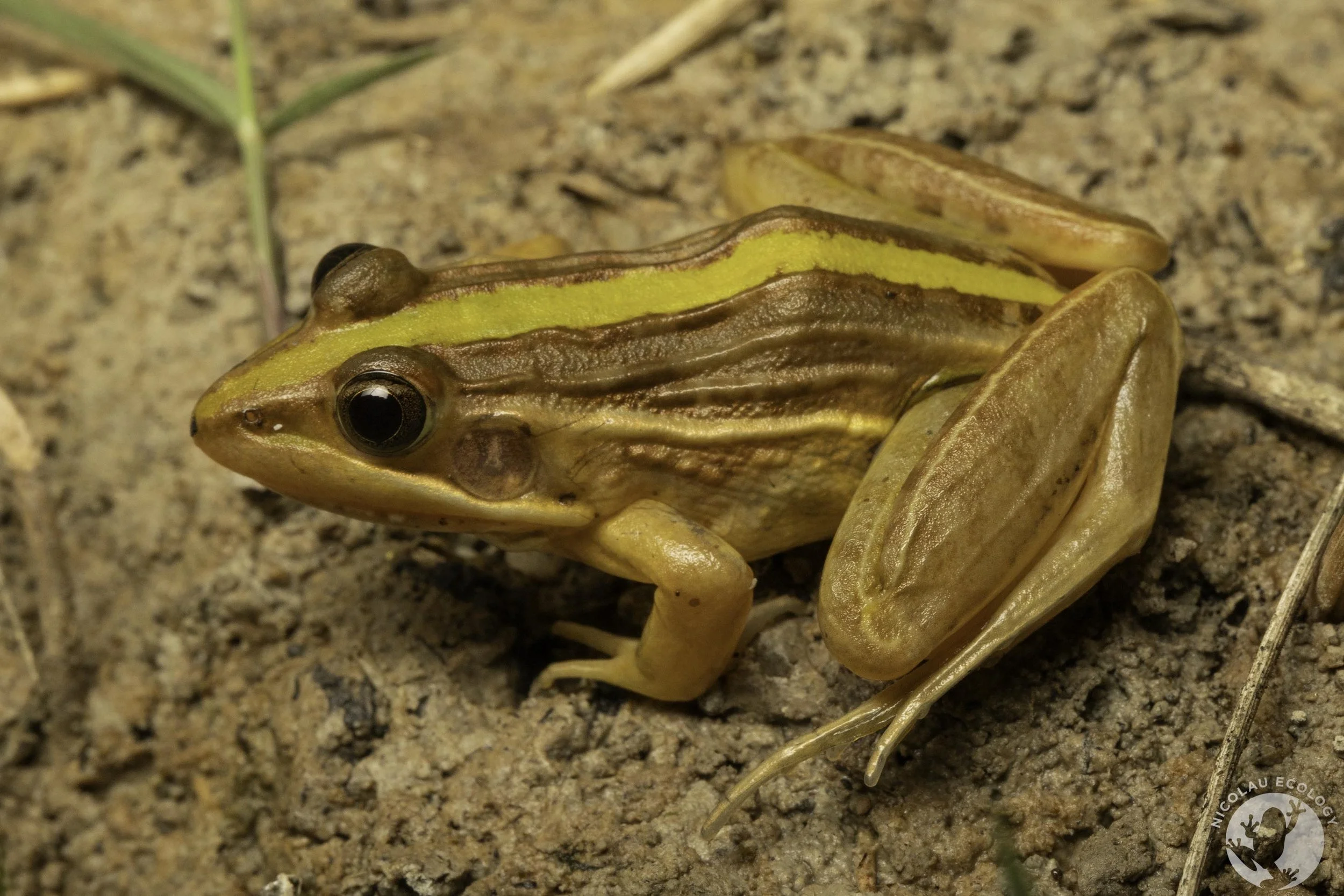
The Nile Grass Frog is a common sight along the Kafue River
The day began with bird counts and setting out bat detectors. We then visited a beautiful hill behind the accommodation. It had extensive rocks and deep leaf litter and once again looked extremely promising. It was not. I found a single Panaspis in the leaf litter beside a rock, but otherwise the hill was quiet. After repeatedly searching habitats that looked so pretty good, the lack of activity was genuinely surprising. That night, we went back into the Kafue floodplain. The amphibian community remained much the same, with the same two Hyperolius and Ptychadena. The best find was a large, brick-red adult Boaedon capensis, again active along the bank between the road and floodplain, in very similar conditions and habitat in which we had found the juvenile a few nights earlier.
I spent part of the day searching and raking through leaf litter, but once again found nothing. It was another deeply unproductive herping session. Slow field days can be frustrating, but they also provide time to properly document the animals already encountered.
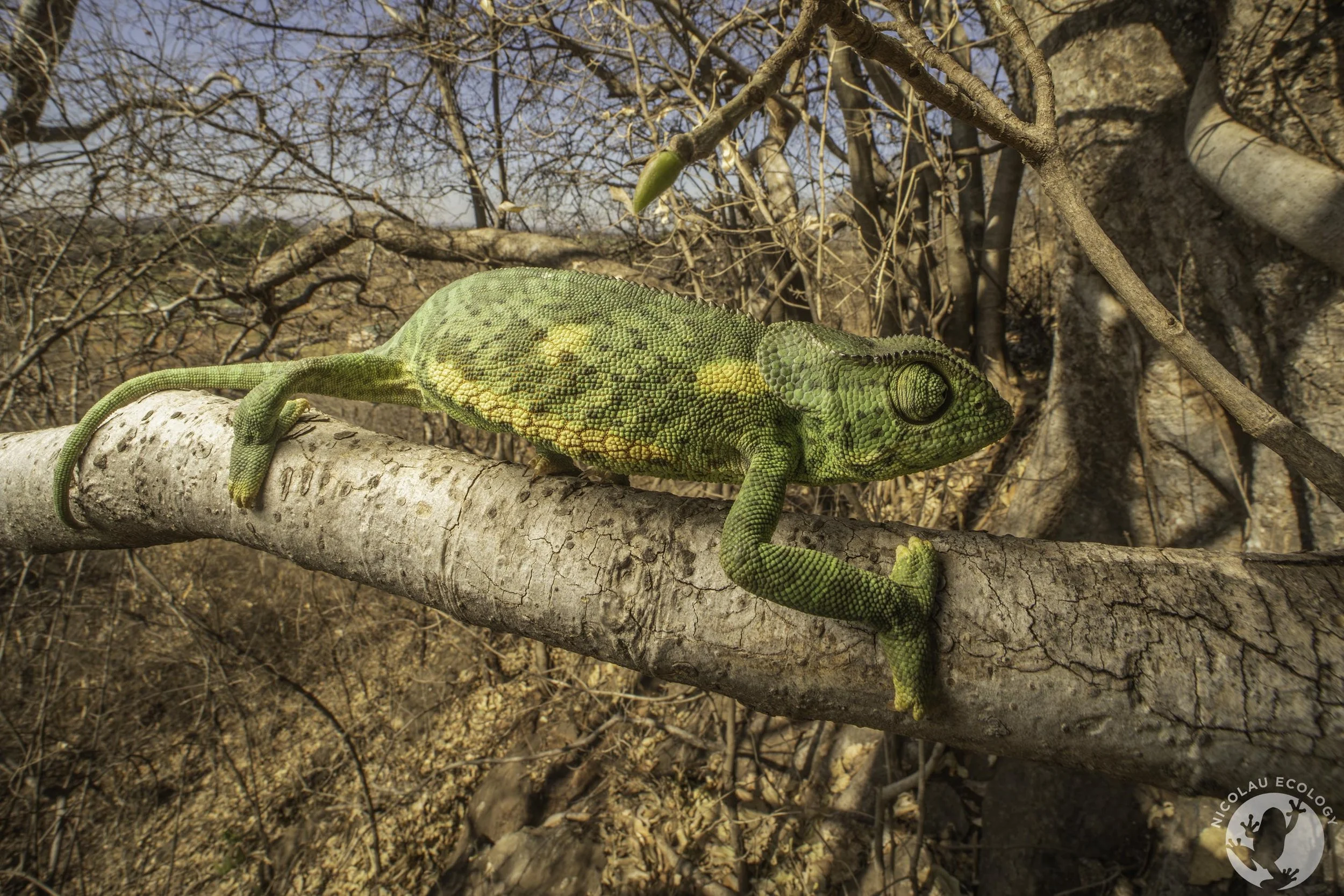
The following days and nights were all much the same; we did end up coming across a monstrous Chamaeleo dilepis, which was the final addition to the species list and the end of the first episode on the Southern African Herpetofauna Project, where I will be documenting my travels and attempts to find, photograph, and document the diversity of reptiles and amphibians within the sub-continent. I hope you have all enjoyed the Kafue Floodplain expedition… stay tuned for upcoming expeditions from the Drakensberg in KwaZulu-Natal and Coega in the Eastern Cape in South Africa.
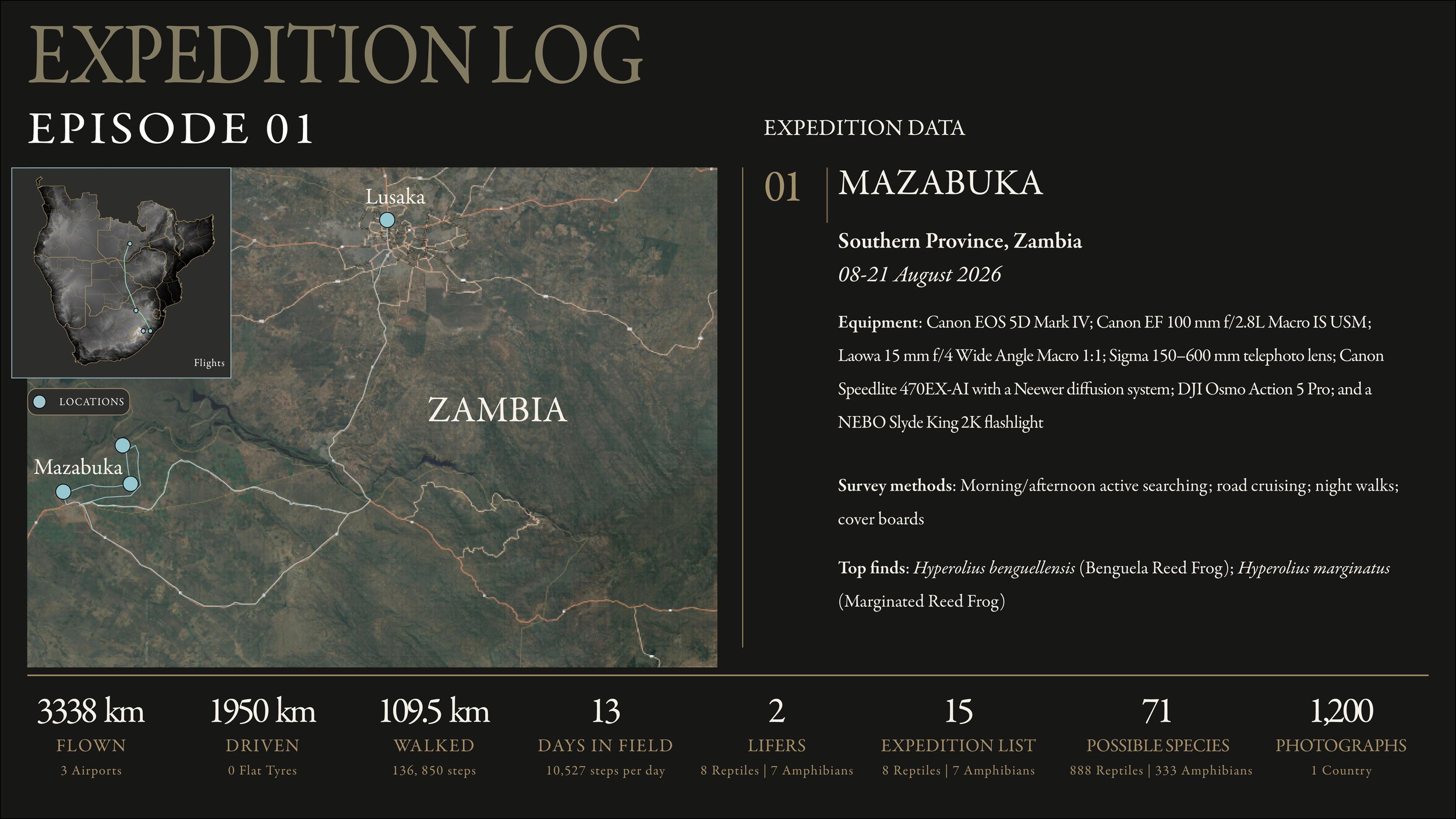
The expedition log displays some of the essential and interesting stats across the expedition’s episodes.
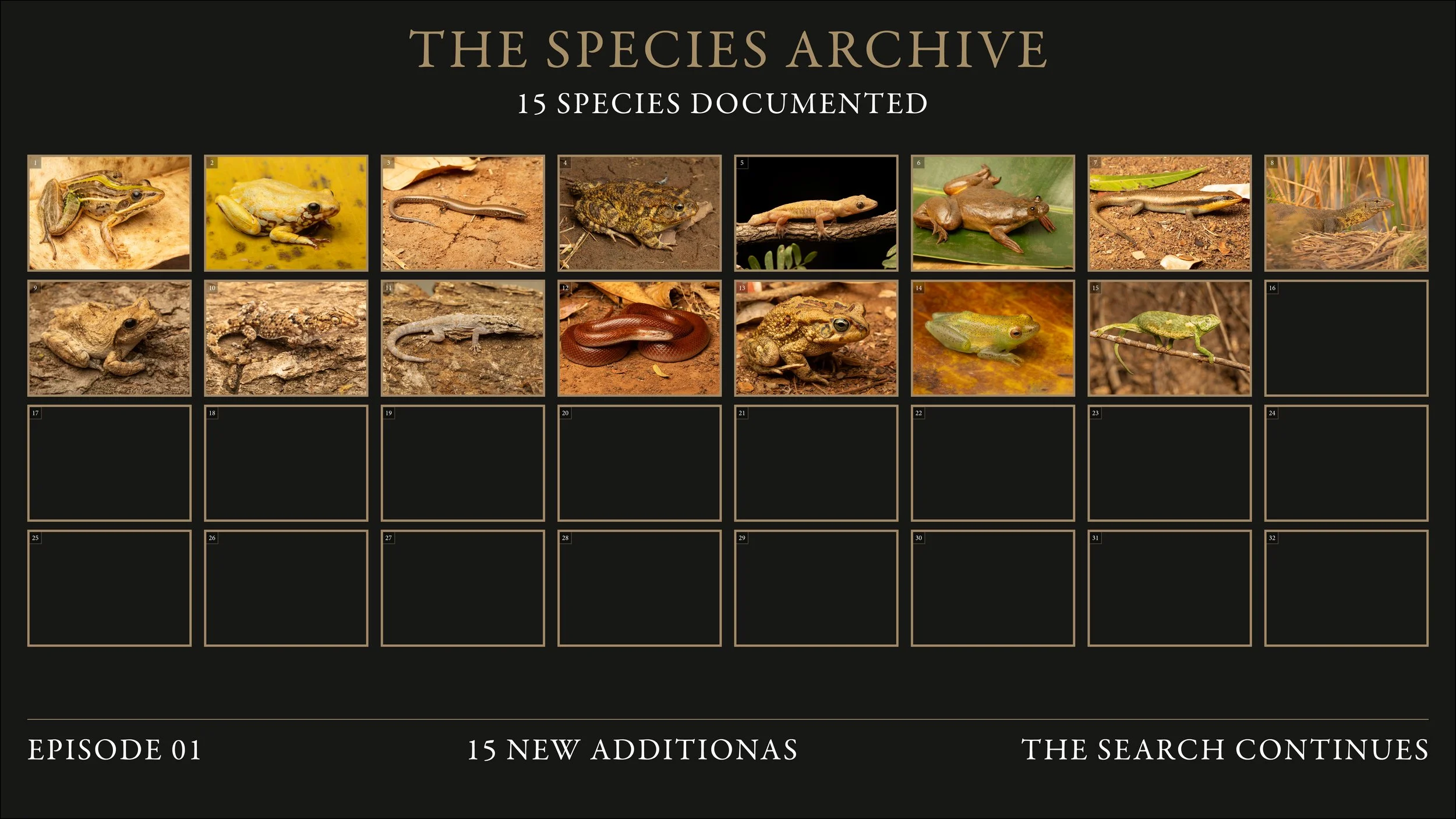
The species archive will be a common site across the SAHP. This will illustrate the total number of species encountered over the course of the project from Day 1, which, as of the launch of Episode 1, was my arrival in Lusaka. The project has officially started, and we are on 15 species of herps encountered out of 1176 species for Southern Africa.
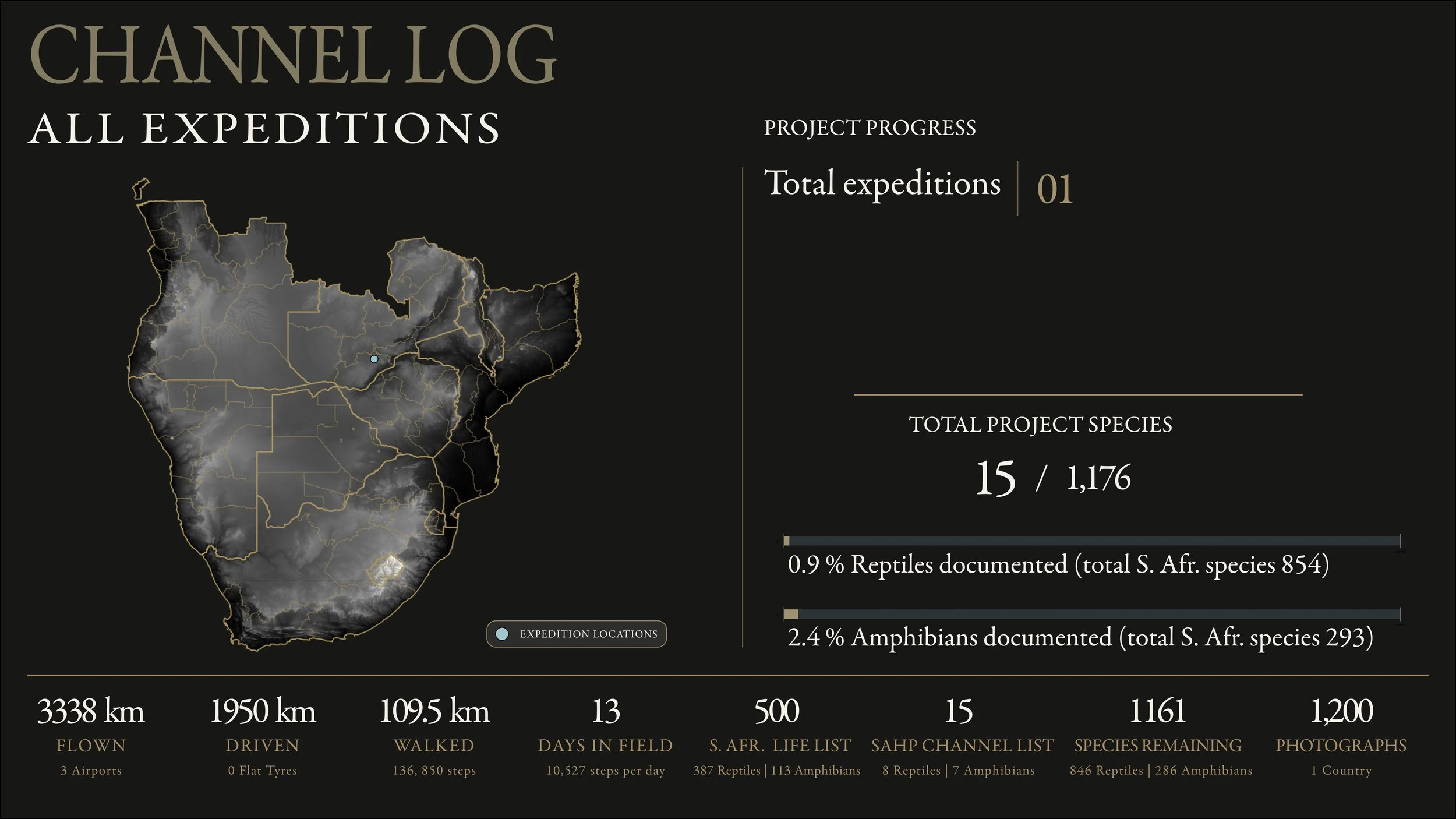
The channel log displays the stats across the duration of the SAHP, from episode 1 until the end of the project.