Project Data

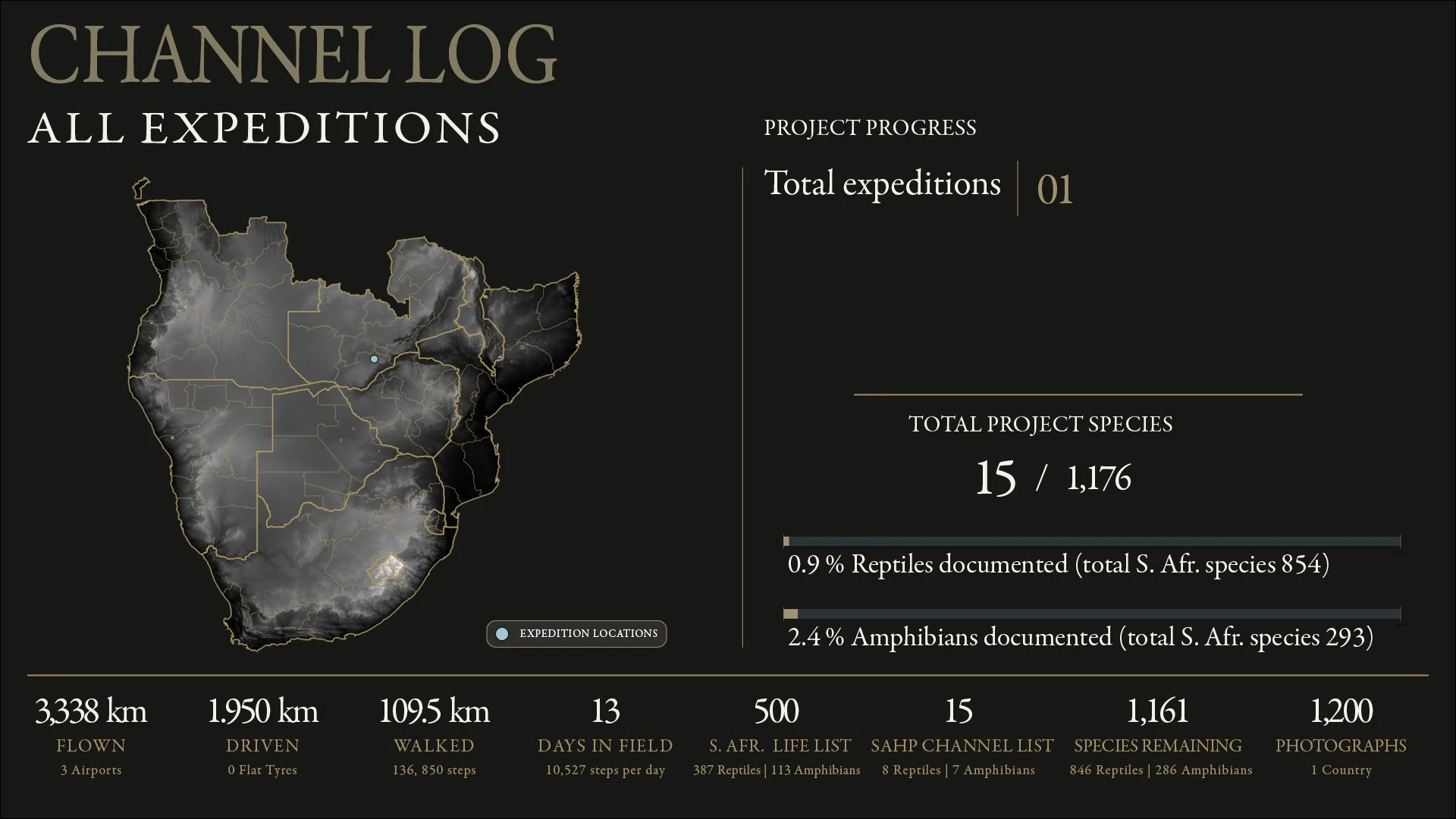
Tracking Southern Africa's Herpetofauna

The Southern African Herpetofauna Project is more than a series of expeditions—it's an ongoing effort to document the reptiles and amphibians of Southern Africa through field observations, photography, filmmaking and scientific research.

This page provides a live overview of the project's progress, documenting how the dataset grows with every expedition.

Project Progress

This should be the first thing visitors see.

Overall Progress

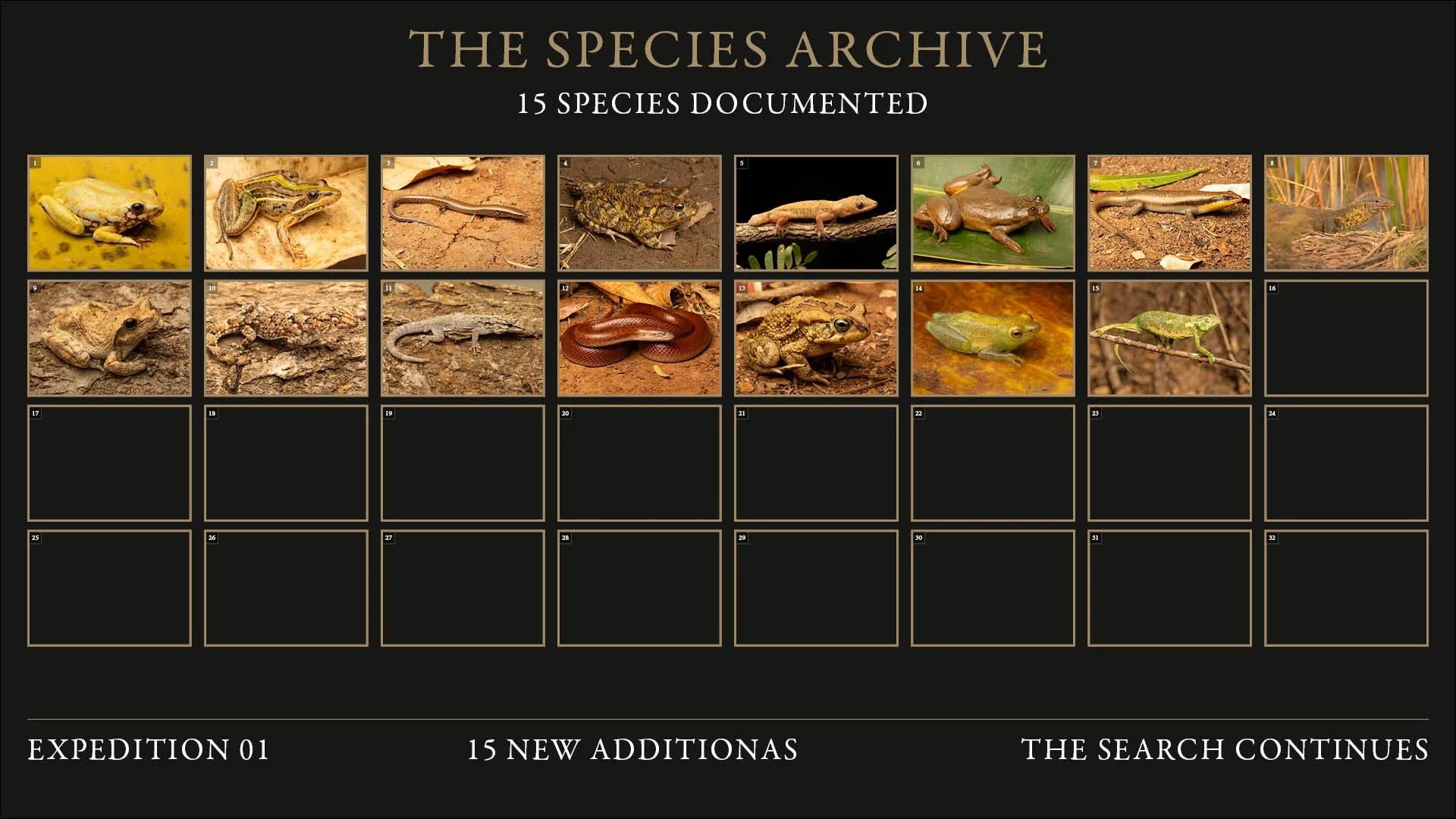
Species Documented

████████████░░░░░░

245 / 615 species
39.8%

Break it down further:

CategoryProgressTotal Species Observed245Reptiles198Amphibians47Species Photographed220Species Filmed176Species Yet to Find370

Expedition Statistics

StatisticValueExpeditions Completed12Days in the Field86Hours Herping412Kilometres Travelled18,640 kmNight Surveys53Day Surveys74Road Cruising Hours121Mountain Hikes17

Species Statistics

Visual graphs work well here.

Reptiles

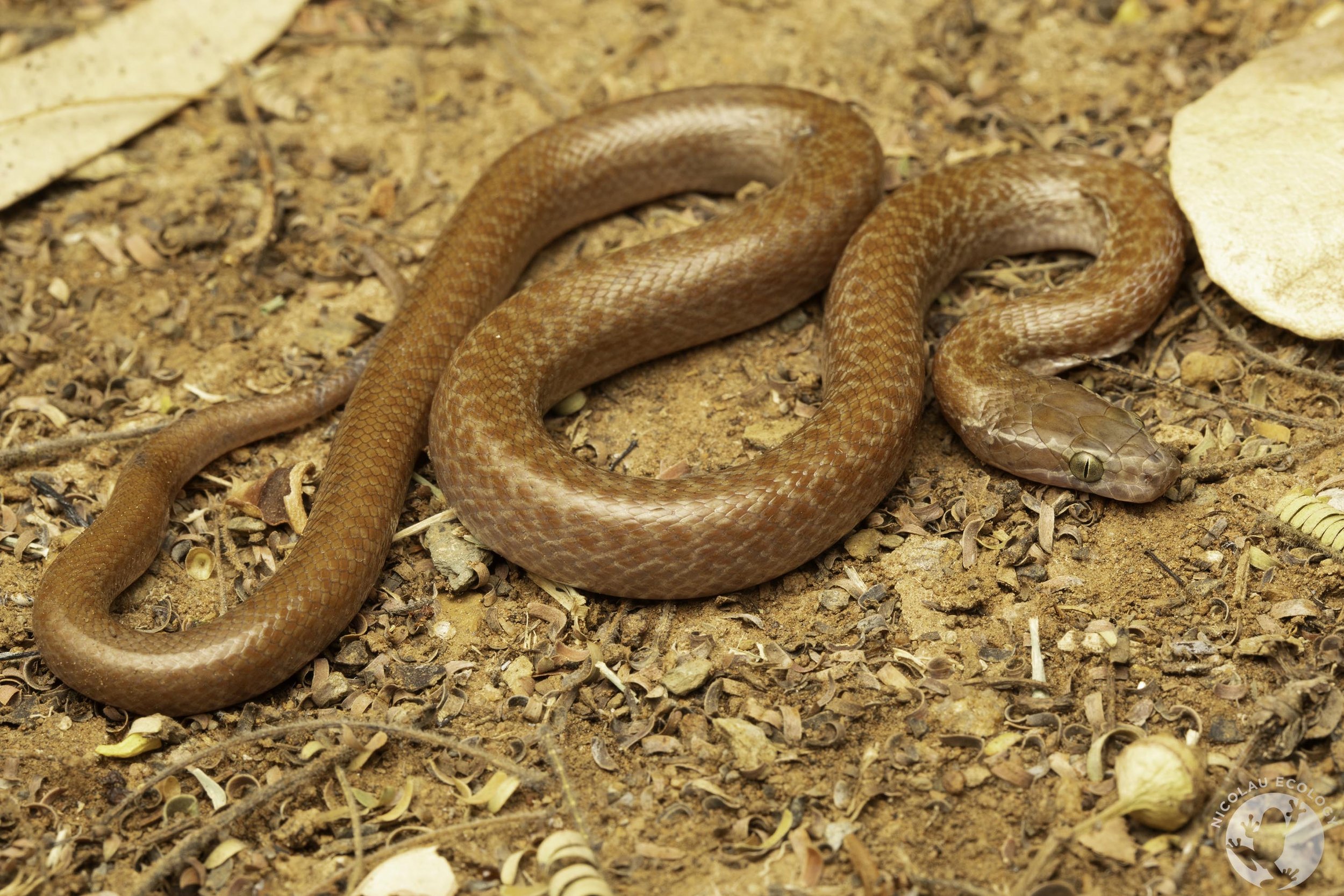
Snakes

Lizards

Tortoises

Terrapins

Crocodiles

Amphibians

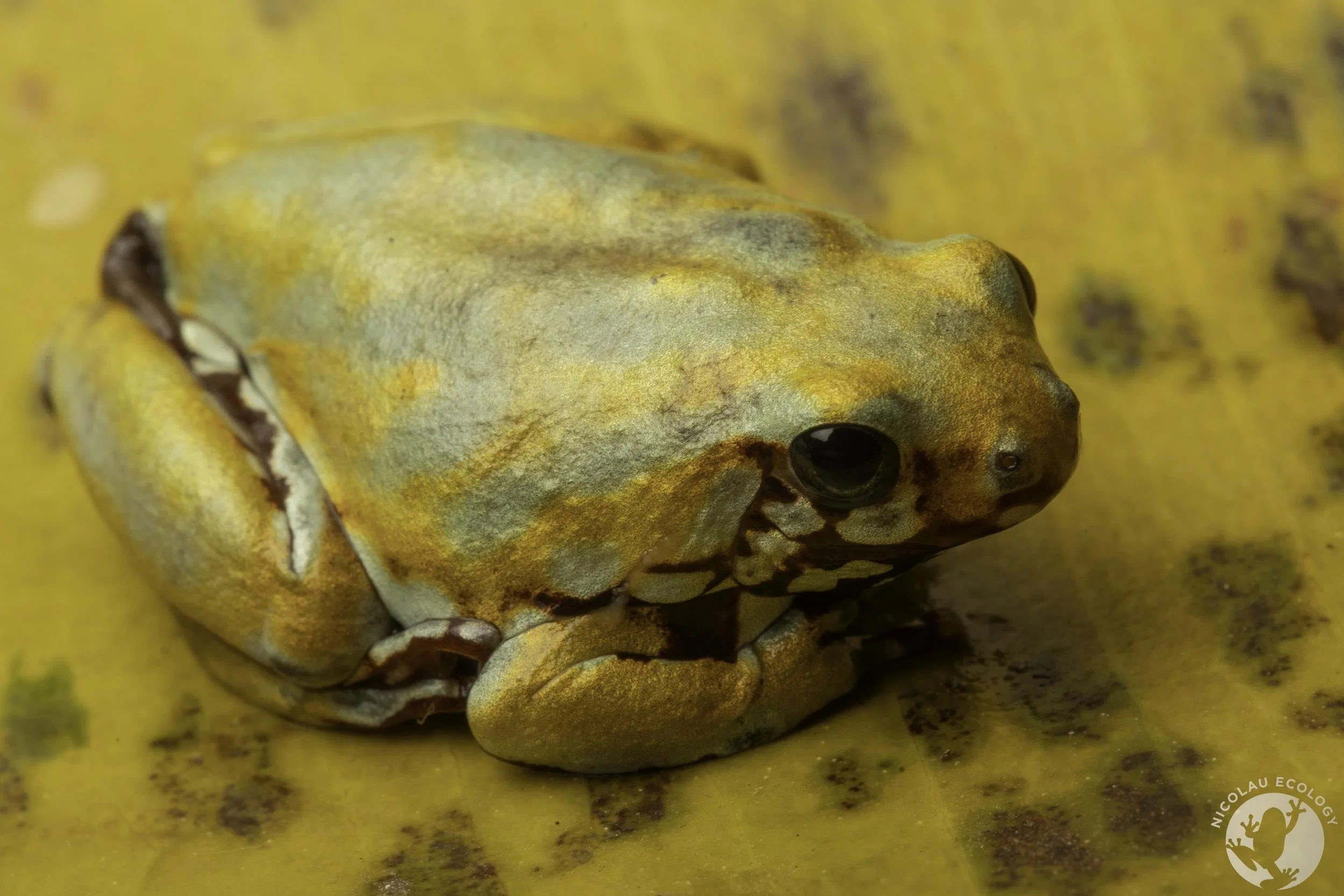
Frogs

Caecilians (if ever encountered)

Observation Statistics

This could be really interesting.

MetricValueTotal Individuals Observed4,325Total Species Recorded245Average Species per Expedition31Highest Species Count67Lowest Species Count9

Photography Statistics

MetricValueWildlife Photographs Taken58,000Keeper Images8,400Species Photographed220Macro Images6,100Habitat Images2,300

Filmmaking Statistics

MetricValueDocumentary Episodes14Hours of Footage540Drone Flights68Interviews Recorded22

Biodiversity Records

Highlight milestones:

  • First species photographed

  • 100th species

  • 200th species

  • 300th species

  • First country outside South Africa

  • First endemic species

  • First threatened species

Distribution Data

Interactive maps showing:

  • All expedition routes

  • Species observation points (generalised if needed to protect sensitive species)

  • Countries visited

  • Protected areas surveyed

Habitat Coverage

A map or chart showing habitats sampled.

Examples:

  • Grassland

  • Savanna

  • Forest

  • Desert

  • Karoo

  • Fynbos

  • Wetlands

  • Coastal Forest

  • Mountains

Visitors can see where you've spent the most effort and where future expeditions are planned.

Life List

A searchable database with columns like:

SpeciesSeenPhotographedFilmedExpeditionLast Seen

You could also add icons:

👀 Seen

📸 Photographed

🎥 Filmed

🎙️ Audio Recorded

🧬 Tissue Sample (research)

Annual Statistics

Track the project's growth year by year.

YearExpeditionsSpecies AddedTotal Species202681121122027115817020281042212

This gives visitors a sense of momentum.

Research Contributions

This is where your project becomes unique compared to other wildlife channels.

Include:

  • Distribution records submitted

  • Museum specimens collected (where appropriate)

  • Tissue samples collected

  • Peer-reviewed papers resulting from expeditions

  • New species described

  • Conservation projects supported

  • Citizen science observations contributed (e.g., iNaturalist)

Environmental Conditions

For the data enthusiasts:

  • Rainfall during expeditions

  • Temperature ranges

  • Moon phase

  • Elevation surveyed

  • Total hours after sunset

  • Total kilometres walked

  • Average nightly survey duration

Equipment Usage

Track your field effort.

ItemUsageCamera Shutter Count425,000Flash Fires198,000Drone Flights68Batteries Charged1,250

People love behind-the-scenes numbers.

Conservation Impact

Show tangible outcomes:

  • New protected-area records

  • Species rediscoveries

  • Roadkill records documented

  • Habitat threats reported

  • Educational presentations

  • Community outreach events

My favourite addition: the Project Dashboard

At the top of the page, include a clean dashboard with key metrics:

🦎 Reptiles🐸 Amphibians📸 Photos🎥 Films1984758,21414

🚙 Distance🌍 Countries⛰️ Expeditions🕒 Hours in Field18,640 km512412

One suggestion

Since you're a scientist, distinguish between lifetime statistics and project statistics. For example:

  • Project Statistics: Only observations made since the Southern African Herpetofauna Project began.

  • Lifetime Statistics: Everything you've documented throughout your career.

That distinction lets people follow the project's progress from day one while still appreciating the depth of your lifetime field experience. It also gives you flexibility to display both without confusing your audience.