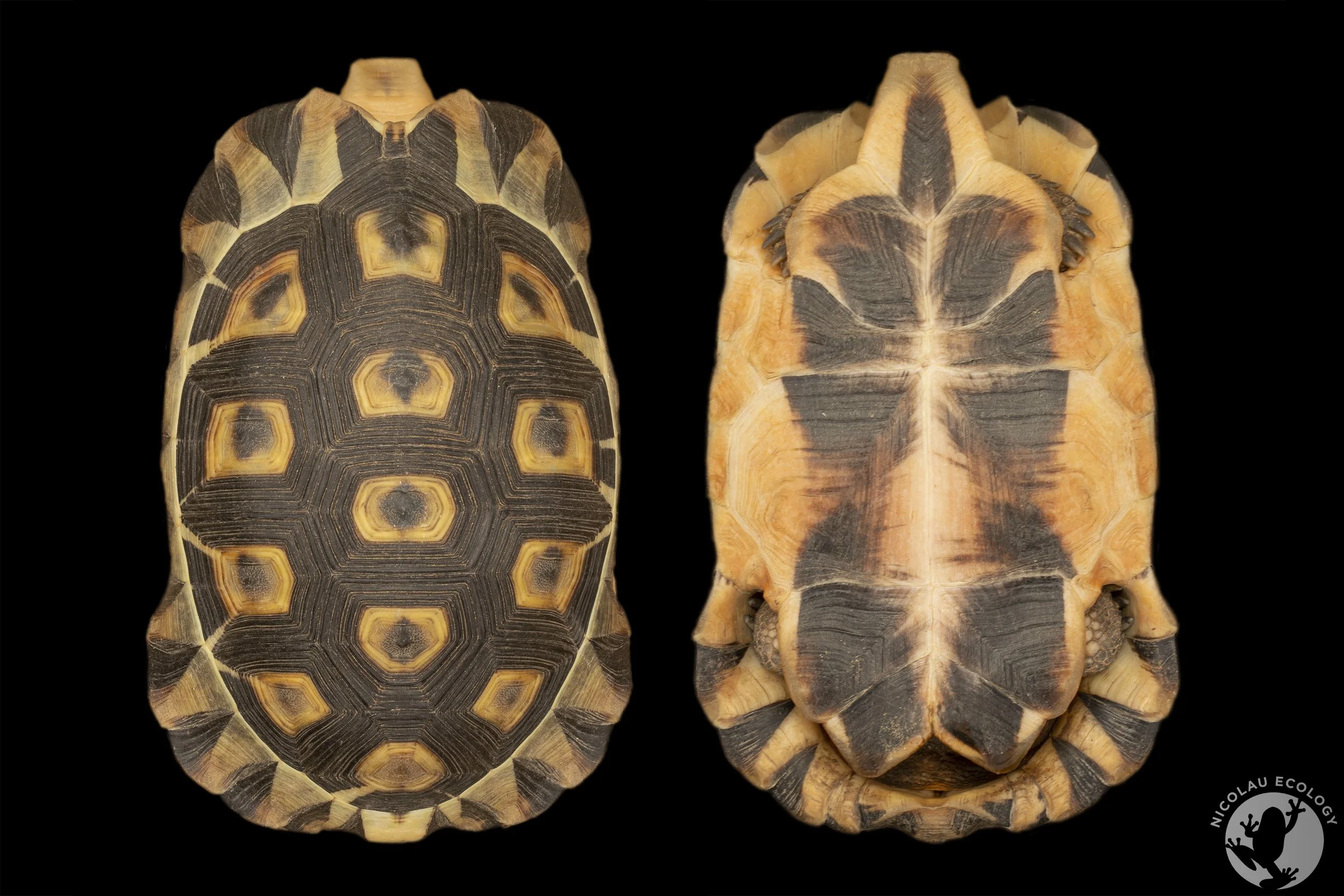
Chersina agnulata
Angulate Tortoise
Chersina angulata — Angulate Tortoise
Baviaanskloof | Eastern Cape | South Africa
OVERVIEW
Chersina angulata inhabits a range of dry coastal and inland habitats, including fynbos, renosterveld, succulent shrubland, thicket, strandveld, and semi-arid scrub. It is a terrestrial species usually associated with open vegetation and sandy or well-drained soils, where it shelters beneath bushes, among leaf litter, or in shallow scrapes. It is most active during mild or wet conditions and feeds mainly on low-growing vegetation, flowers, and seasonal plant material.
Key Features
Small- to medium-sized tortoise with a high-domed, oval carapace.
Distinctive single, enlarged gular scute projecting beneath the neck (unique among southern African tortoises).
Carapace highly variable in colour, ranging from yellowish-brown to dark brown or black, often with contrasting growth rings.
Plastron yellow to cream, sometimes with dark markings.
Forelimbs covered with large, overlapping scales adapted for digging and protection.
Males typically have a longer, thicker tail and a more pronounced gular scute than females.
Adults possess a strongly serrated rear edge to the carapace, particularly in older individuals.
Endemic to the south-western parts of South Africa.
HABITAT
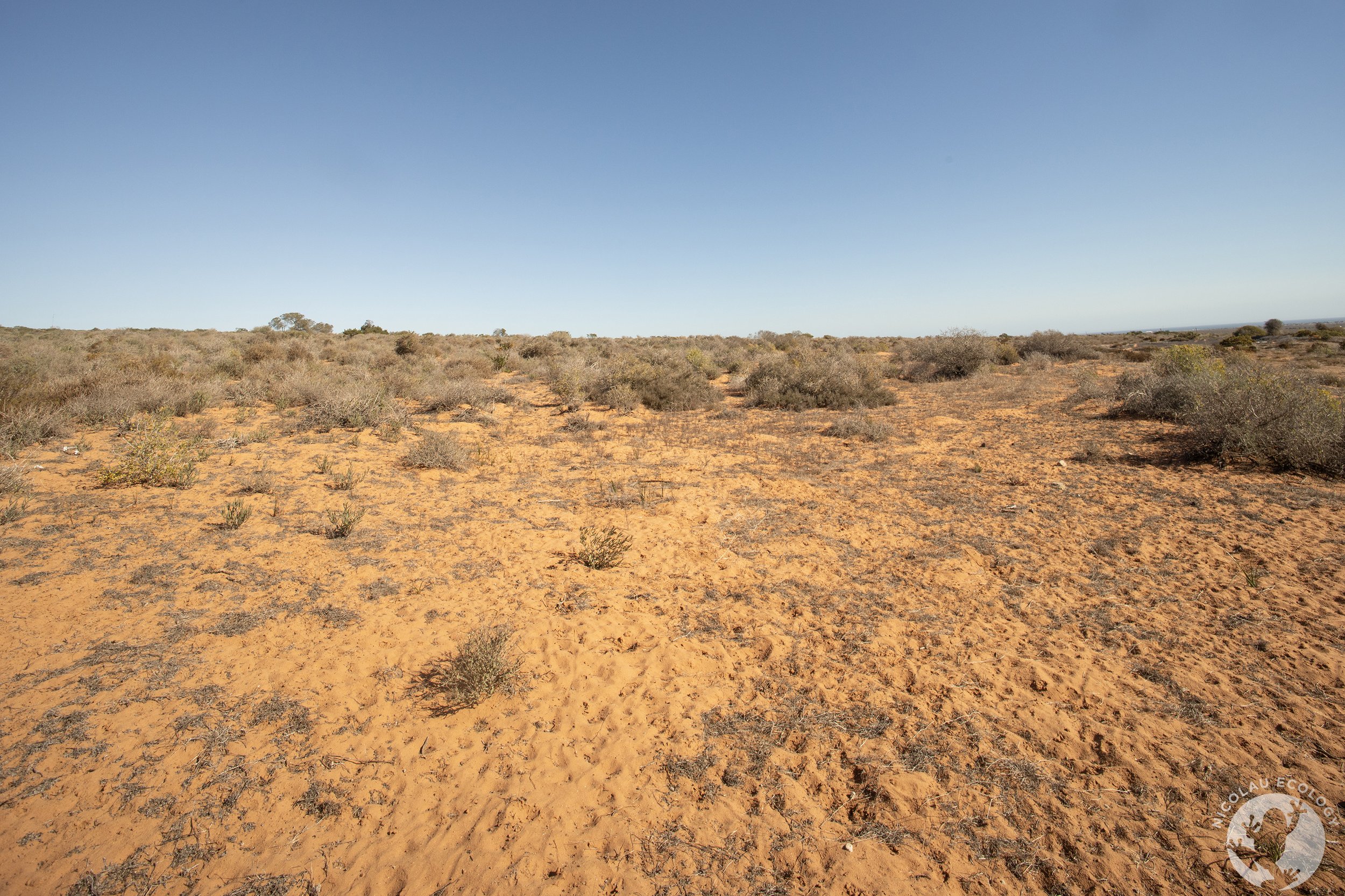
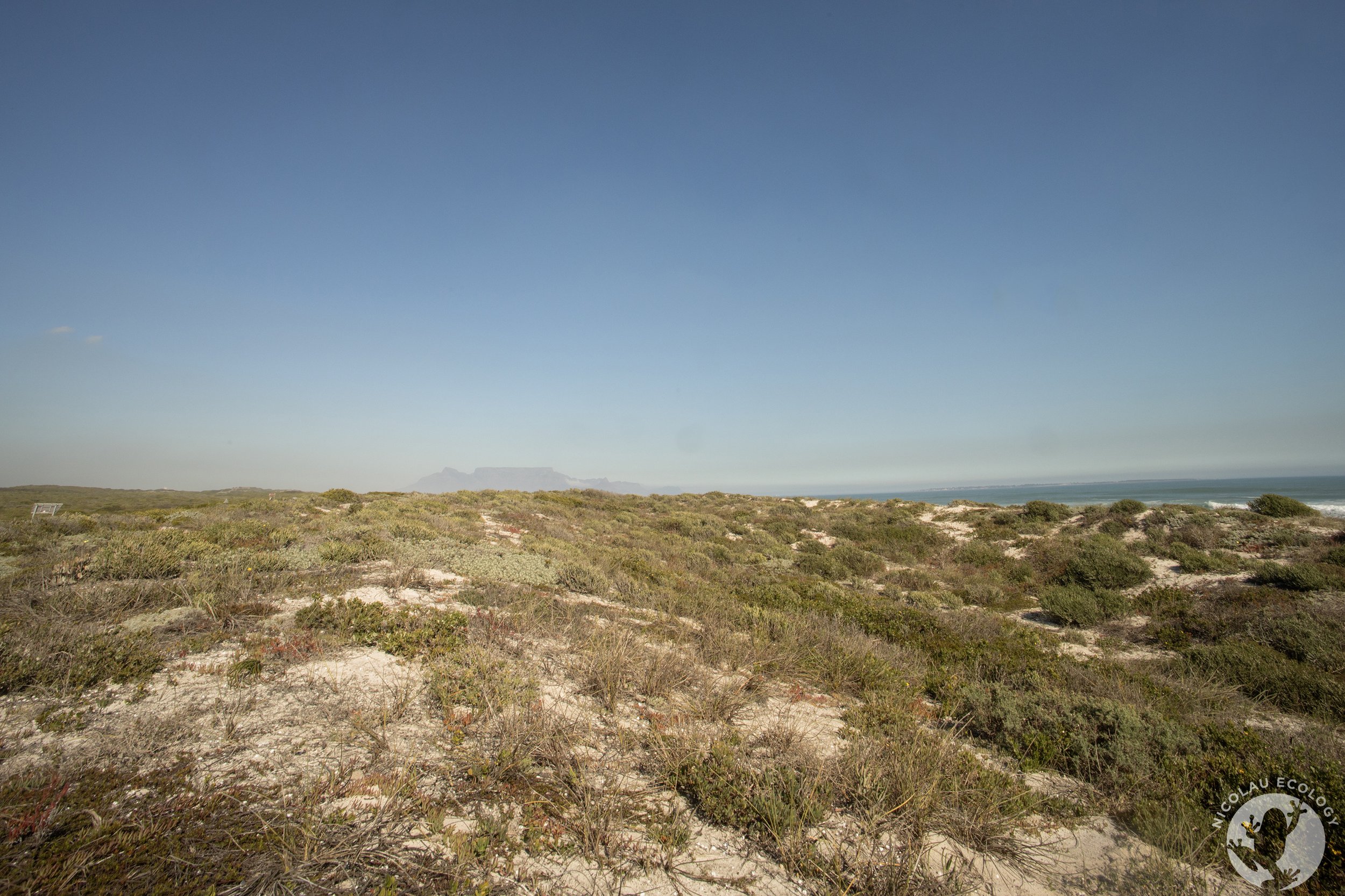
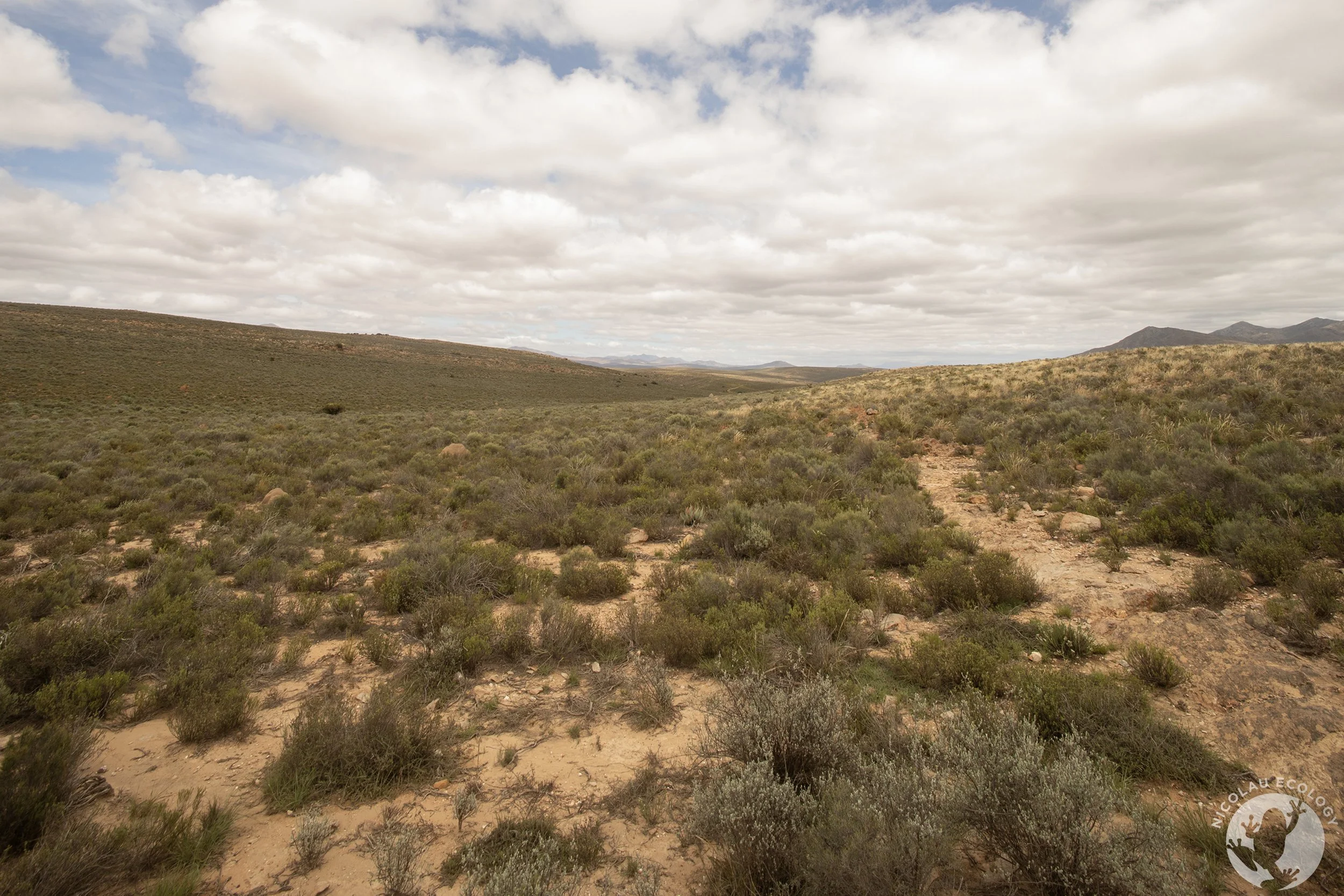
Chersina angulata occupies a wide variety of terrestrial habitats across the winter-rainfall region of southern Africa, including fynbos, renosterveld, succulent karoo, strandveld, coastal dune systems, Albany thicket, and semi-arid shrubland. It is most commonly found in areas with well-drained sandy or loamy soils, sparse to moderately dense vegetation, and an abundance of shrubs that provide shade and shelter. The species also occurs in modified habitats such as grazing lands and agricultural areas where suitable natural vegetation remains. Individuals typically shelter beneath bushes, in dense vegetation, or within shallow scrapes during periods of extreme heat, becoming most active during cooler weather and following rainfall.
GALLARY
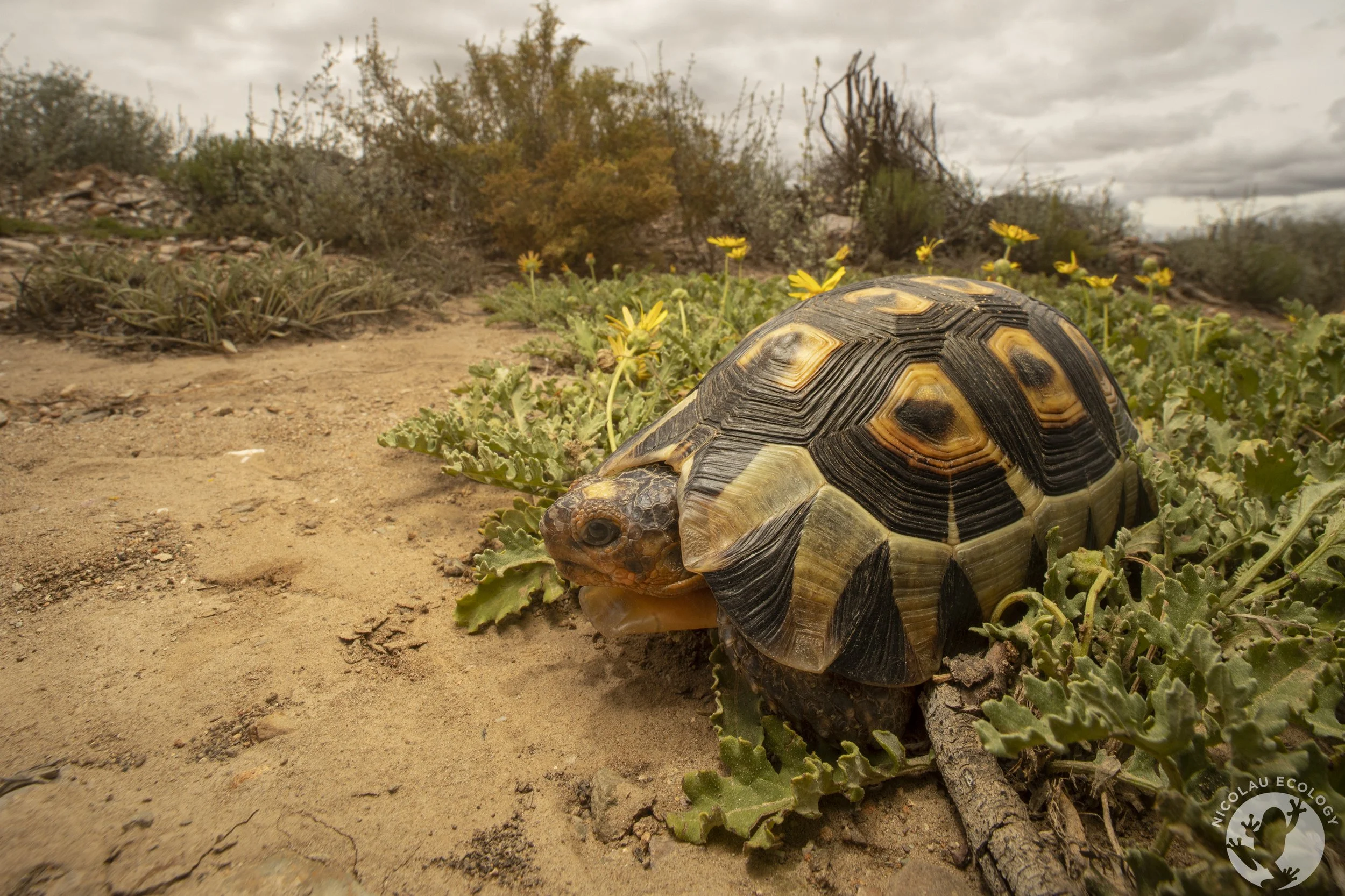
Chersina angulata — Angulate Tortoise
Baviaanskloof | Eastern Cape | South Africa
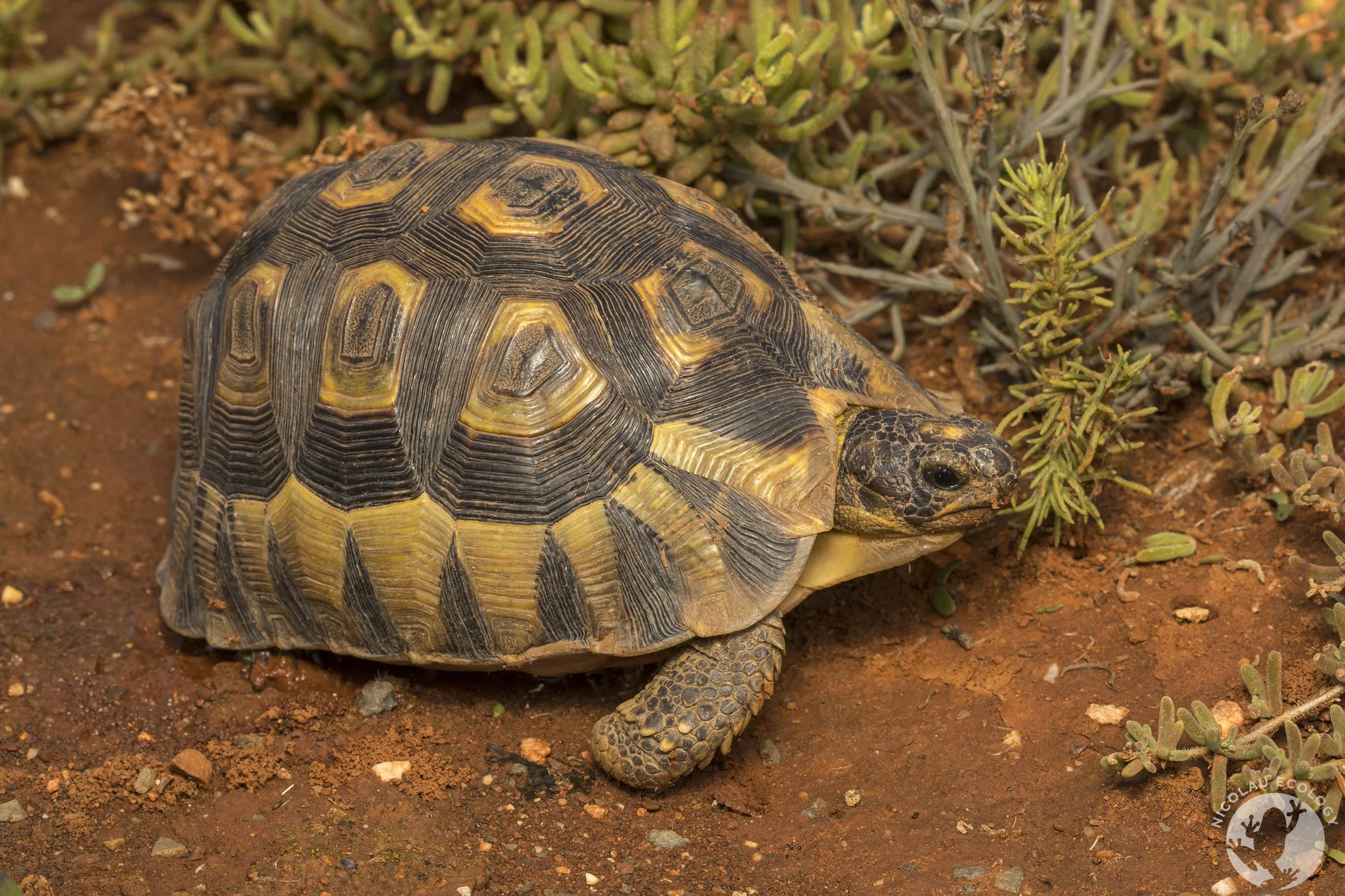
Chersina angulata — Angulate Tortoise
De Hoop | Western Cape | South Africa
MORPHOLOGY
Morphology
Chersina angulata is a medium-sized tortoise, with adults reaching a carapace length of approximately 350 mm. The carapace is moderately to strongly domed and shows considerable variation in colour and pattern, ranging from pale straw-yellow or yellowish-brown to dark brown or black. The dorsal scutes often have darker centres and margins, producing a contrasting, angular pattern across the shell. The plastron is well developed, with the anterior gular region forming a single, undivided, forward-projecting gular scute. This protruding gular scute is one of the most distinctive diagnostic features of the species and is especially pronounced in adult males. Sexual dimorphism is evident, with males typically larger than females and possessing a longer gular projection, a longer and thicker tail, and a concave plastron. Females generally have a shorter gular projection, shorter tail, flatter plastron, and a more rounded, strongly domed shell. The limbs are robust and covered with large protective scales, while the head is relatively small with a slightly hooked upper jaw.