At the end of Part 1, we had just returned from another evening of frogging around our little home in the Kamberg Valley, where we were convinced that we could hear the calls of the Endangered Long-toed Tree Frog (Leptopelis xenodactylus). This was a species I had been hoping to find in the field for a very long time. Although I had previously encountered a froglet, an adult had somehow managed to evade me despite numerous attempts over the years. As it turned out, I wouldn't have to travel very far to finally find one.
Before that, however, I managed to track down another species that had been calling around us: the Mountain Caco (Cacosternum parvum). This was a lifer for me, although not one I had put nearly enough effort into finding previously. I had heard these little frogs calling on many occasions over the years but had never really taken the time to track one down. With the recent rain bringing everything out in force, I finally managed to add the species both to my life list and the Southern African Herpetofauna Project (SAHP).
Then came what was hands down one of the highlights of the entire expedition, and possibly my life. After spending so much time hoping to encounter an adult Long-toed Tree Frog, I finally managed to find Leptopelis xenodactylus, and amazingly, it was calling from our own garden. It is quite amusing, spending years looking for a particular species, only to eventually find it right outside your front door. Either way, I was stoked. This frog also represents the second Endangered amphibian occurring on the property. Our little patch of the Drakensberg is turning out to be quite an exciting place.
Unfortunately, just as the Berg was getting a lot of rain and things were looking up, I had to put the expedition on hold yet again. This time, Emily and I was heading off on a bit of a side quest to Sierra Leone in West Africa, where we would be conducting biodiversity surveys. It was a great opportunity to spend time in a different part of the continent, and I am looking forward to sharing some of the finds from that trip in future content. For now, however, it meant another interruption to our Kamberg expedition.
When returning to South Africa, I was keen to get straight back into the field. With the grasslands becoming increasingly active as the season changed, I headed out to search for some of the snakes that I had yet to document for the project. In particular, I was hoping to encounter a Berg Adder or perhaps a Rinkhals. Unfortunately, neither made an appearance. We were koined on two seperate occasian by Adriaan Jordaan and Alex Rebelo and then Tyrone Ping.
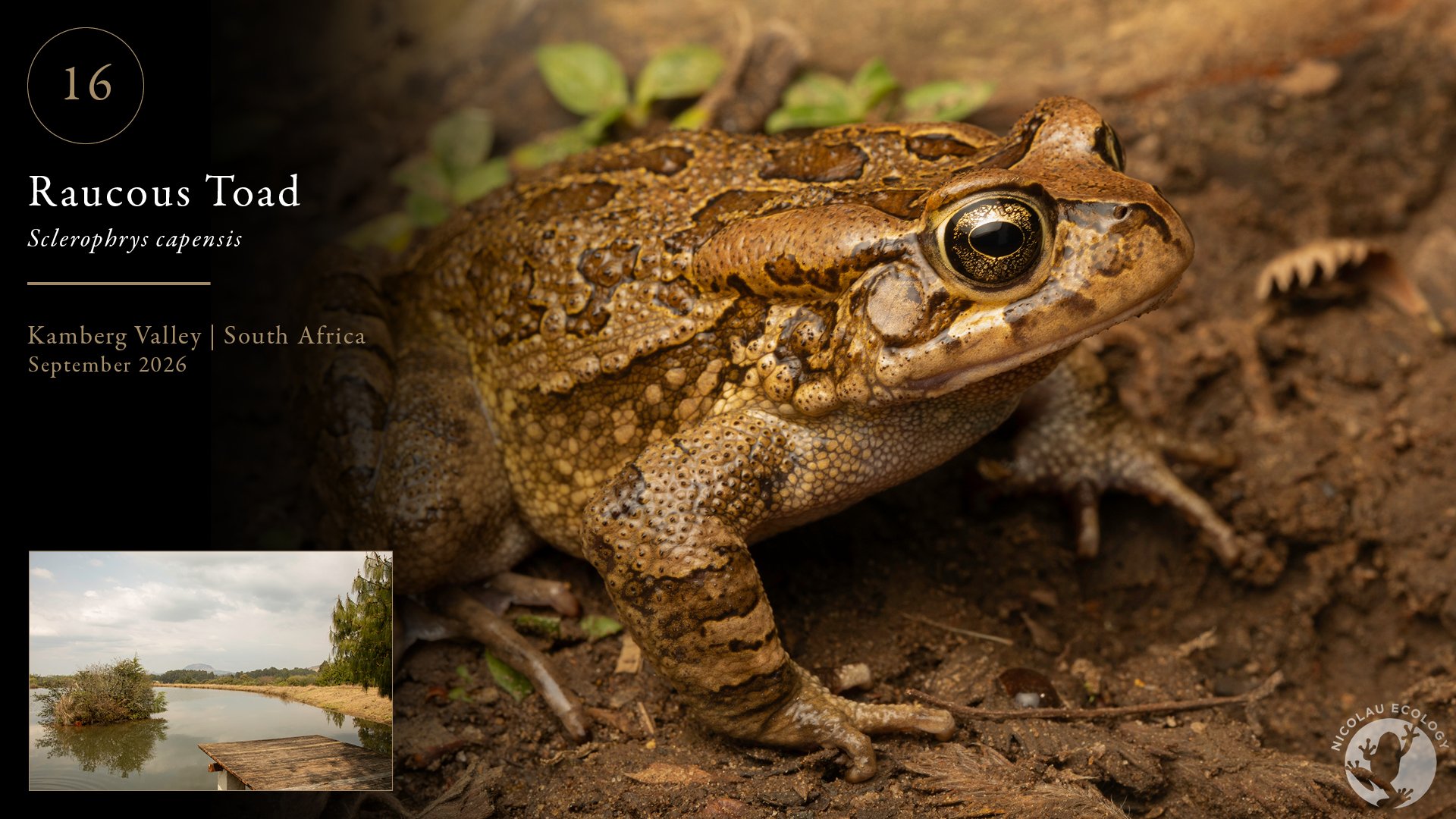
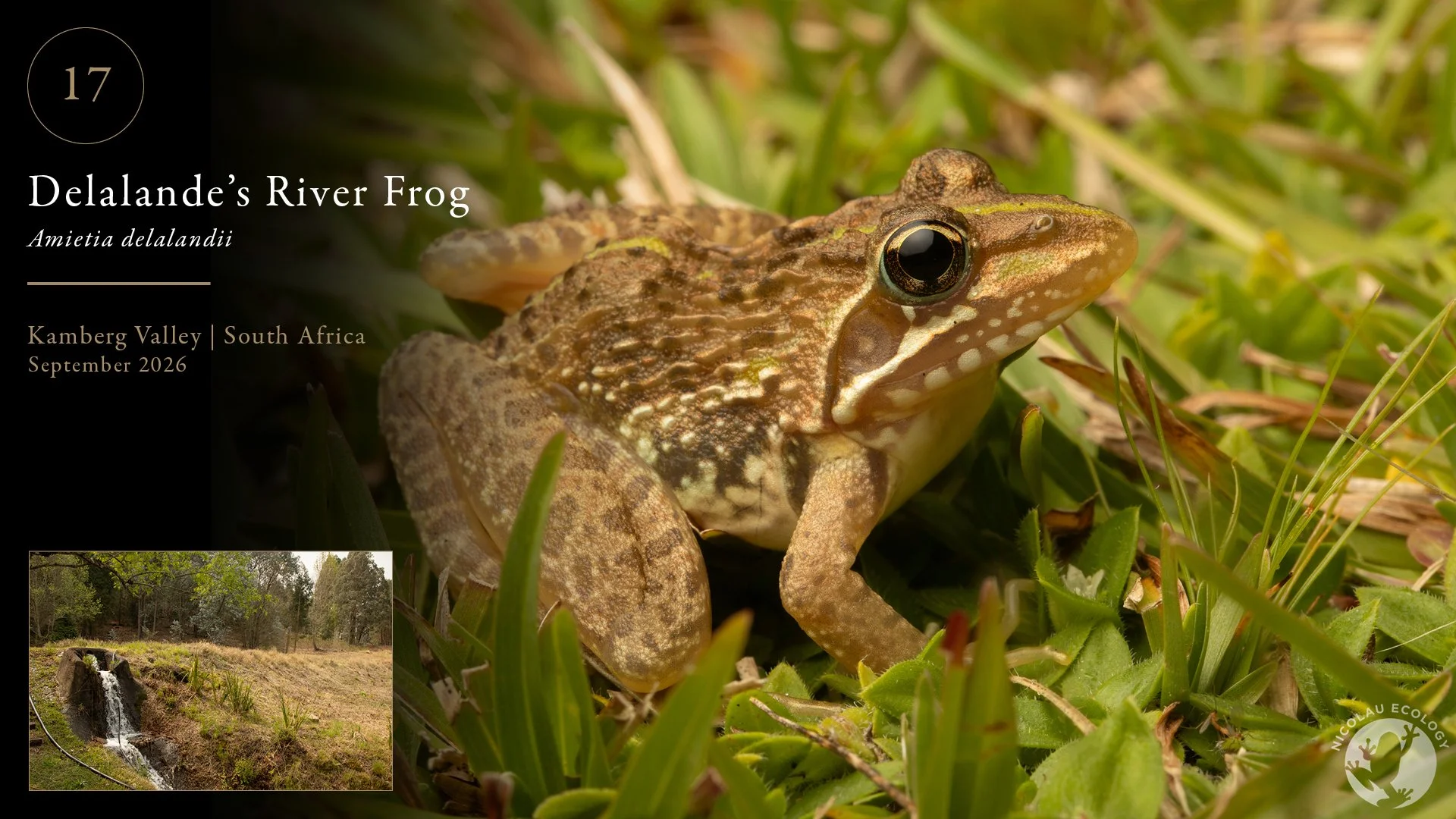
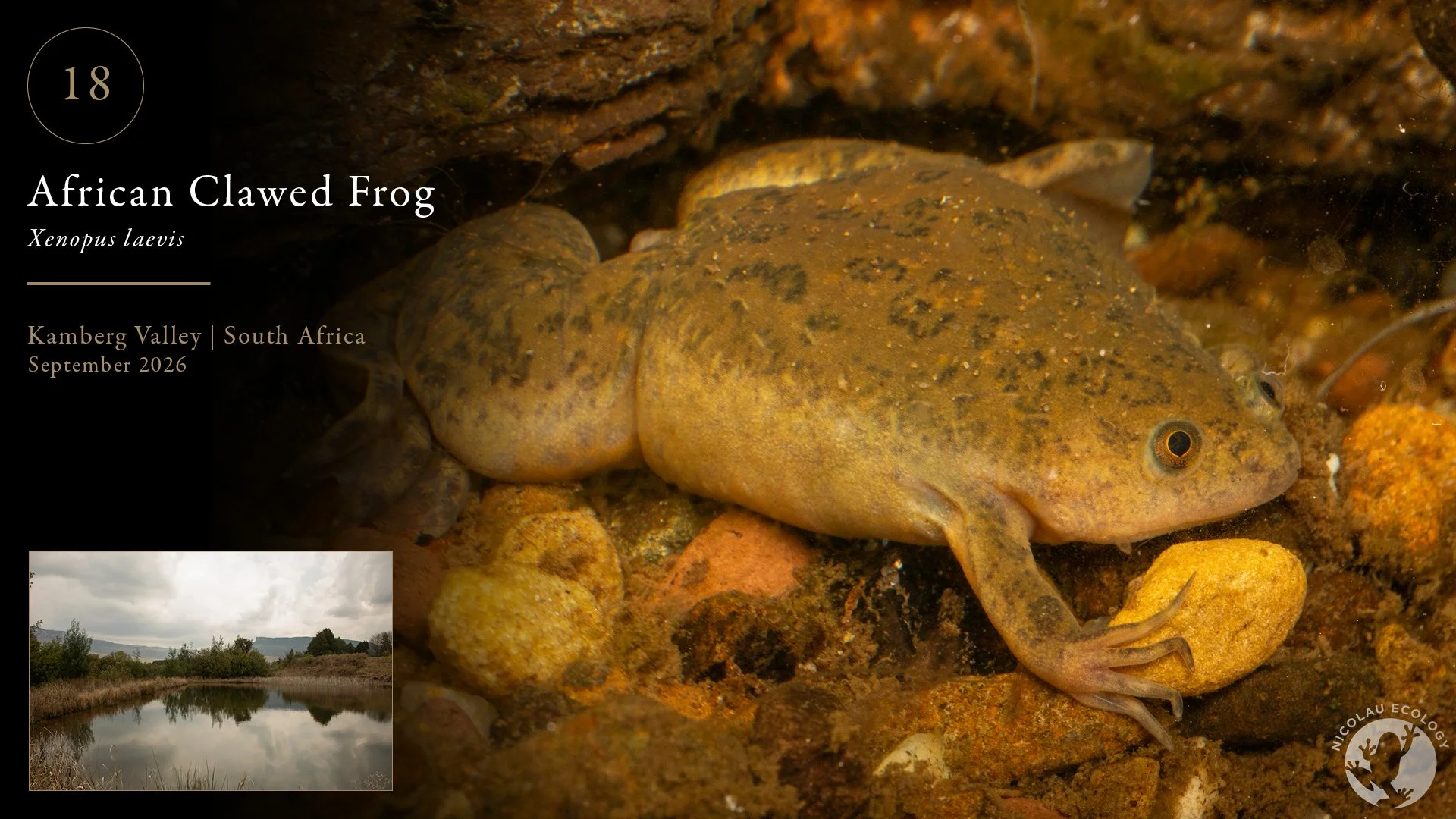
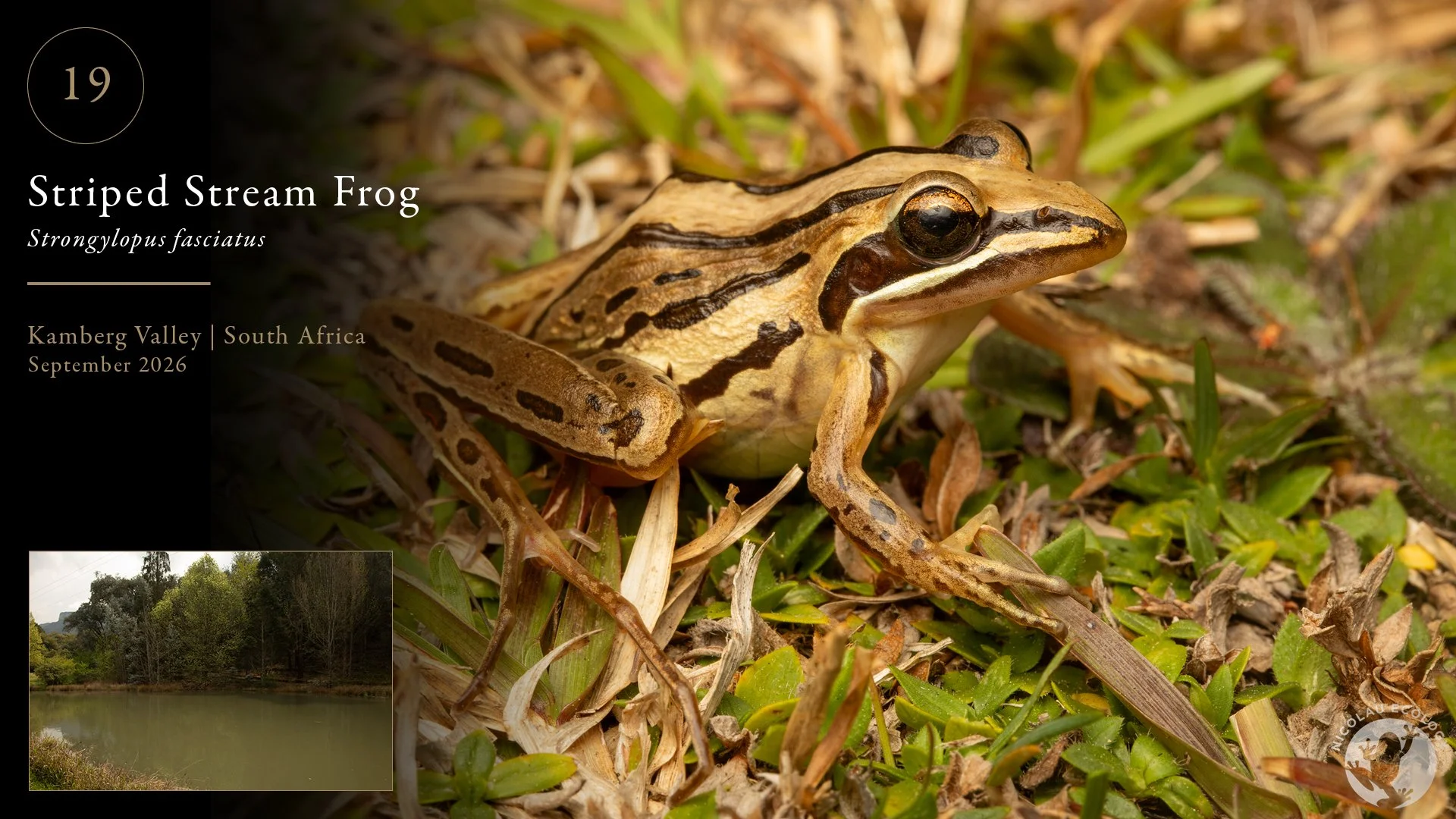
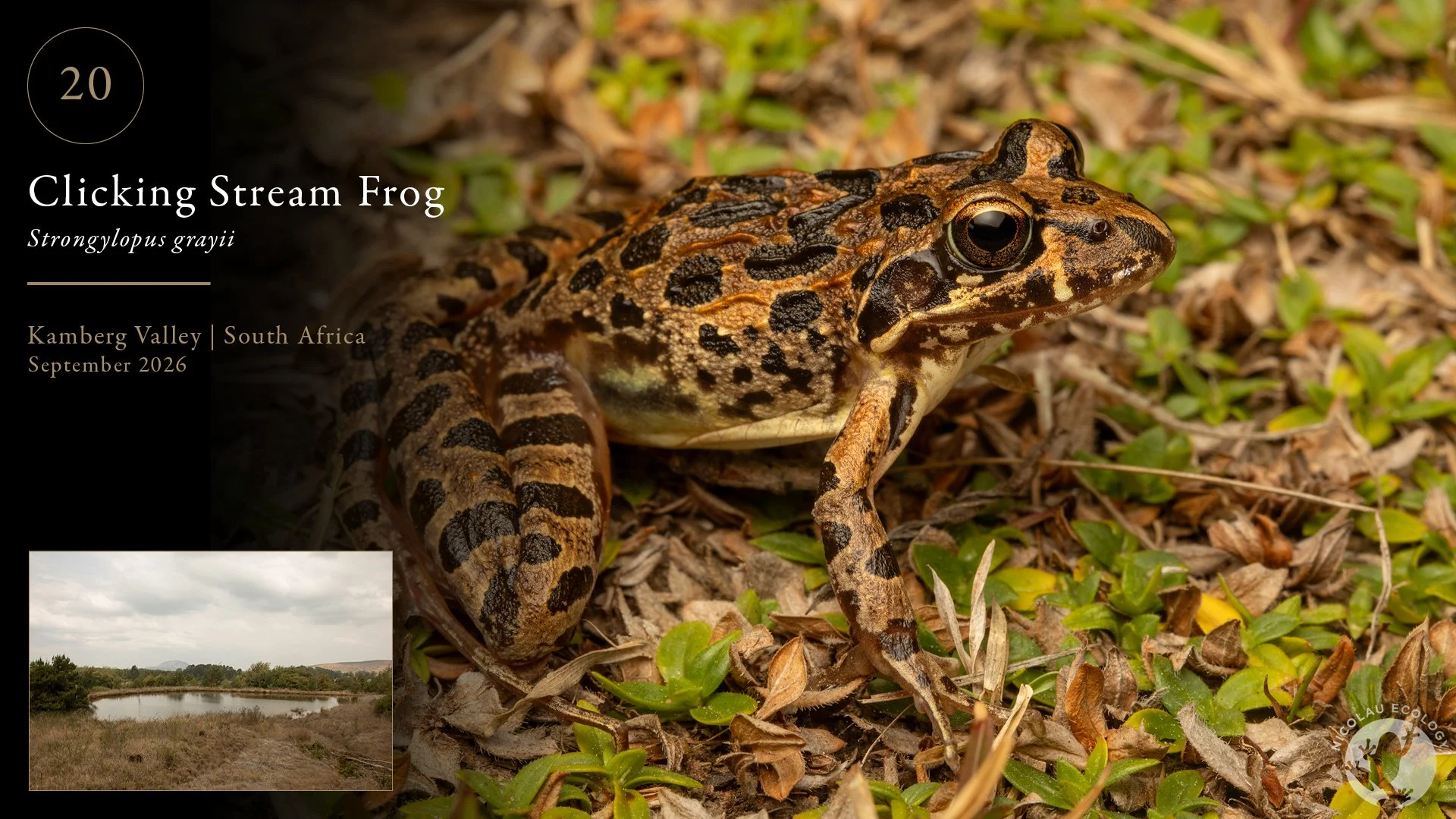
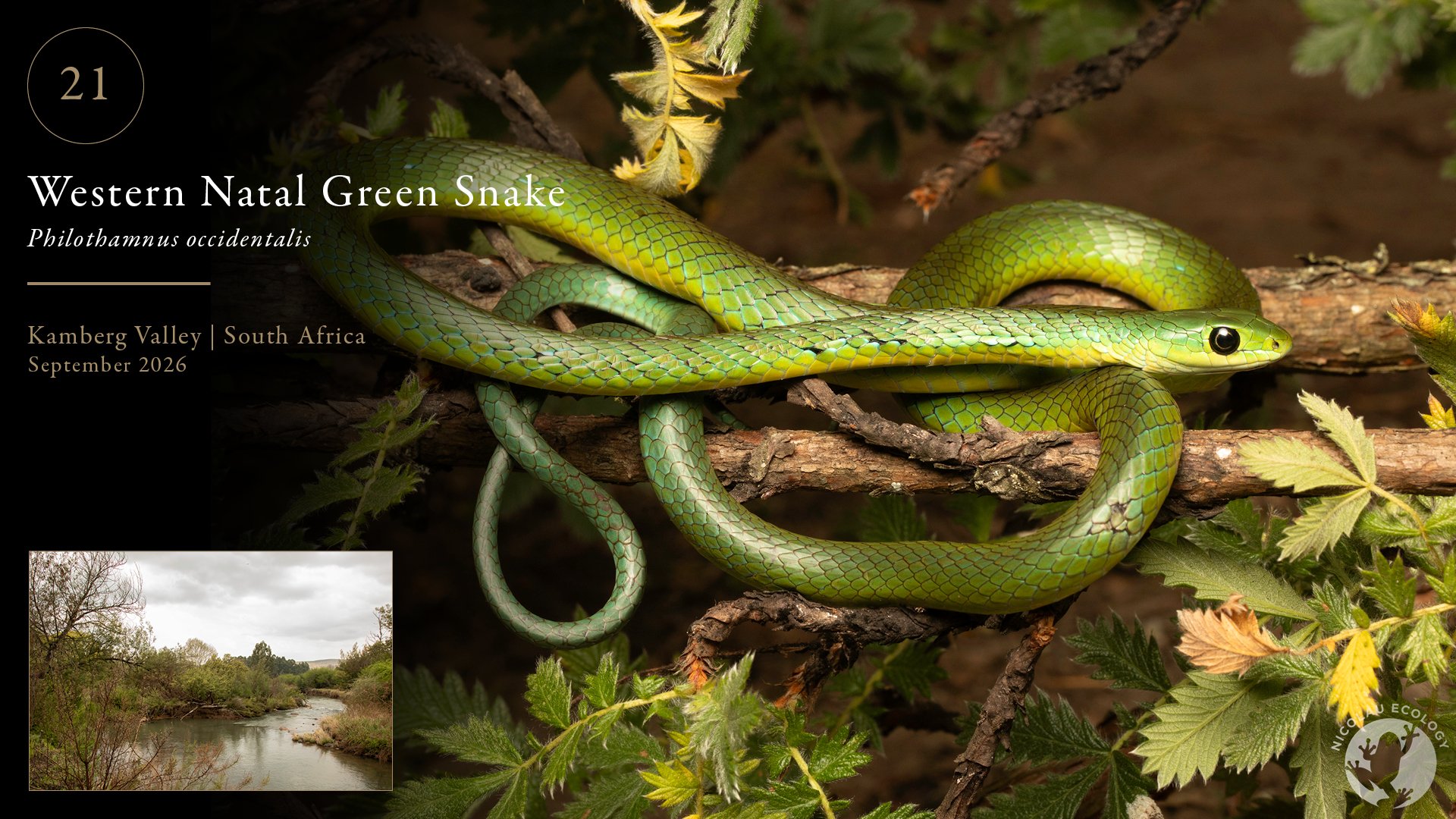
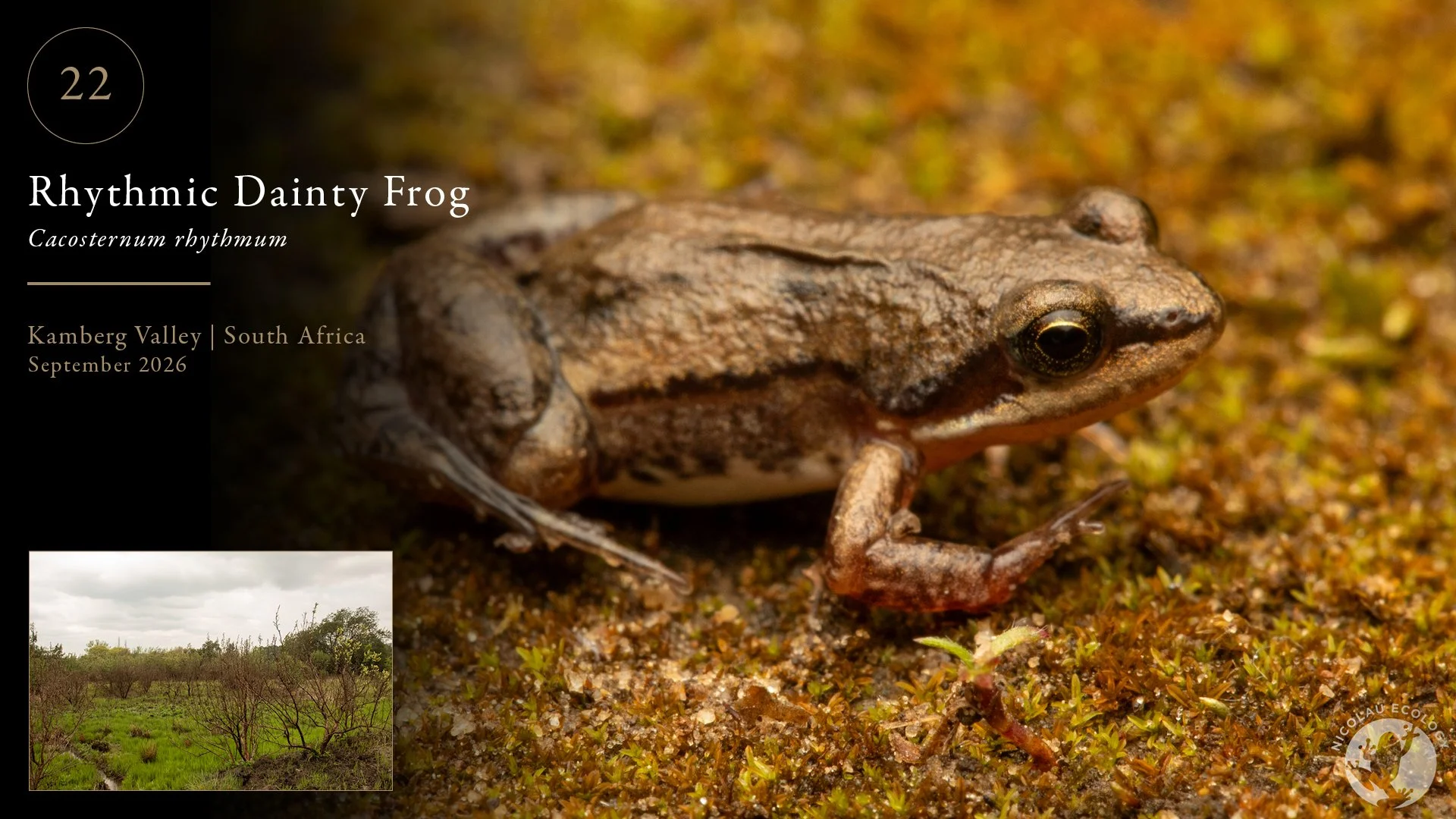
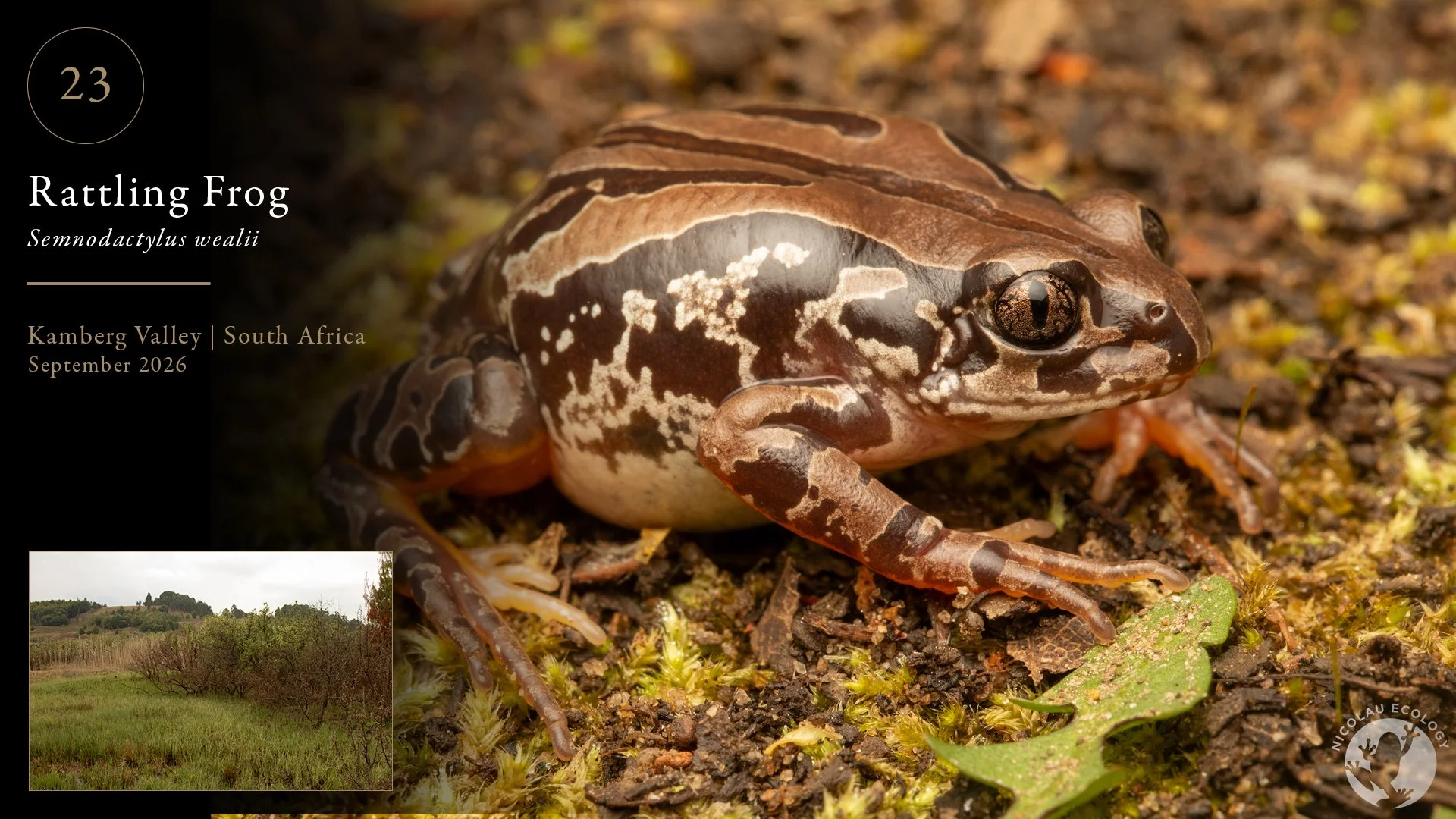
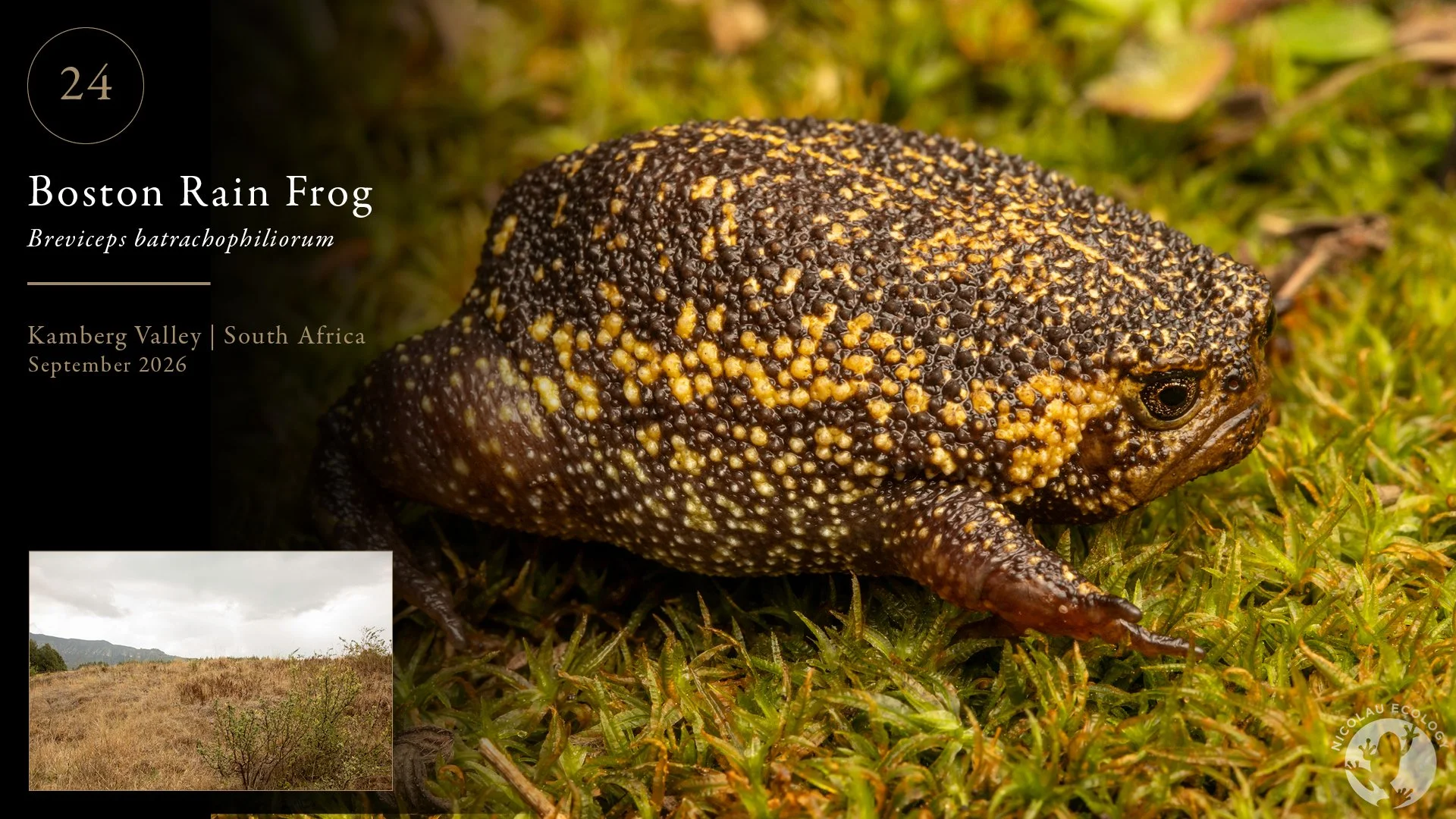
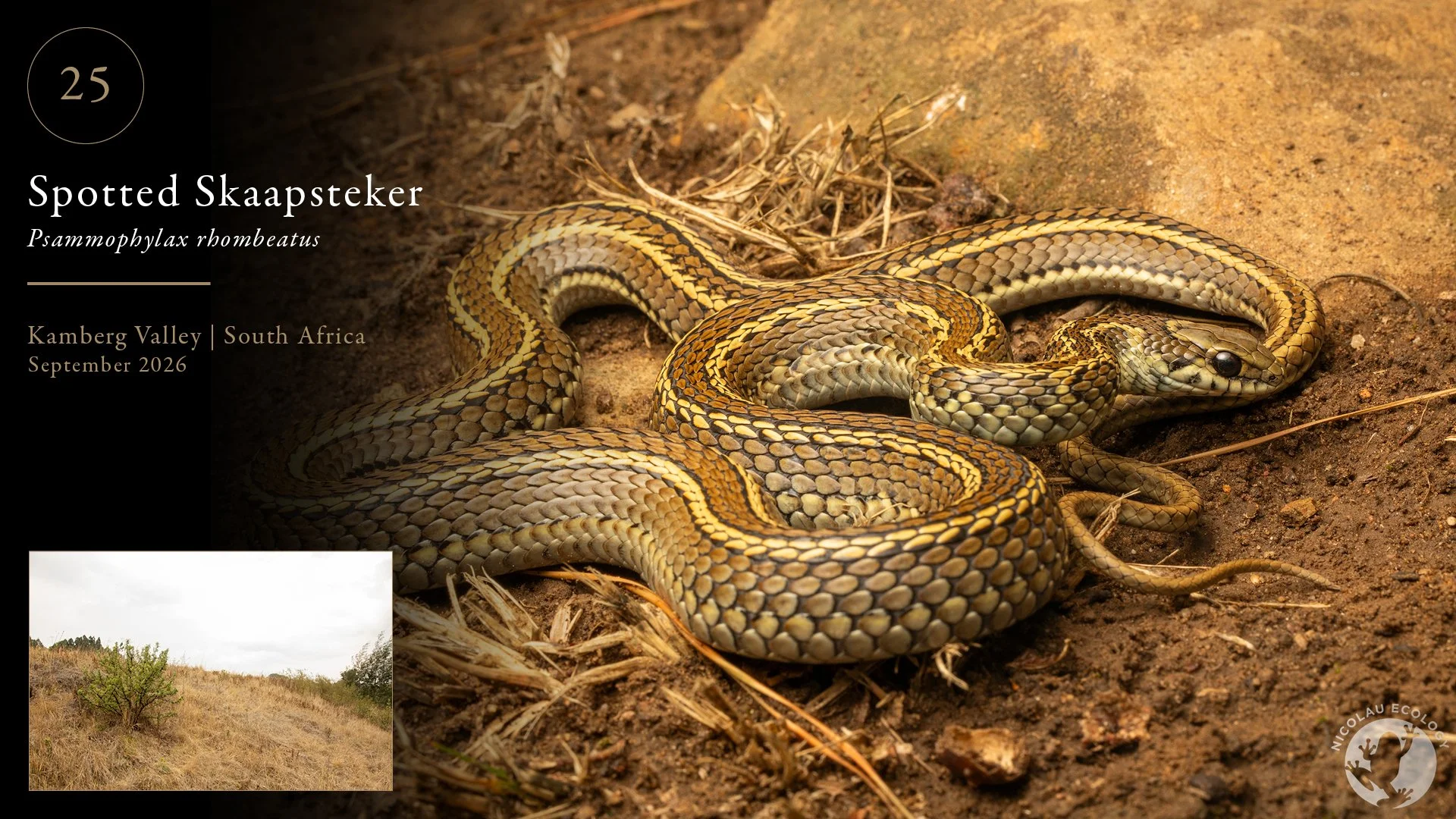
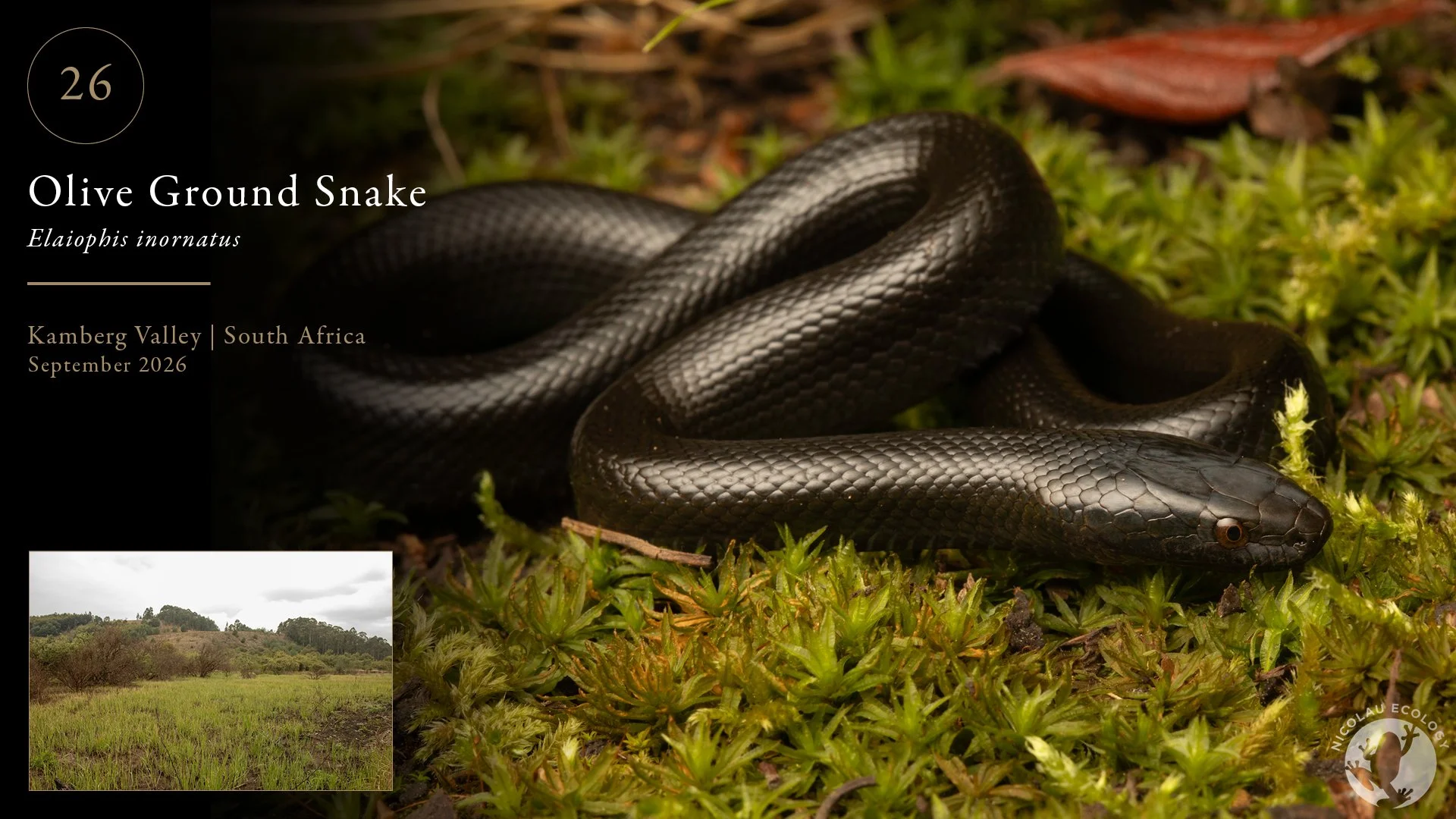
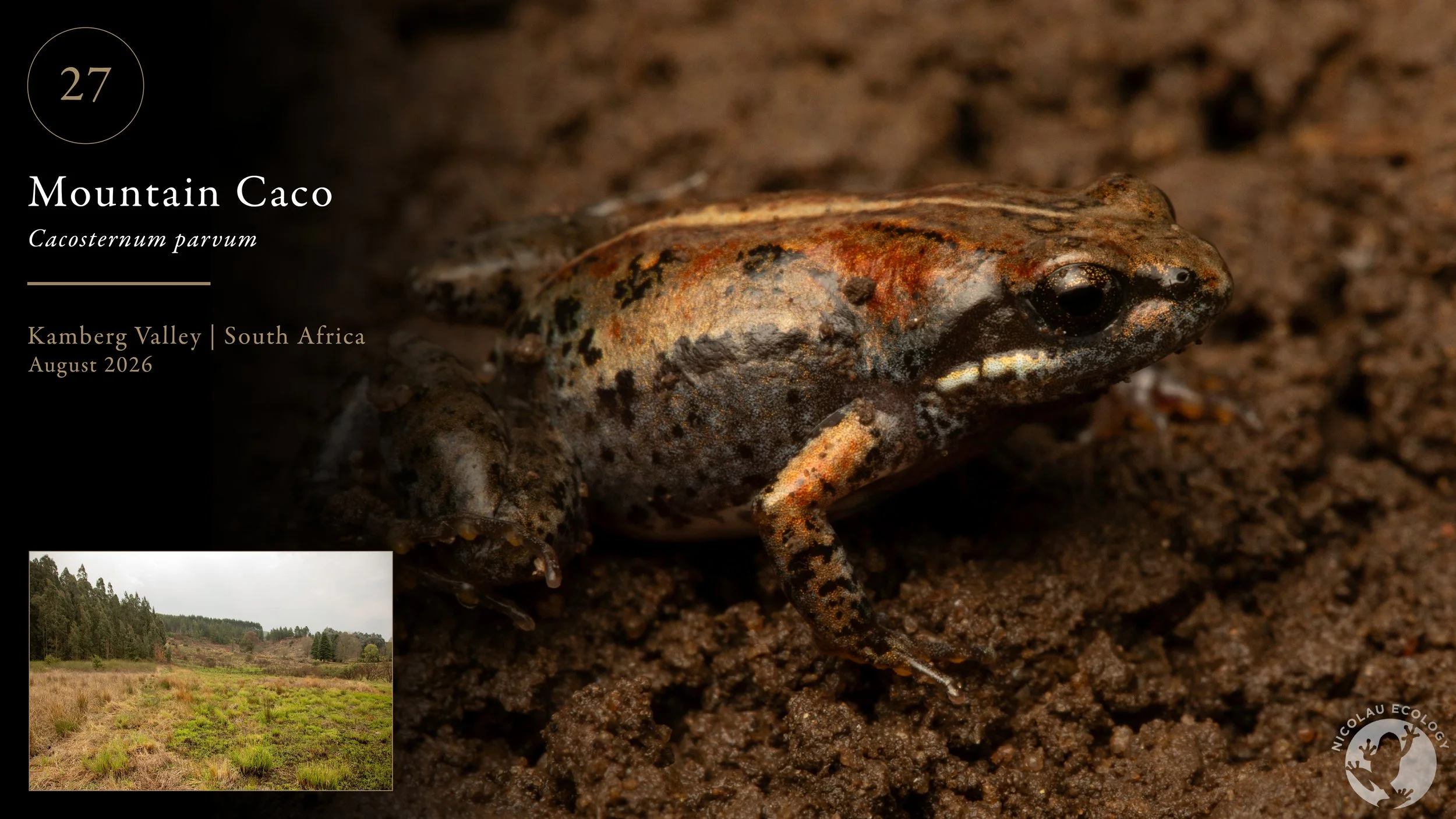
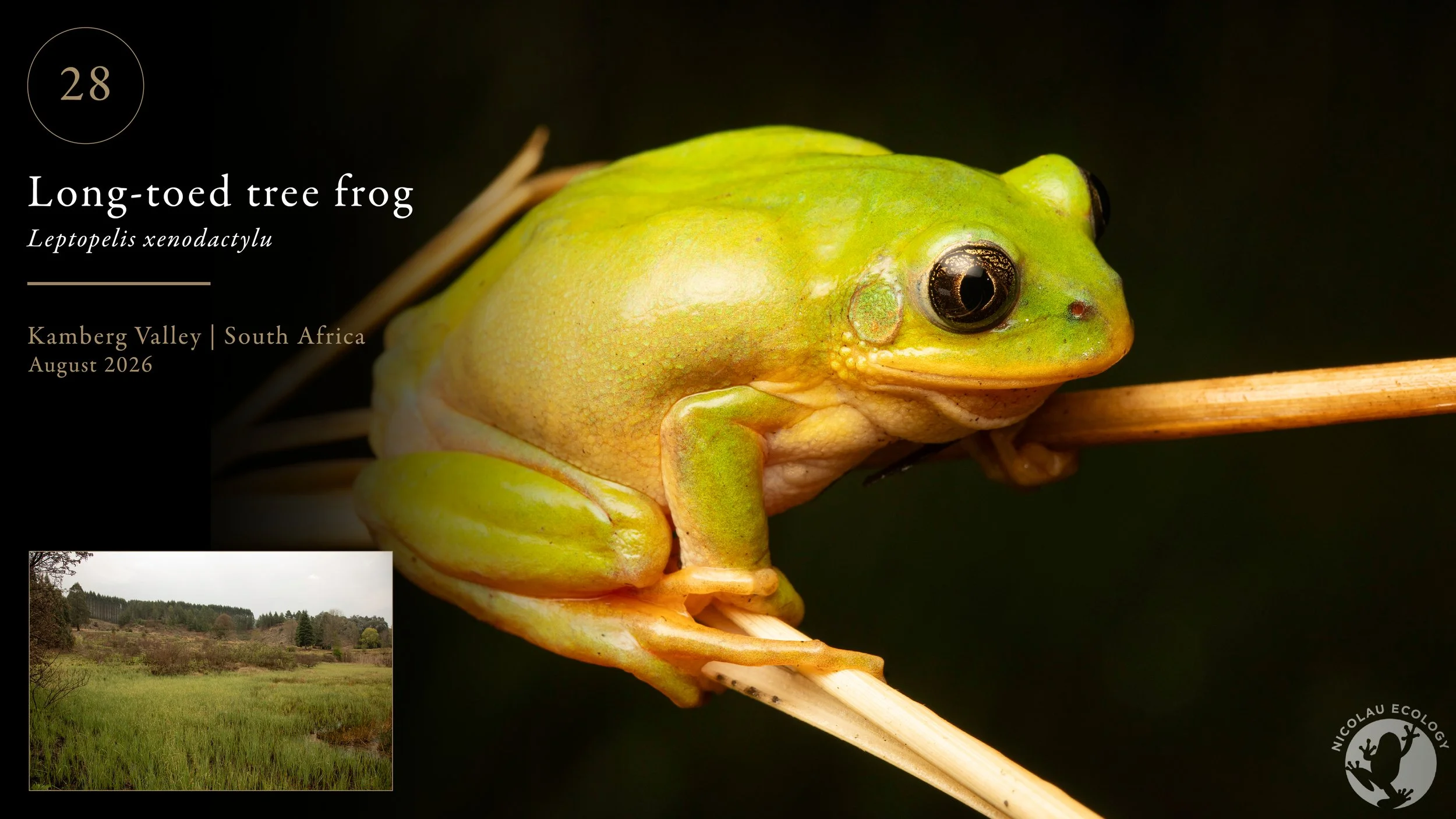
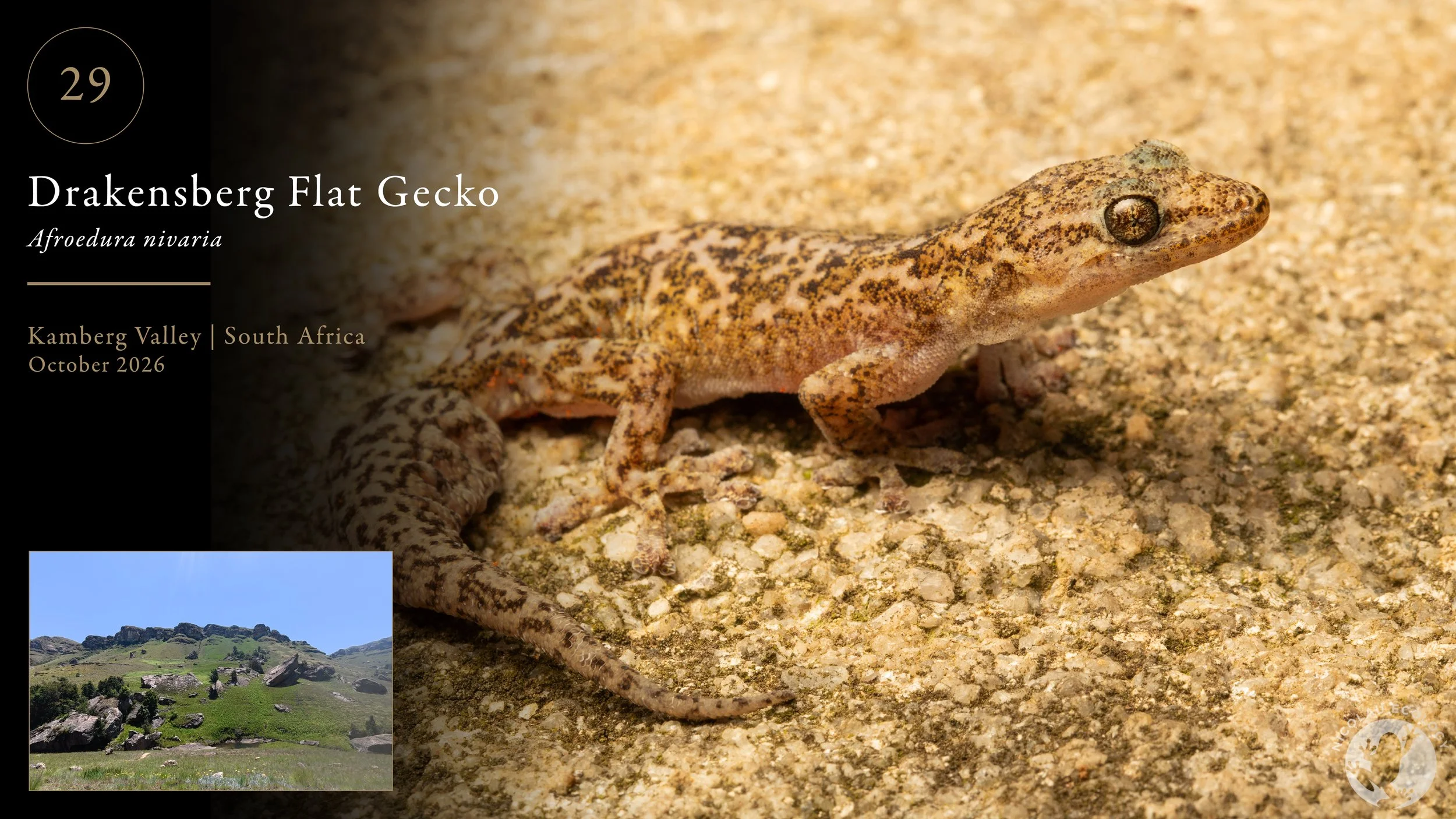
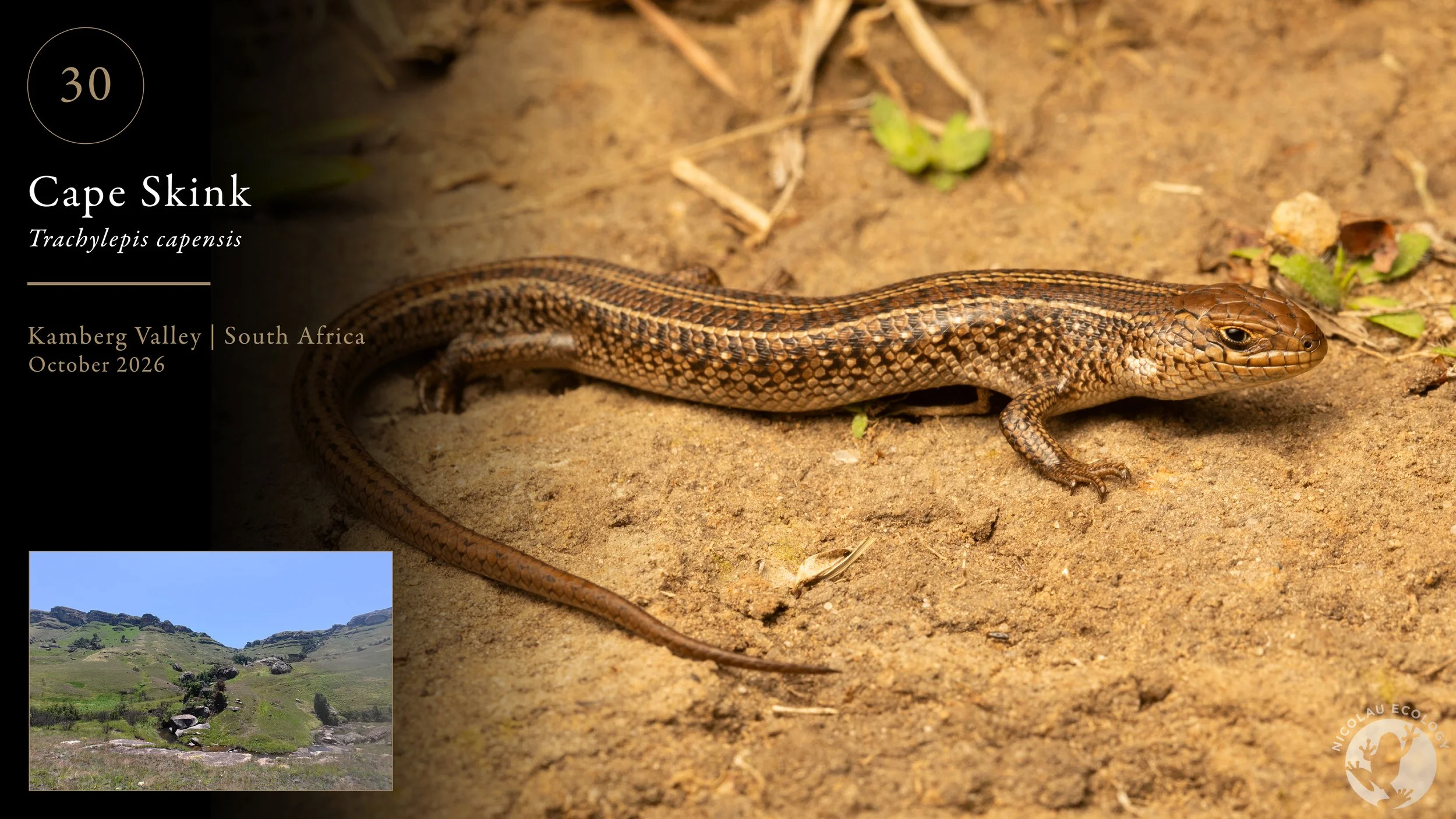
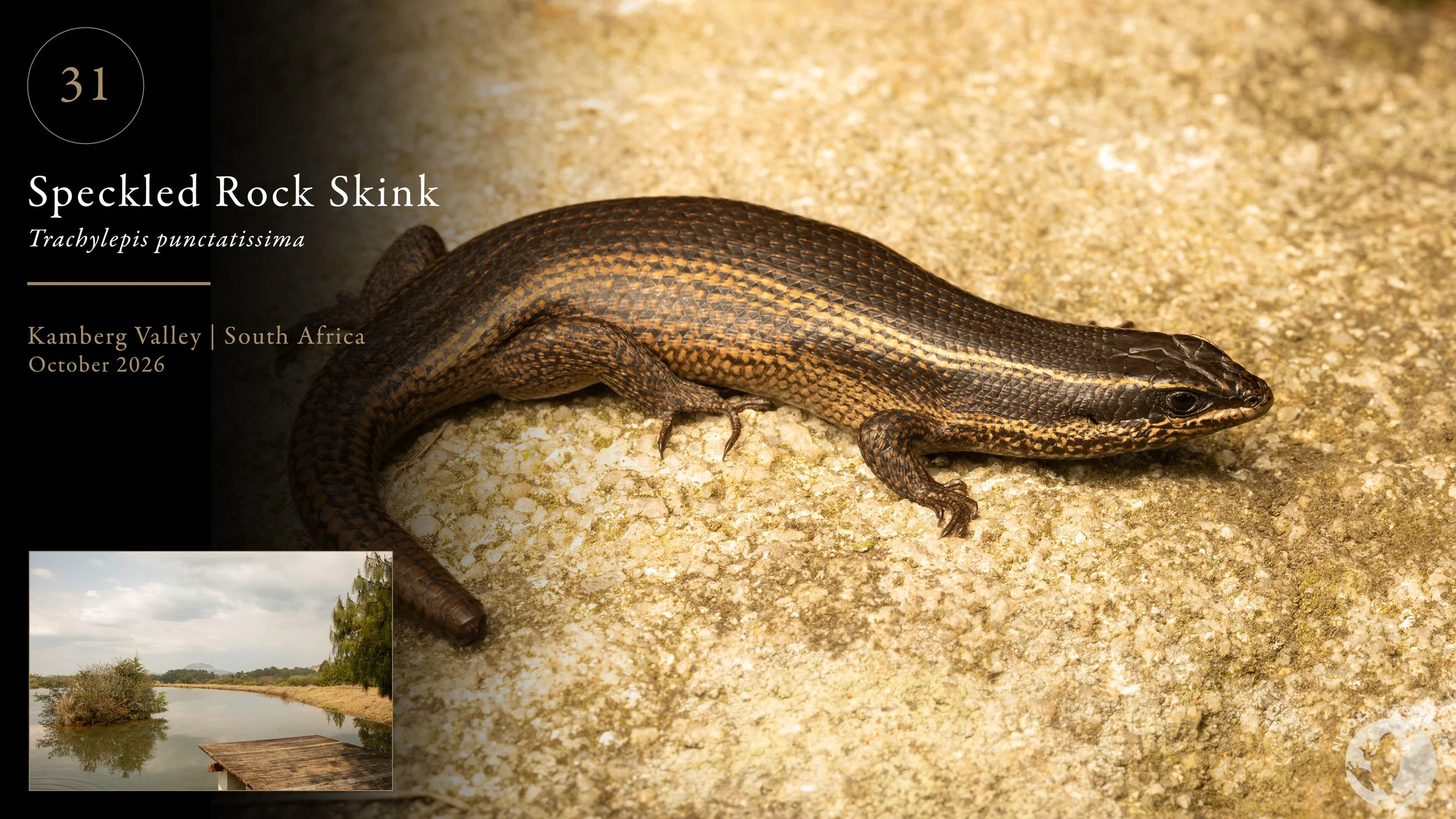
A collection of images from Expedition 02, Part 1. The first 11 species documented for the SAHP in South Africa.
While searching around the rocky areas, I managed to add our first Afroedura to the SAHP species list: the Drakensberg Flat Gecko (Afroedura nivaria). This was a particularly great addition for me. I have spent the better part of the last five years searching for, studying, thinking about, and writing about these geckos, with much of my research focusing on the taxonomy and evolutionary relationships of the genus. Given how much of my life has revolved around Afroedura in recent years, it seemed rather fitting that the first species documented for the project would come from the Drakensberg, not far from home. It is a genus that I am especially keen to document thoroughly as the project progresses, so getting the first of what will hopefully be many species was nice.
We also managed to add another two reptiles to the growing species list: the Speckled Rock Skink (Trachylepis punctatissima) and the Cape Skink (Trachylepis capensis). Both are vommon in the region and, although perhaps not quite as exciting as some of the more elusive species we were hoping to encounter, they were great additions. After all, one of the main objectives of the SAHP is to document the full diversity of southern Africa's reptiles and amphibians, from the common species we encounter almost every day to those that might take years of searching to find. We also found a Delalande's Sandveld Lizard (Nucras lalandii) which had just laid eggs, unfortunatly I did not have my camera on me at the time, so the species will have to remain off the list for now.
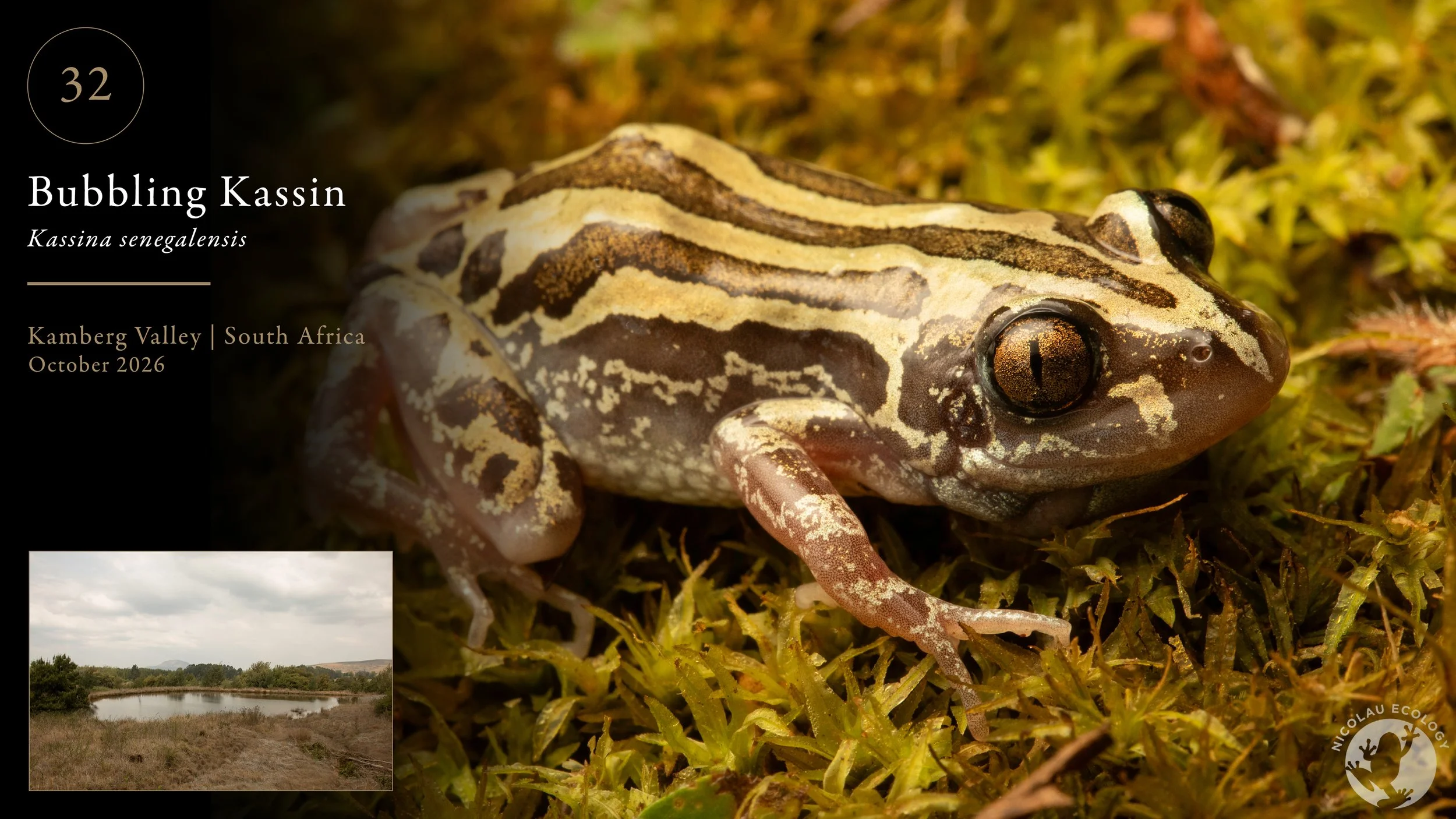
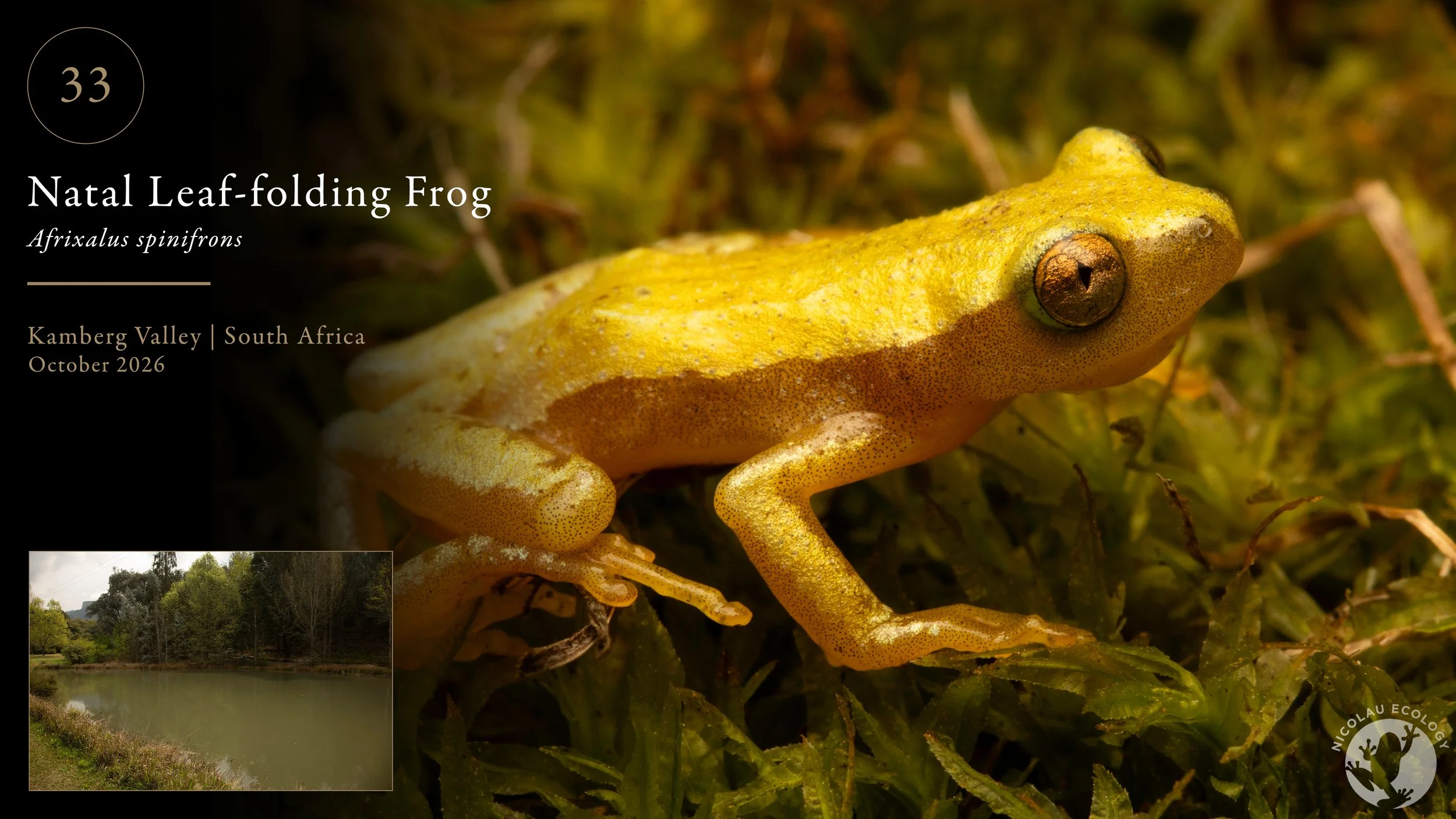
Following a night of rain, frogs were active in remarkable numbers around the property, giving us another opportunity to search for species that had so far escaped us. Among the new additions was the Bubbling Kassina (Kassina senegalensis), a species whose calls are a familiar sound across much of southern Africa. More surprisingly, however, we also managed to find the Natal Leaf-folding Frog (Afrixalus spinifrons). This was a species we had specifically searched for during Part 1 without success, so finally encountering one was perfect. And once again, it was found right in our garden.
With the addition of Afrixalus spinifrons, we had now documented essentially all of the amphibian species that I would realistically expect to find within the rather restricted area of the property where we are staying. Considering how much time I have spent travelling across southern Africa in search of reptiles and amphibians, it has been wonderful to have such a diversity of species right on our doorstep.
And with that, Expedition 02 of the Southern African Herpetofauna Project finally came to an end. Despite being interrupted on several occasions by other fieldwork commitments, it turned out to be a particularly rewarding expedition. Across the two parts, we managed to document 18 species of reptiles and amphibians, including three lifers for me, all of which were amphibians: the Boston Rain Frog (Breviceps batrachophiliorum), Rhythmic Dainty Frog (Cacosternum rhythmum), and Mountain Caco (Cacosternum parvum). Finding the Endangered Boston Rain Frog and finally encountering an adult Long-toed Tree Frog at home were definite highlights, while adding our first Afroedura to the project was another great milestone.
Of course, 18 species represents only a portion of the herpetofaunal diversity found in the Kamberg Valley and surrounding Drakensberg. There are still many snakes, lizards, and frogs that I would like to track down, along with a few particularly elusive species that will certainly require a fair amount of effort. With summer here and the grasslands becoming increasingly productive, hopefully the next Kamberg expedition will be out soon.
For now, that brings our first South African expedition to a close. I hope you enjoy Part 2, with some long-awaited amphibian encounters, our first flat gecko, a few familiar reptiles, and quick dive into the herpetofauna surrounding our little home in the Berg.
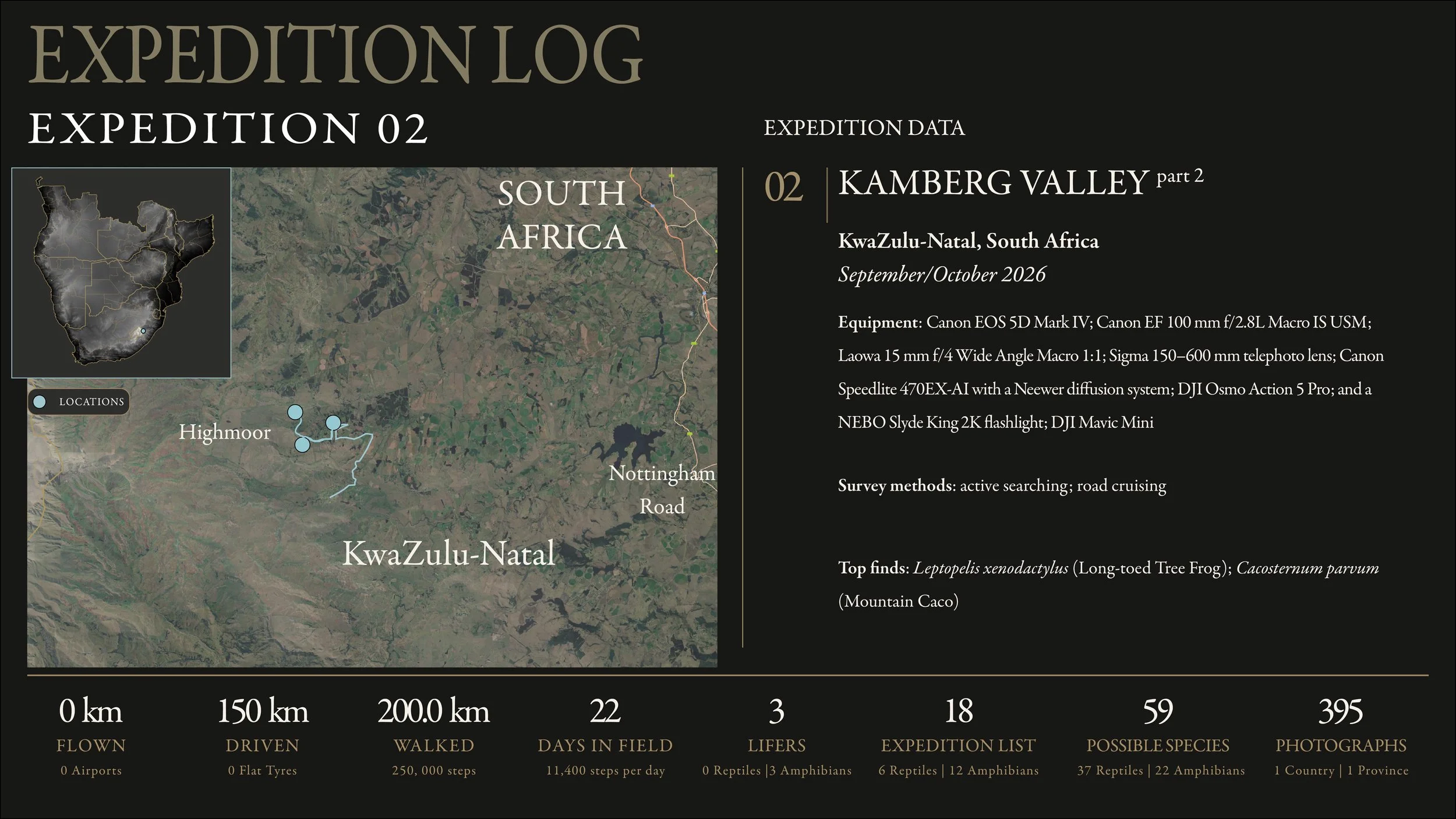
The expedition log displays some of the essential and interesting stats across the expedition’s episodes.
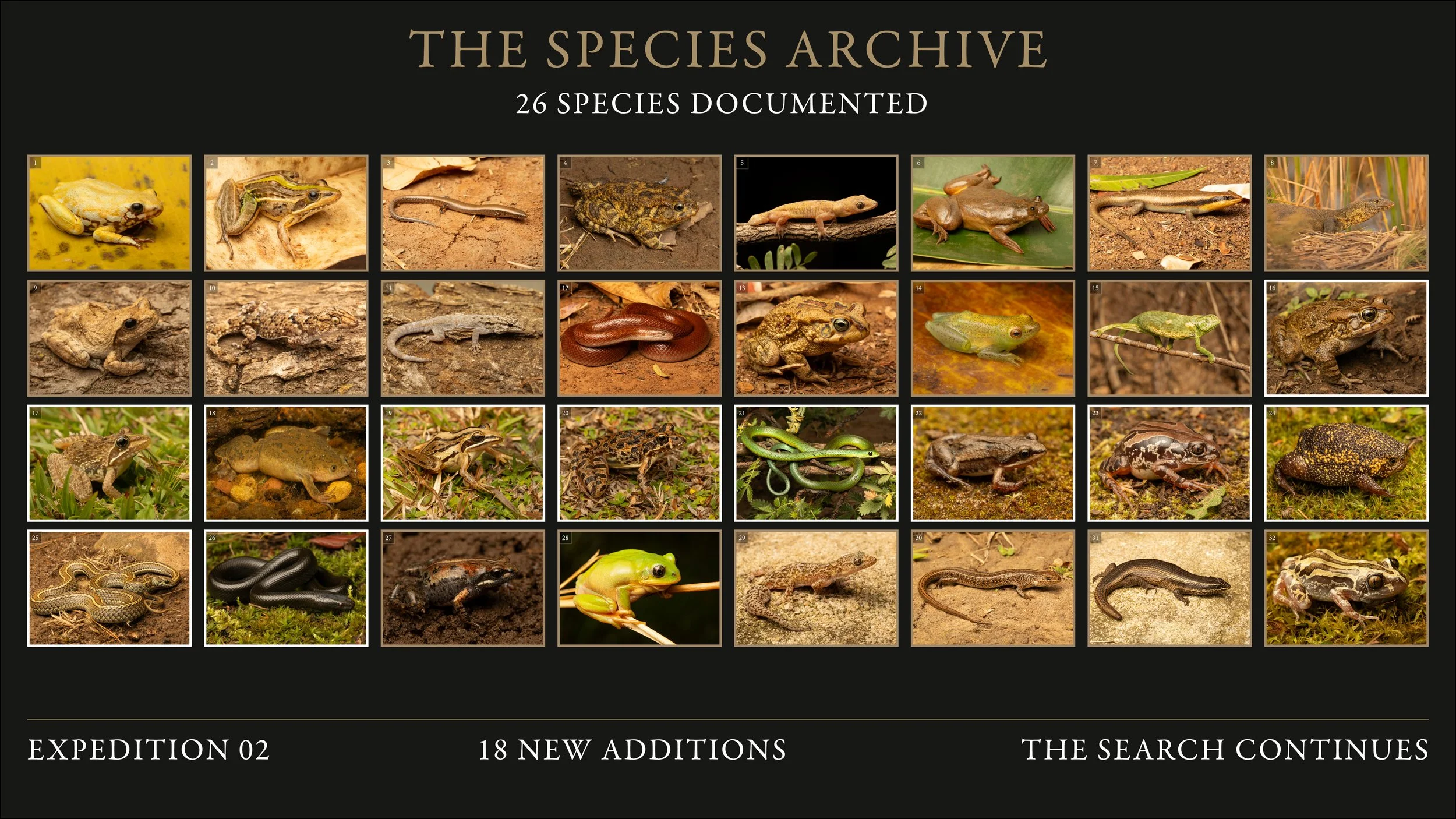
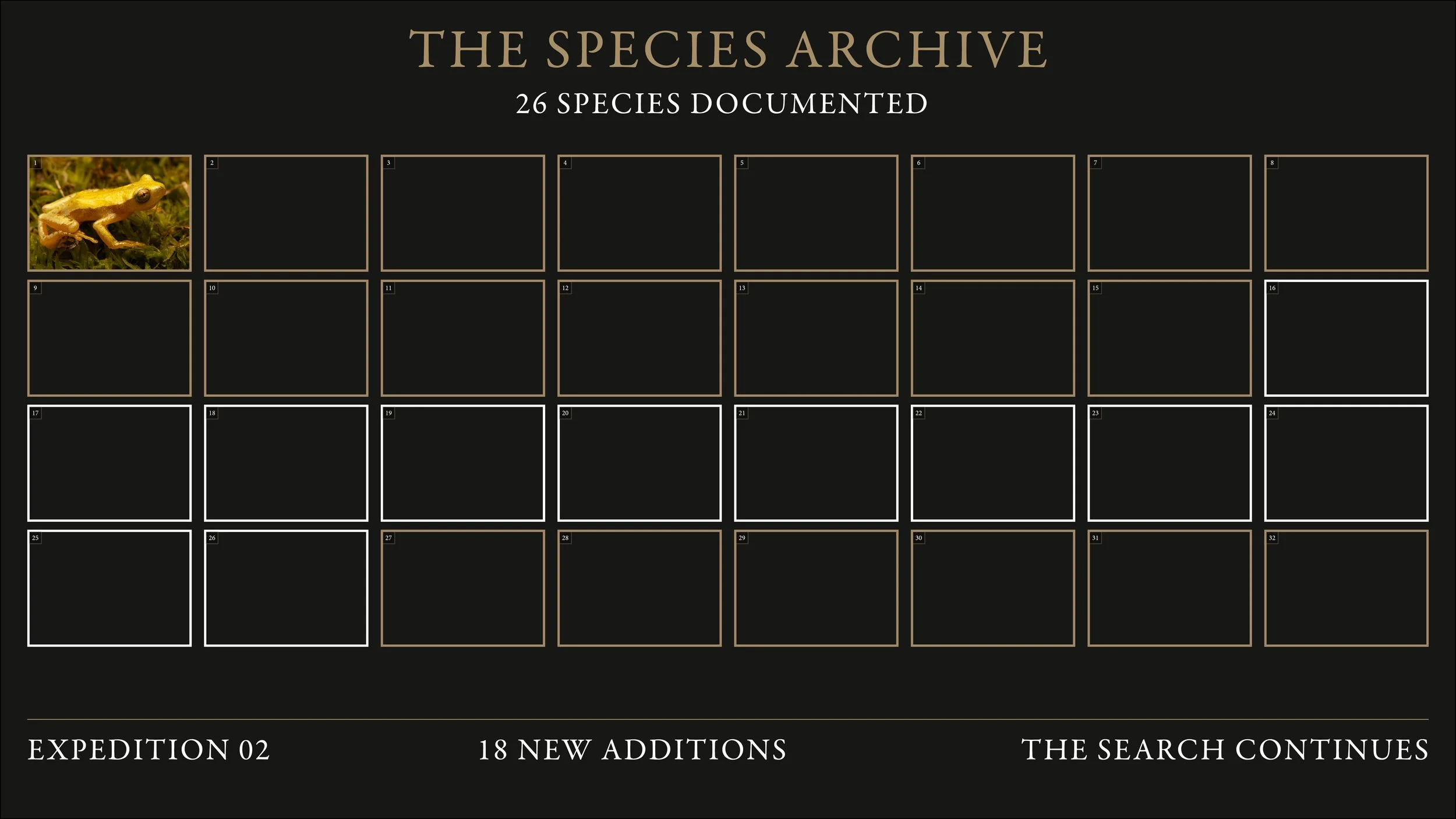
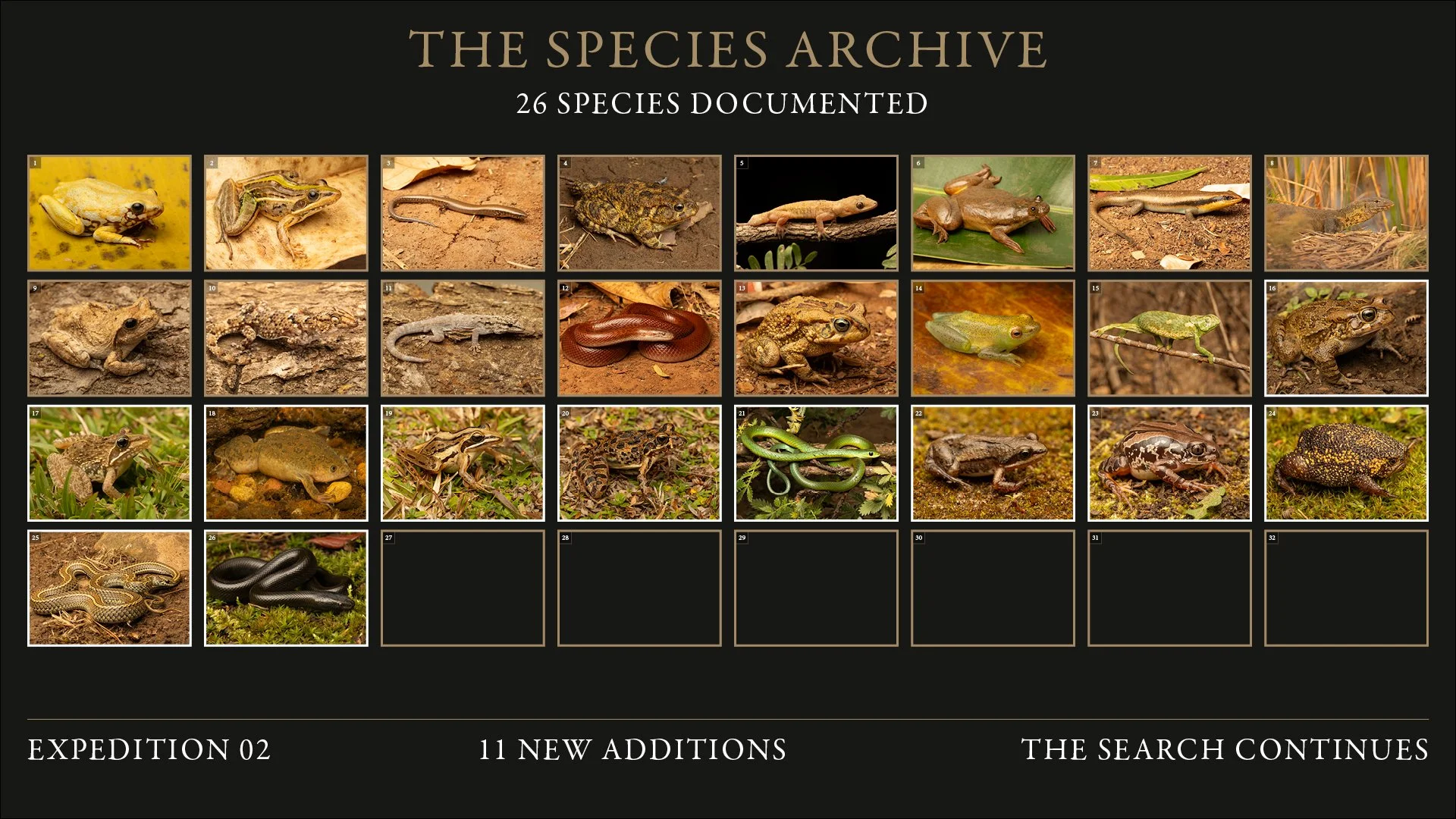
The species archive will be a common site across the SAHP. This will illustrate the total number of species encountered over the course of the project from Day 1. Halfway through expedition 2, we are now at 26 species of herps encountered out of 1176 species for Southern Africa.
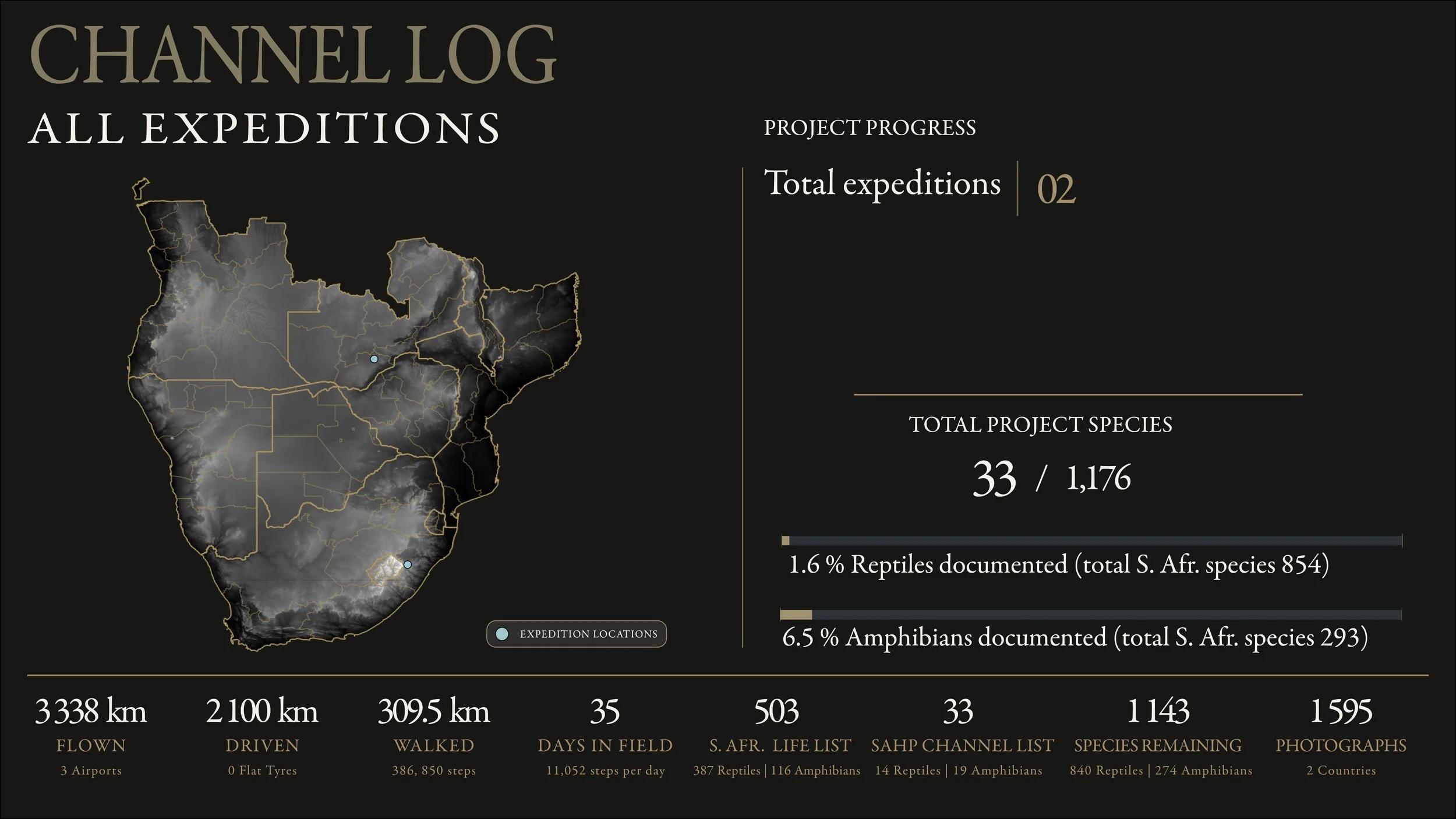
The channel log displays the stats across the duration of the SAHP, from episode 1 until the end of the project.